
Recently, local officials, guests, and the media endured a flurry of snow in Abington, Pennsylvania for the celebration of the�erection�of a new historical marker outside of Jenkintown VFW Post 676. The marker, which is one of 36 historical markers...
Recently, local officials, guests, and the media endured a flurry of snow in Abington, Pennsylvania for the celebration of the�erection�of a new historical marker outside of Jenkintown VFW Post 676. The marker, which is one of 36 historical markers provided around�the�Philadelphia area by the State of Pennsylvania, commemorates�the�Battle of White Marsh or the Battle of Edgehill in December 1777.
Here, Michael Thomas Leibrandt looks at the connection between 1777 and recent events.
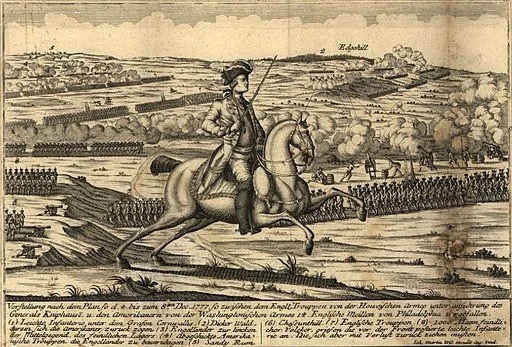
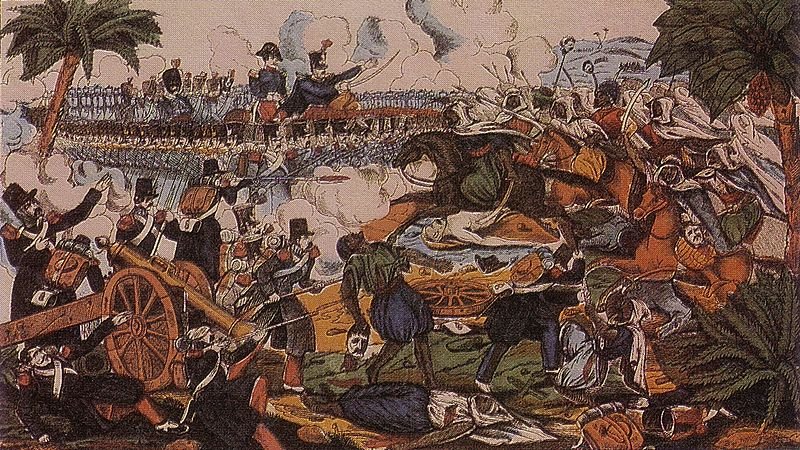
A depiction of the view from the British side during the Battle of White Marsh or the Battle of Edgehill.
The Battle of White Marsh itself, which involved the area from Abington Township, PA to the ground around Chestnut Hill over three December�days, was Sir Lord Williams Howe�s attempt to march�out�of Philadelphia�and�to draw General George Washington�s Continental Army into Battle before they could move�to�winter quarters.
The allocation of the marker is yet another reminder in 2023 of our revolutionary roots around Philadelphia. Unlike other conflicts like the American Civil War, multiple engagements between�the�American Continental Army�and�King George�s forces happened during Revolutionary times around the Philadelphia suburbs.
America in 1777 is in many ways not so different from our current challenges in 2023. Although our nation is not currently involved in a military engagement for our independence, 1777 was a time in America of great societal turmoil as well as military action. While some supported the cause for independence, others were sympathetic to the British cause throughout America�s struggle for independence.
Not far from the recent celebration, a family purchased land on�the�heights of Edge Hill during the 1860s, and�then�discovered a bayonet�and�eventually human remains of�four�revolutionary soldiers killed at the Battle of Edge Hill.
�
Spring 1953
In the spring of 1953, a relative of�the�family allowed the remains to be exhumed and properly buried. In a moving tribute, the patriots were relocated down the street to the property of North Penn VFW 676 during Memorial Day Weekend 1953. A plaque was also placed a memorial stone and plaque at the location�where�the remains were found on the heights of Edgehill.
Just a few miles north of the�new�marker in Hatboro, is the site of the Battle of Crooked Billet, which also took place during the American Revolution. Crooked Billet (which is now an elementary school) was the name of a�tavern�which existed at the time of�the�early morning Battle, when a British force stationed in Philadelphia surprised, overwhelmed, and routed American troops in spring of 1778.�
While it�s true that the City of Philadelphia was captured by the British without firing a shot in 1777, American soldiers did put up a heroic defense of Fort Mifflin on�the�Delaware River, until they were finally overrun�by�British forces during a siege 246�years�ago. This June, Mifflin made news�when�a historic cannon was stolen from the Fort.
�
2023
In July 2023, a runaway Septa Trolley crashed into the Blue Bell Inn in Southwest Philadelphia.�During a British maneuver toward the Darby Road during the Revolutionary War, an American Raiding Party opened fire on the English troops. Five Americans were killed and the British arrested the remaining soldiers. In 1781, American and French forces themselves marched past the Blue Bell Inn on the way to the British surrender at Yorktown.
While it is easy to argue very few parallels can be drawn between Philadelphia in 1777 and in 2023, the internal struggles and divisions of the past feel all too real as America approaches 2024. Struggles that were especially evident between loyalists and patriots much like the political division that exists today.
Back in Abington Township, Abington Presbyterian Church is preparing to celebrate�its�310th anniversary this year since its founding in 1714. The historic�walls�of its cemetery directly across Old York Road were once a defense for American Continental troops while firing�on�British regiments marching up�from�Philadelphia. Lord Howe and his British forces would march into Abington Village�that�day in December 1777, not far from the site of the new marker dedication. Just another constant reminder of the Philadelphia region�s involvement�in�another tumultuous political time.
The American Revolution.
�
Enjoy that piece? If so, join us for free by clicking here.