
 Arctic Anthropology
time: 13.30 Finnish, 11.30 UK, 18.30 Beijing time, 12 October 2023. Online at zoom, meeting id: 641 887 4740, password: 2023. For those in Rovaniemi: join us in the BOREALIS meeting room on the top floor of the Arctic Centre
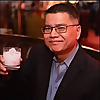
We define the Arctic broadly of course, but usually not as broad as reaching all the way down to the Korean Peninsula. But today is an exception, because the speaker is Heonik Kwon – a Cambridge anthropologist born in Korea. Some of us working in the Arctic have got to know through his 1993 Phd from Anthropology in Cambridge “Maps and Actions. Nomadic and Sedentary Space in a Siberian Reindeer Farm”. His work on “The Saddle and the Sledge” focusing on Orochen hunting spirituality and the notion of wild and domestic reindeer. Later he moved on engage with theories of perspectivism and reviewed such currents in anthropological writing starting from Leach, Evans-Pritchard and Mauss.
In today’s lecture he turns to spirituality and fortune-telling in North Korea (at least here we have “north” in the name, as Tim Ingold has once argued “the North is everywhere”). His lecture is organised online today by our former Cambridge colleague Kostas Zorbas, nowadays at Changong University in China, jointly with Prof. Okpyo Moon, a notable anthropologist of Seoul National University.
Here is the abstract of the talk: North Korea is sometimes called a religion-less society, unique in the world. Although there might be certain truth to this argument, especially if considered in the sphere of institutional religions, it also ignores religious experience found at the subaltern level or what is referred to as popular religion in the existing scholarship. This lecture challenges the argument. It will explore the phenomenon of sinj?m or spirit fortune-telling that today has become an intimate part of everyday life among many North Koreans. Extremely popular at the grassroots level, the rise of this traditional religious culture since the early 2000s, if properly understood, can provide an interesting looking glass to North Korea’s society and economy in transition. The lecture will situate the finding in a broad modern religious history of Korea as a whole—particularly the fact that before the partition of the nation into two separate polities in 1945, the northern half of Korea experienced one of the strongest evangelical movements in Asia, which involved a struggle against the elements of popular religiosity defined as superstition.
Information about the speaker and more of his non-Arctic work: Heonik Kwon is a Senior Research Fellow in Social Science and Distinguished Research Professor of Social Anthropology at Trinity College, University of Cambridge. A Fellow of British Academy, he is also a member of the Mega-Asia research group at the Seoul National University Asia Center. His previous works include: After the Massacre (2006), which received the inaugural Clifford Geertz prize from the American Anthropological Association, Ghosts of War in Vietnam (2008, winner of George Kahin Prize), The Other Cold War (2010), North Korea: Beyond the Charismatic Politics (2012, co-authored with Byung-Ho Chung) and After the Korean War: An Intimate History (2020, Palais Prize). Kwon’s recent book explores Cold War history from a religious historical angle: Spirit Power: Politics and Religion in Korea’s American Century (2022, co-authored with Jun Hwan Park). Kwon serves as a principal editor for the multi-volume Cambridge History of the Korean War, and his current writing project, The Soul of the Earth, investigates the spiritual subjectivity of the land and the earth in a broad comparative context.

 Tech Scope World
 .jpg)
 TechGliding
  Sportelo
 The Intercept
 Coastal House Media
 DUDE FOR FOOD