
 A4 Architecture
 Rhode Island Housing Zoning Map
On February 22, 2022, Rhode Island Governor Dan McKee signed into law Act 6061, also known as the “Zoning Modernization and Housing Act.” This landmark legislation introduced significant changes to the states zoning ordinances, aiming to promote housing affordability, encourage mixed-use development, and enhance transparency and consistency in land use regulations. The new provisions required each of the local Zoning Ordinances to be revised so that they are in compliance in compliance with the Act by January 1, 2024. This will represent a truly transformative shift in Rhode Island’s approach to zoning and land use management.

Zoning Site Analysis
Rhode Island’s zoning ordinances have evolved over time, reflecting the states changing needs and priorities. The first comprehensive zoning ordinance was adopted in the city of Providence in 1921, and other municipalities followed suit in the ensuing decades. Frequently, these early ordinances primarily focused on separating residential, commercial, and industrial uses to protect neighborhoods from what were seen at the time of the legislation to be incompatible development.
In recent years, however, concerns have arisen regarding the restrictive nature of traditional zoning ordinances, which have been criticized for limiting housing options, hindering mixed-use development, and perpetuating socioeconomic segregation. Act 6061 seeks to address these concerns by introducing a more flexible and inclusive approach to zoning.
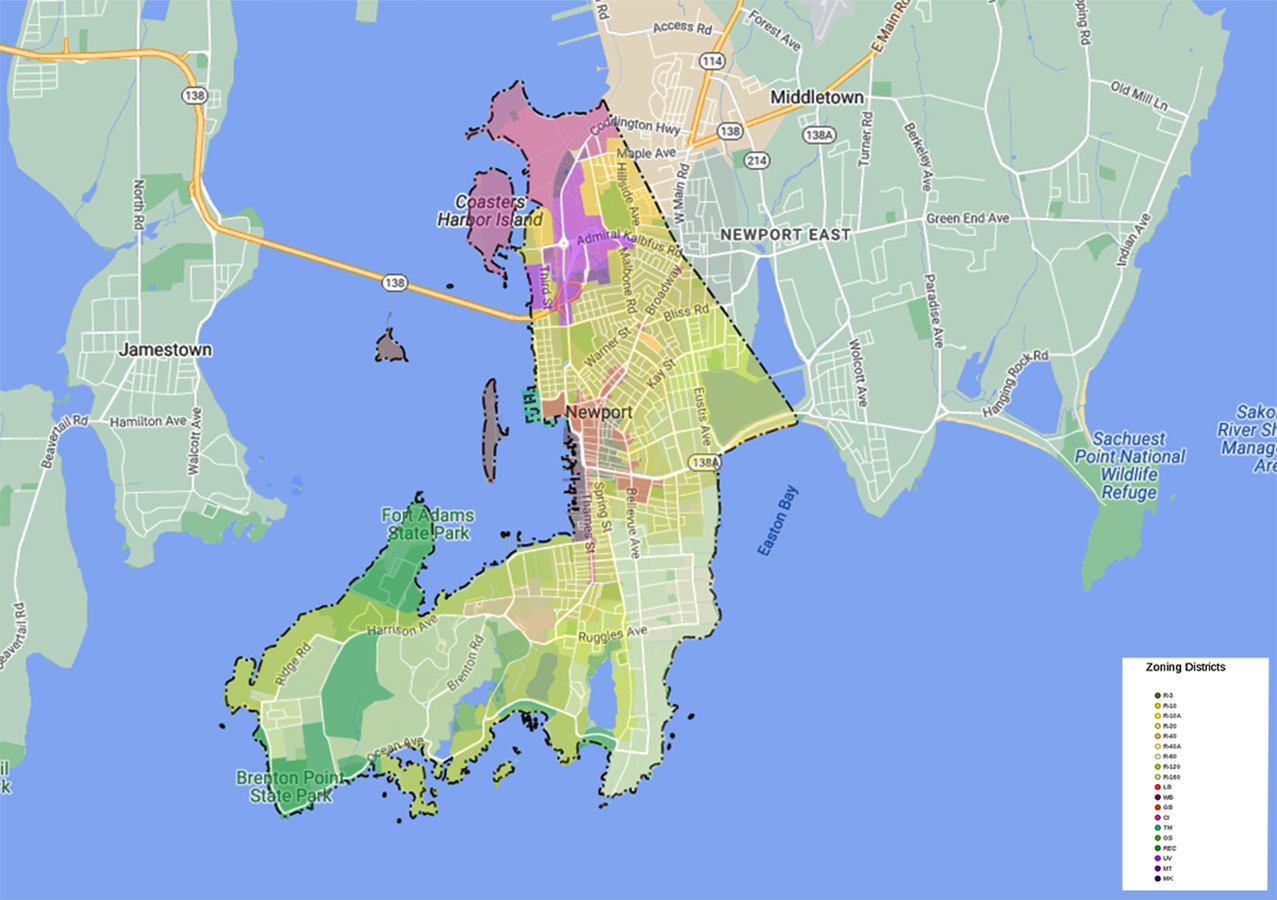
Zoning Map of Newport
Act 6061 introduces several notable changes to Rhode Island’s zoning ordinances, including:
Conversion of Commercial Buildings to Residential Use: The law now allows the conversion of at least 50% of the gross floor area of any commercial building into residential units, facilitating the creation of more affordable housing options in urban and suburban areas.
Mixed-Use Development: The law encourages the development of mixed-use projects that combine residential, commercial, and retail spaces, promoting lively and walkable communities.
Unified Development Review: The law mandates unified development review, a streamlined process for reviewing applications that require multiple permits, reducing administrative burdens and expediting project timelines.
Specific and Objective Criteria for Special Use Permits: The law requires municipalities to establish specific and objective criteria for issuing special use permits, ensuring greater consistency and predictability in land use decisions.
Enhanced Public Notice and Participation: The law strengthens public notice and participation requirements, ensuring that residents have ample opportunity to engage in the zoning process.
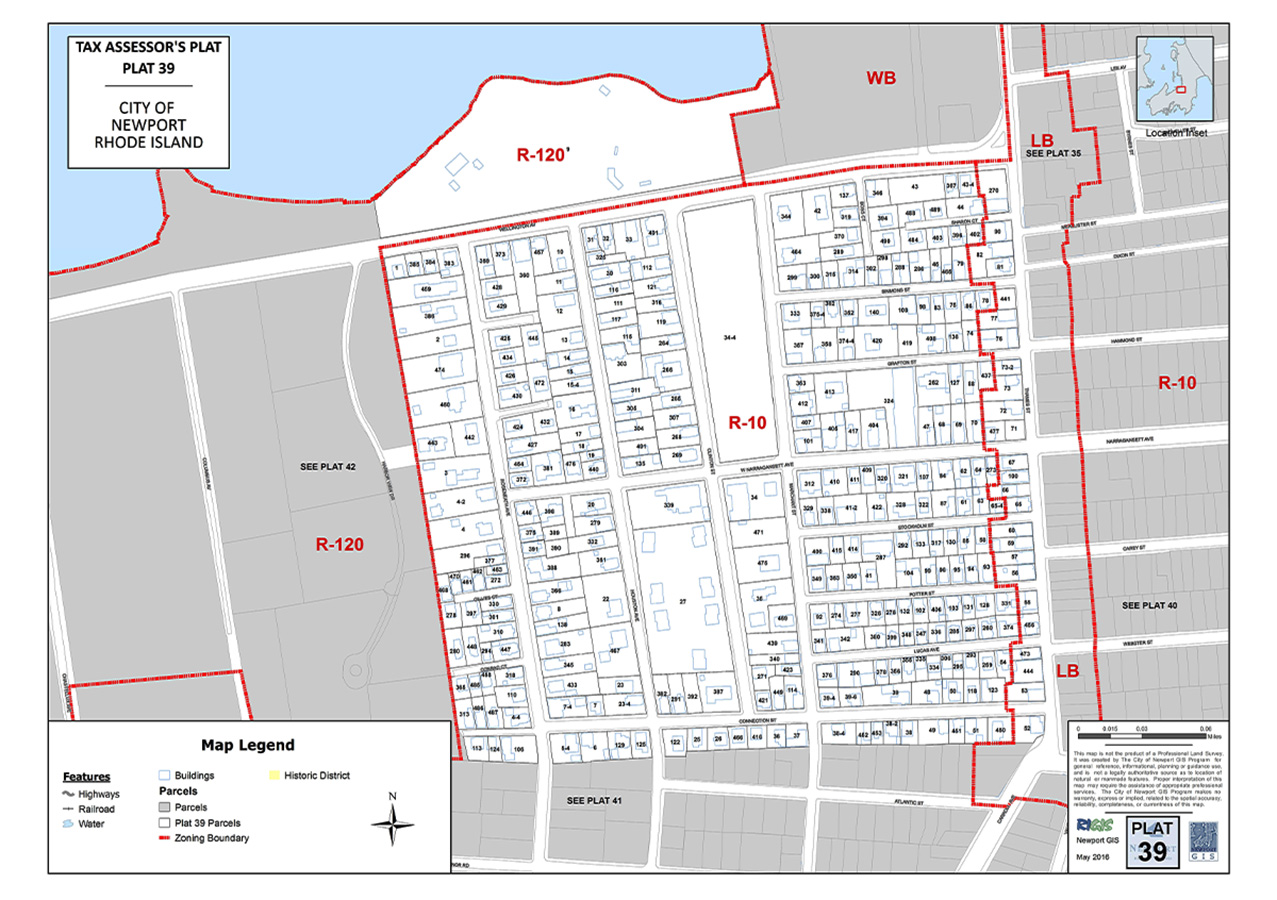
Plat Map of Current Project on Marchant St, Newport, Rhode Island
The impact of the implementation of Act 6061 is expected to have a profound impact on Rhode Island’s landscape and communities. By promoting housing affordability, encouraging mixed-use development, and enhancing transparency in land use decisions, the new provisions aim to create a more vibrant, inclusive, and sustainable Rhode Island.
The laws emphasis on mixed-use development is particularly significant, as it can revitalize neighborhoods, foster economic growth, and reduce car dependency. By creating more livable and walkable communities, mixed-use development can enhance quality of life and contribute to a healthier environment.
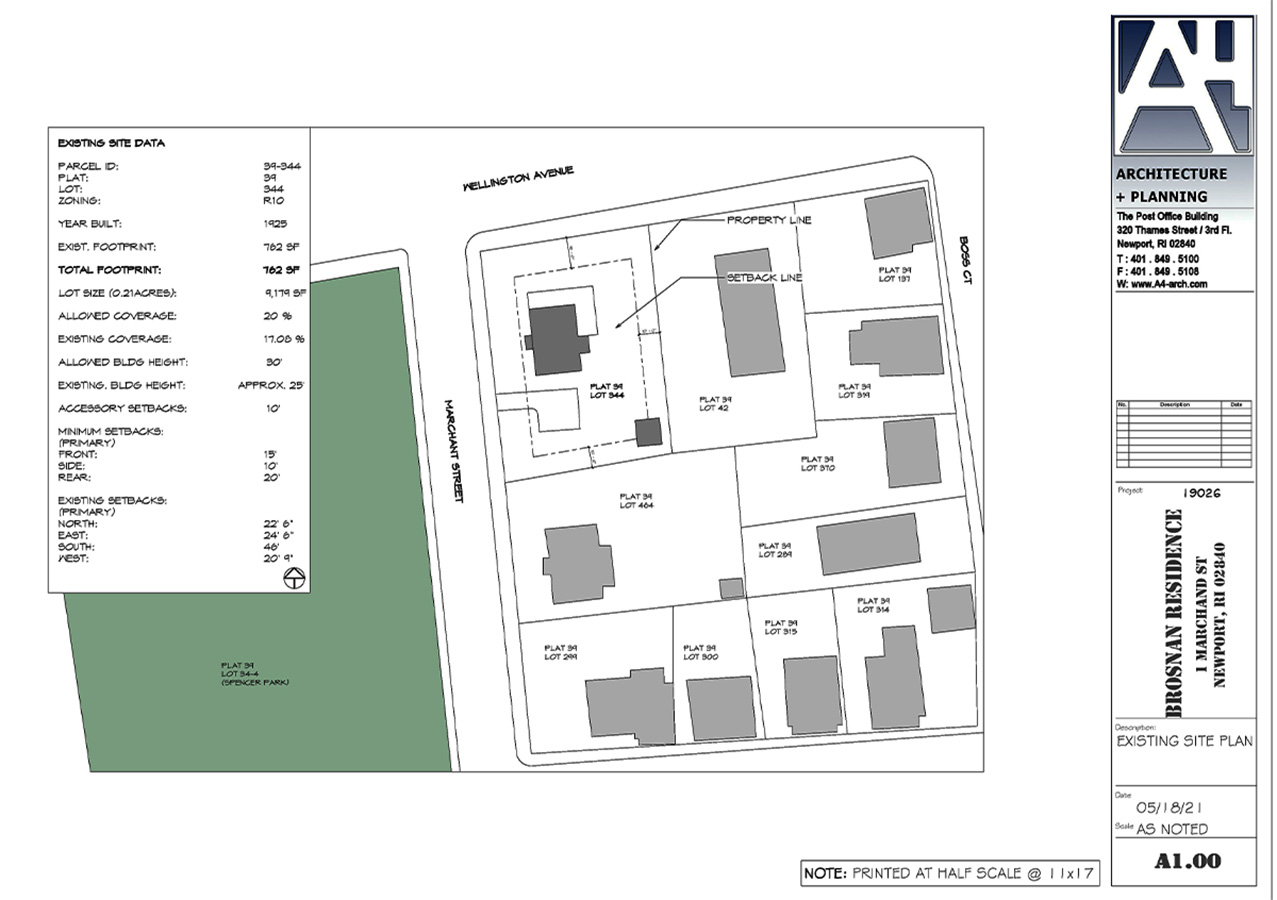
Marchant Existing Site Plan with Setbacks (Newport, Rhode Island)
In addition to its long-term impact, Act 6061 is also expected to have an immediate effect on the state’s housing market. By facilitating the conversion of commercial buildings to residential use, the law is likely to increase the supply of affordable housing options, addressing a critical need in Rhode Island.
Act 6061 marks a significant step forward in Rhode Island’s efforts to modernize its zoning ordinances and address contemporary challenges in land use management. The law emphasis on housing affordability, mixed-use development, and transparency is expected to have a positive impact on Rhode Island’s communities and environment, fostering a more vibrant, inclusive, and sustainable future for the state. Many localities are bridling at the loss of independence of their “unique” and “targeted” ordinances but, only time will tell how this statewide initiation will affect the development of real estate and housing in particular) over the longer term.
Ross Cann, RA, AIA, LEED AP, is an author, historian, teacher and practicing architect living and working in Newport, RI. He holds degrees in Architecture and Architectural History from Yale, Cambridge, and Columbia Universities.
 Toledo Real Estate Investors Association Blog
  Arterra Landscape Architects
  BreakingNews - World
  Ciente Blog
 -xl-xl-xl.jpg)
 AppleInsider
  FierceHealthcare