
 Climate Stories Project Blog
 At Climate Stories Project, we’ve long believed that stories are one of the most powerful ways to bridge the gap between scientific knowledge and personal connection to climate change. As our work has shown, storytelling helps make climate change “real,†helping people relate to the changing climate through personal and community responses.
​Today, we’re excited to share a new resource designed to help K-12 and University teachers integrate climate storytelling into their educational curriculum: The Climate Storytelling Curriculum Guide.
​Today, we’re excited to share a new resource designed to help K-12 and University teachers integrate climate storytelling into their educational curriculum: The Climate Storytelling Curriculum Guide.

Why a Curriculum Guide?
​
Climate change is often communicated through data—charts, projections, and metrics that can feel distant or overwhelming. But stories do something different. They humanize, connect, and invite us to listen.
​
The Curriculum Guide builds on this philosophy. It offers educators guidance and practical tools for integrating climate storytelling into a wide range of classes, regardless of grade level or academic subject. The Curriculum Guide is based on Climate Stories Project facilitated climate storytelling workshops, which enable students to identify their own climate stories, practice active, empathetic listening, develop skills in oral, written, and digital storytelling, connect personal narratives to broader climate themes, and foster meaningful climate engagement.
​This guide is not about prescribing a single way to teach climate storytelling. Instead, it creates space—for exploration, creativity, and connection. The curriculum materials can be adapted to meet the needs of teachers of students of all ages and academic subjects. The activities and lesson plans are aligned with Next Generation Science, Common Core, and College, Career, and Civic Life Social Studies Standards.
​
Climate change is often communicated through data—charts, projections, and metrics that can feel distant or overwhelming. But stories do something different. They humanize, connect, and invite us to listen.
​
The Curriculum Guide builds on this philosophy. It offers educators guidance and practical tools for integrating climate storytelling into a wide range of classes, regardless of grade level or academic subject. The Curriculum Guide is based on Climate Stories Project facilitated climate storytelling workshops, which enable students to identify their own climate stories, practice active, empathetic listening, develop skills in oral, written, and digital storytelling, connect personal narratives to broader climate themes, and foster meaningful climate engagement.
​This guide is not about prescribing a single way to teach climate storytelling. Instead, it creates space—for exploration, creativity, and connection. The curriculum materials can be adapted to meet the needs of teachers of students of all ages and academic subjects. The activities and lesson plans are aligned with Next Generation Science, Common Core, and College, Career, and Civic Life Social Studies Standards.

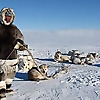
Students at Common Ground School in New Jersey interviewing students and elders in Shishmaref, Alaska about local impacts of climate change
The Curriculum Guide includes an Overview document and 5 modules:
1) Understanding climate change through recorded stories
Using climate stories and other materials on the CSP website to introduce climate storytelling and have students engage with climate change through a personal and community framework.Â
2) Crafting and recording your own climate story
Leading students through the process of crafting and sharing their own climate stories.
3) Planning and conducting a climate story interview
Guiding students in planning, conducting, and recording interviews with others about their personal responses to climate change.
4)Â Developing and sharing climate stories through creative media
Students use media such as documentary film, podcasts, and art projects to enrich and publicize climate stories and interviews.
4) Leveraging climate stories for positive change
Students discuss and develop strategies for using climate stories and interviews to promote positive social change, such as letter-writing to elected officials and student climate summits.Â
Module 1 includes structured lesson plans for classroom use, while modules 2-5 follow a project-based learning approach in which students learn through hands-on activities.Â
1) Understanding climate change through recorded stories
Using climate stories and other materials on the CSP website to introduce climate storytelling and have students engage with climate change through a personal and community framework.Â
2) Crafting and recording your own climate story
Leading students through the process of crafting and sharing their own climate stories.
3) Planning and conducting a climate story interview
Guiding students in planning, conducting, and recording interviews with others about their personal responses to climate change.
4)Â Developing and sharing climate stories through creative media
Students use media such as documentary film, podcasts, and art projects to enrich and publicize climate stories and interviews.
4) Leveraging climate stories for positive change
Students discuss and develop strategies for using climate stories and interviews to promote positive social change, such as letter-writing to elected officials and student climate summits.Â
Module 1 includes structured lesson plans for classroom use, while modules 2-5 follow a project-based learning approach in which students learn through hands-on activities.Â
​The Curriculum Guide is available to teachers free of charge, with attribution to Climate Stories Project. If you'd like to receive a copy of the curriculum materials, please use the Climate Stories Project Contact Form.
 Sportelo
 Experian Health
  Entrepreneur
  Lifestyle Denver
  Deadspin
 Analytics in HR Blog