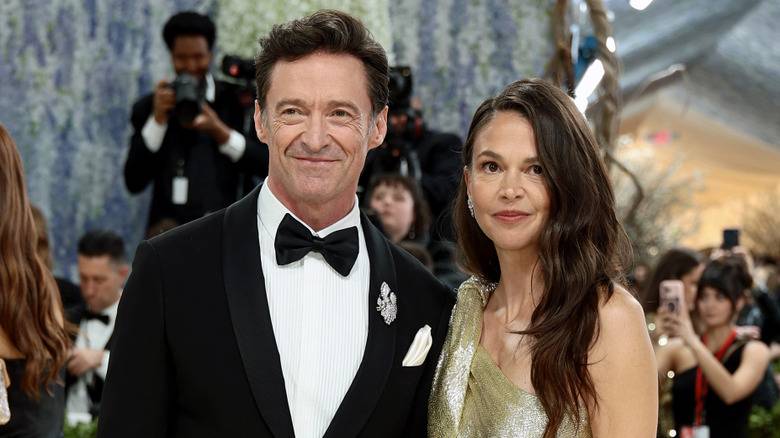

Sonja Shaw and Richard Barrera, both board presidents of high-performing school districts, are running for state superintendent of public instruction with differing views on transgender students, funding and ethnic studies.
Top Takeaways
- Sonja Shaw and Richard Barrera are candidates for California’s superintendent of public instruction.
- The two school board presidents beat veteran state legislators by a large margin.
- Shaw and Barrera disagree about cultural issues, including whether transgender students should be allowed to participate in girls sports.
A mother with two daughters, a father with two sons, both board presidents of high-performing school districts — at first glance, Sonja Shaw and Richard Barrera seem to have a lot in common. But the two candidates for state superintendent of public instruction have very different ideas about what is best for California’s schools.
Shaw, the president of the Chino Valley Unified school board, has been a vocal opponent of California policies that allow transgender students to participate in girls sports and forbid teachers from telling parents if they believe a child identifies as LGBTQ+. She doesn’t think California should spend more money on education, but wants more of it to make it to classrooms.
Barrera, the president of the San Diego Unified board, supports the state policies on transgender and LGBTQ+ students, and wants more funding for the state’s schools.
Democratic consultant Andrew Acosta said he expects the Nov. 3 general election for the nonpartisan seat to be “super partisan,” with Democrats voting for Democrats and Republicans voting for Republicans.
“This isn’t like the old days when it was charter schools versus teachers,” Acosta said.
School board members trounce state lawmakers
With an estimated 1.4 million ballots still to be tabulated as of noon Tuesday, Shaw had received more than 1.5 million votes and Barrera more than 1.3 million votes, advancing past eight other candidates in the primary election, including three veteran Democratic state legislators.
Not since the election of Bill Honig in 1982 have California voters selected a superintendent of public instruction who was not a state legislator.
“I think voters are not wanting top-down solutions,” Barrera said. “I think they’re recognizing that the solutions have to be grounded in the realities of what educators are working with at the school level. So, yeah, I think that came across pretty clearly in the election results.”
If Shaw were to win the seat, she would be the first Republican to hold the seat since Max Rafferty, who served from 1963 to 1971.
Acosta said it’s unlikely that Shaw could win in California, where 45% of registered voters are Democrats and 25% are Republicans.
“It’s hard to see a path in California for a sort of MAGA conservative school board superintendent of public instruction candidate,” Acosta said.
Shaw doesn’t agree.
“They can outspend us, but if I get across and outwork them like I have, they will not win this,” she said. “I just need people to pay attention and trust me. I’m going to put in the work to make people pay attention.”
Candidates clash over culture
If elected, Shaw said she will continue to advocate for policies that bar transgender students from competing in sports and for parental notification policies related to a student’s sexual orientation or gender identity.
“I will never back down from trying to make sure California’s on the right side of history when it comes to that,” Shaw said. “And Richard has made it very clear that he’s OK with our daughters having to change in their cars and feeling uncomfortable in their locker rooms, and having scholarships ripped away from them.”
SONJA SHAW
Age: 43
Occupation: Former small business owner
Connection to education: President of the Chino Valley Unified school board for the past four years. Mother of two daughters; activist against policies allowing transgender athletes in girls sports.
Key quote: “It’s all been political ideologies being shoved down everybody’s throats, and I think everybody’s tired of that. You need somebody who’s going to get in there and fight that and be like, ‘No, enough already.’ ”
Barrera said that, if elected superintendent, he would work to protect the civil rights of LGBTQ+ students in all school districts, including Chino Valley Unified.
“I do believe that what we’ve seen out of Sonya Shaw is an attempt to violate the basic civil rights of certain groups of students. And I will hold those districts accountable, absolutely,” Barrera said.
Despite the attention the issue has received, transgender athletes make up a tiny fraction of California’s student population. Fewer than 10 transgender athletes participated in K-12 school sports last year among nearly 6 million students statewide, according to Gov. Gavin Newsom’s office.
The candidates also differ on ethnic studies. Barrera has been a strong proponent of ethnic studies, leading efforts in San Diego Unified to mandate the subject be taught in high school and to hire more bilingual teachers.
Shaw calls ethnic studies divisive.
“You see a lot of ideologies being pushed through that class and it’s not even funded,” Shaw said. “It’s not a required class for a reason, but again I want accurate, truthful history. I would love civics. That’s definitely something we need to focus on instead of all these other classes that obviously are driving the failure here in California.”
Shaw says the differences between the candidates allow voters to make a clear choice.
“You have two clear options and California can decide which way they want to direct our California education system,” she said.
San Diego vs. Chino Valley
Barrera was first elected to the San Diego Unified school board in 2008. He presides over a school district that has an enrollment of 103,000 students and that will operate on a $2.9 billion budget next school year.
Shaw was elected to the Chino Valley Unified school board in 2022. She leads a district of 26,500 students with a budget of about $446 million next school year.
Both candidates point to their districts’ academic gains as evidence that their approaches work. In recent years, students in both districts have improved their scores on standardized tests at a faster rate than state averages. Both candidates point to their districts’ successes as proof that their methods are successful.
In Chino Valley Unified, the percentage of students scoring proficient or advanced in English Language Arts rose from 58.91% in 2022 to 62.12% in 2025, the most recent year that data is available. The percentage of students with proficient or advanced scores in math increased from 44.58% to 49.79%
In San Diego Unified, the percentage of students scoring proficient or advanced in English language arts improved from 53.13% in 2022 to 56.17% in 2025, while math proficiency increased from 41.10% in 2022 to 45.3% in 2025.
The districts also had higher than average graduation rates in 2025, with 90.3% at San Diego Unified and 95.5% at Chino Valley Unified. The state average was 87.5% in 2025.
Improving the education of California students
Both candidates agree that California’s schools need to make significant improvements. A recent study ranked the state 34th in the nation for education.
RICHARD BARRERA
Age: 59
Occupation: Senior adviser for special projects at the California Department of Education.
Connection to education: 18-year school board member of San Diego Unified, including five years as board president. Father of two sons.
Key quote: “There is a complete disconnect between the conversations that are happening in Sacramento and the conversations that are happening at the local level.”
“California should have the best public school system in the world,” Barrera said. “We have one of the strongest economies in the world. So, it’s not that we lack the resources that our students and educators need. We just need to get those resources to the classroom.”
Unlike Barrera, Shaw doesn’t believe California needs to spend more on education. Instead, she said the state should do a better job directing more resources to the classroom.
“I believe that the state should be providing tools to districts instead of us having to pull out of our general fund to do things that are best for kids,” Shaw said.
If elected, Shaw said she would focus on improving reading, writing and math achievement; preparing students for success after high school; increasing parental involvement in schools; and preventing transgender students from participating in girls sports or using girls’ locker rooms.
Barrera said he would focus on bringing parents, educators, superintendents, school board members and community leaders together to establish shared goals for California schools and hold both schools and state leaders accountable for meeting them.
According to Barrera, schools that make the strongest academic gains tend to have collaborative, supportive environments that focus on implementing strategies that improve student outcomes.
“That’s the secret sauce,” he said.
Consensus building is key to running the CDE
Jack O’Connell, who served as California superintendent of public instruction from 2003 to 2011, knows what it takes to run the California Department of Education.
He said both candidates have a strong background in local education policy, but believes Barrera would be a better fit to lead the department.
“With his knowledge of the department, background with labor, his ability to be more collaborative and consensus building, that’s how you get things done,” O’Connell said. “Instead of being a lightning rod and such a polarizing figure on Fox News.”
CTA members will campaign for Barrera
The race for state superintendent of public instruction drew a surge of late spending, including $5 million in contributions to Barrera from the California Teachers Association’s independent expenditure committee. No candidate has won the office in the past 44 years without the CTA’s backing.
CTA President David Goldberg said the union is prepared to invest whatever resources are required to ensure Barrera wins.
“His vision around public education aligns with ours around so many things — community schools, investing deeply in educators and students and pushing back on this kind of austerity mindset that we’ve all been living with for so long,” Goldberg said.
Goldberg said the union’s greatest resource is its 300,000-plus members, who will be actively talking with voters in their communities about electing Barrera.
“We’re in every community across the state talking about what our candidate Barrera really stands for,” Goldberg said. “We feel very confident that it’s going to resonate with people. We feel very good about it. We have a great candidate, and we’re going to really try to build some capacity to pull him over the finish line.”
Barrera also received an endorsement from the California Charter Schools Association, which has often backed candidates opposing CTA-supported candidates. The charter school association spent $40,000 on TV and online advertising supporting his campaign.
Shaw, by comparison, raised $165,000 for her campaign since the beginning of the year, including $10,000 from the conservative Reform Local Government PAC, according to the California Secretary of State’s office. Representatives of Reform Local Government did not respond to emails from EdSource requesting comment.
“In comparison to the over $6 million spent by special interest groups and the unions, we didn’t even get close to that money, and we have an overwhelming amount of people who voted in favor of the change on this side,” Shaw said.
Acosta said the general election will require Shaw to raise more funds.
“It didn’t take her much money to make sure that her team knew that she was part of their team,” Acosta said. “It’ll take a lot more money if she wants to get everyone else. Now we’re in the OK, now it gets real phase, right?”

This story was originally published by EdSource.