
The Thing with Feathers is a fascinating film about grief with a terrifying twist. Benedict Cumberbatch leads this frightening dive into the psychology of sadness. Will he stay on the path to acceptance, or will he surrender to the darkness within himself? The Plot The film is split into four parts, each with its own subtly unique tone. It begins with the main character, known …
The Thing with Feathers is a fascinating film about grief with a terrifying twist. Benedict Cumberbatch leads this frightening dive into the psychology of sadness. Will he stay on the path to acceptance, or will he surrender to the darkness within himself?
The Plot
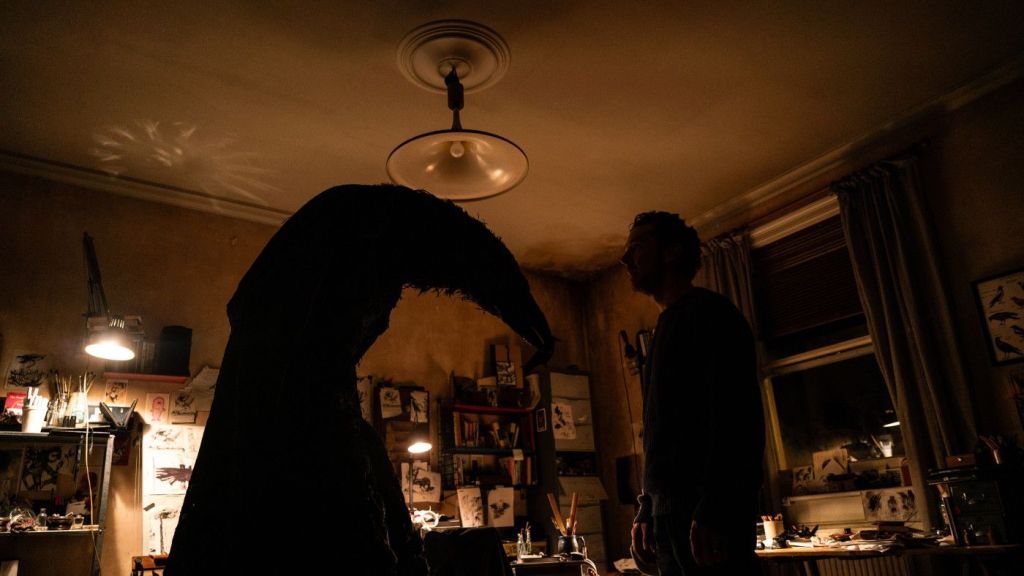
The film is split into four parts, each with its own subtly unique tone. It begins with the main character, known as Dad (Benedict Cumberbatch), bringing his two young boys home after the death of their mother. As Dad struggles with taking over the day-to-day slog of raising his children, something dark and winged creeps into the back of his mind. As he attempts to deal with his grief, this new antagonist, a frightening human-sized avian called Crow, becomes more aggressive and violent. When Dad asks the monster when he will leave, Crow gives a cryptic answer, “I’ll go when you don’t need me anymore.”
The Review
The Thing With Feathers doesn’t fit nicely into one genre. The trailer references the many horror elements in the film, but there are also strong elements of fantasy and drama. There are stretches that will likely feel boring to your average horror lover, and the creepy scares may prove a bit off-putting to audiences looking for a quiet contemplation on the struggle of losing a loved one.
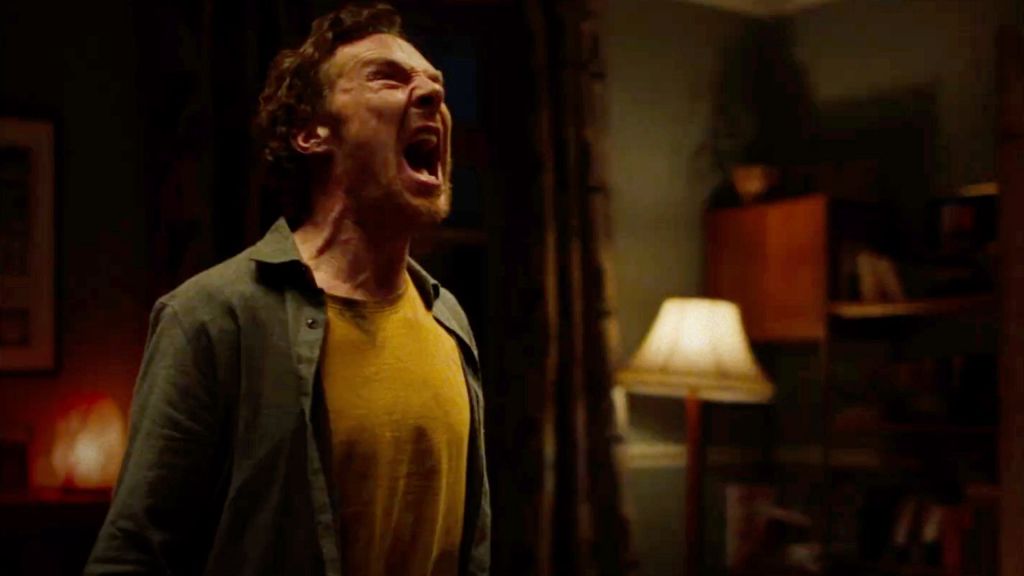
The cast is quite small. Benedict Cumberbatch takes most of the screentime and gives a wonderful performance that gets more unhinged as The Thing with Feathers goes on. The children, played by real-life brothers Richard and Henry Boxall, are entirely believable, especially as the film switches to their perspective. The standouts are the physical and voice performances of Eric Lampaert and David Thewlis as Crow. Its movements feel inhuman and wrong, and Thewlis’ voice is incredibly effective and unpredictable. The practical costume work is also impeccable.

The cinematography is beautiful, if a bit dark at times. The choices of what is lit and the decision to keep the film in a 4:3 aspect ratio add to the unsettling, claustrophobic feeling. The set decoration is thick and vibrant, with every shot feeling chaotic and lived in.
The Problems
This film is adapted from the acclaimed novella Grief is the Thing With Feathers by Max Porter about his real-life battle with the grief of losing his wife. The differences between the book and the film have apparently angered some fans of the source material, but it shouldn’t be a problem if you’re unfamiliar with Max Porter’s book. I did feel as though the pacing was inconsistent, and there are many time jumps that can feel disorienting. The biggest element that may turn people away is the occasional shift in tone that I mentioned before.
Who Should Watch The Thing With Feathers?
This movie may have a slightly more niche audience than most. As I said, the tonal shifts may alienate people who aren’t expecting them. The Thing With Feathers is a must-watch if you want to see a compelling and unflinching look at grief and depression, as long as you don’t mind a few scares along the way.