
 Pop Junctions
 ‘Emmys Watch 2026’ showcases critical responses to the series nominated in the 78th Primetime Emmy Awards.
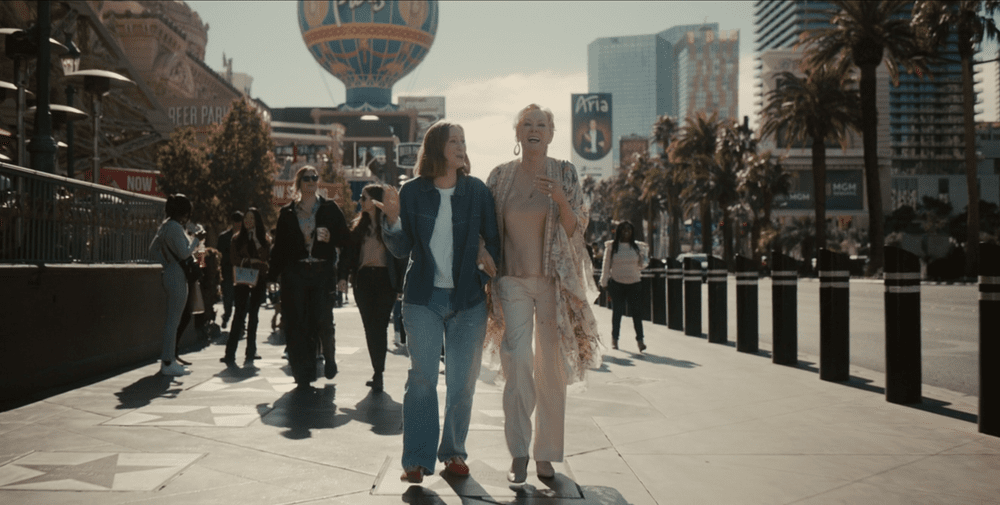
Deborah Vance (Jean Smart) and Ava Daniels (Hannah Einbinder) traverse the Strip in the final shot of season five. (Image Credit: HBO Max)
As we roll into the final awards season for Hacks, it’s clear that the powers that be have given their props to the show. Jean Smart won the SAG-AFTRA Actors Award for the first 3 seasons and was nominated for the fourth. The ensemble was nominated all four of those years as well. Smart, Hannah Einbinder, and the show itself won a slew of Critics’ Choice Television Awards, Golden Globes, and Emmys over the first four seasons. And the list goes on and on: GLAAD Awards, a Peabody, and so on and so on. If Smart wins the Emmy this year, she’ll be the only woman to have won the best actress Emmy for every season of a show’s run – although in her interview with Rosie O’Donnell, Smart downplayed that potential “record,” noting Julia Louis-Dreyfus had won the award six times in a row for Veep. For me, however, what’s so special about this show is its powerful woman-centered narrative that not only embraces the power of female friendship textually, but gifts reverence to the underappreciated history of female stand-up comedians, the struggles of women in the industry, and the overall power and versatility of actresses on stage and screen. Within the narrative and through casting and intertextual nods, Hacks didn’t just give us a story about the generational divide and finding one’s self through female friendship; it allowed viewers—at least this one—a to have a love affair with yesterday and today, and provided a sense of hope for tomorrow.
Sure, The Marvelous Mrs. Maisel (2017-23, Amazon Prime) gave a glimpse into the challenges faced by female comics in the early days when comics like Joan Rivers and Phyllis Diller were fighting for their space in stand-up, but as Debra Aarons and Marc Mierowsky argue, the story told by Maisel tends to miss the nuance of struggle faced by these women on the club stage. Hacks’ creators and Smart have made it patently clear that the series, although influenced by the careers of various Vegas comediennes, was not meant to portray any of them. Paul W. Downs, co-creator and Hacks’ Jimmy LuSaque told The Wrap that the show’s aging comic Deborah Vance:
Started as a stage act with her then partner, kind of like a Nichols and May. So there’s Elaine May in there. She had a famous sitcom and then very public divorce, not unlike Lucille Ball. We also threw on Phyllis Diller and Joan Rivers and Elayne Boosler and Rita Rudner and Paula Poundstone. So many female stand-ups that didn’t get the recognition that some of their white male counterparts did. And obviously Jean also brought a lot of herself to the role. So it really became something very distinct.
But all creator claims aside, I would argue that any Boomer or Gen X fan of Rivers (one of whom is writing this essay) can’t help but feel the presence of Rivers throughout the entire series, in particular the fifth and final season. And for this fan, it gives Rivers a little bit of what the industry ultimately denied her.
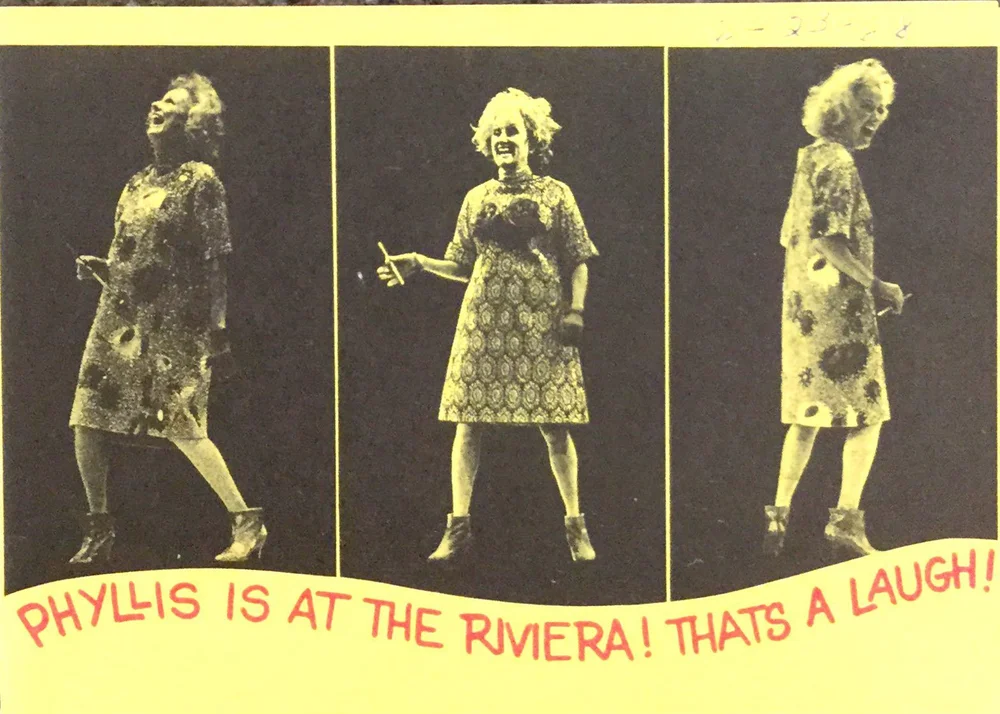
Phyllis Diller and Joan Rivers put major chinks in the glass ceiling with their runs on the Strip from the sixties on (Image Credit: UNLV Las Vegas Entertainers Collection)
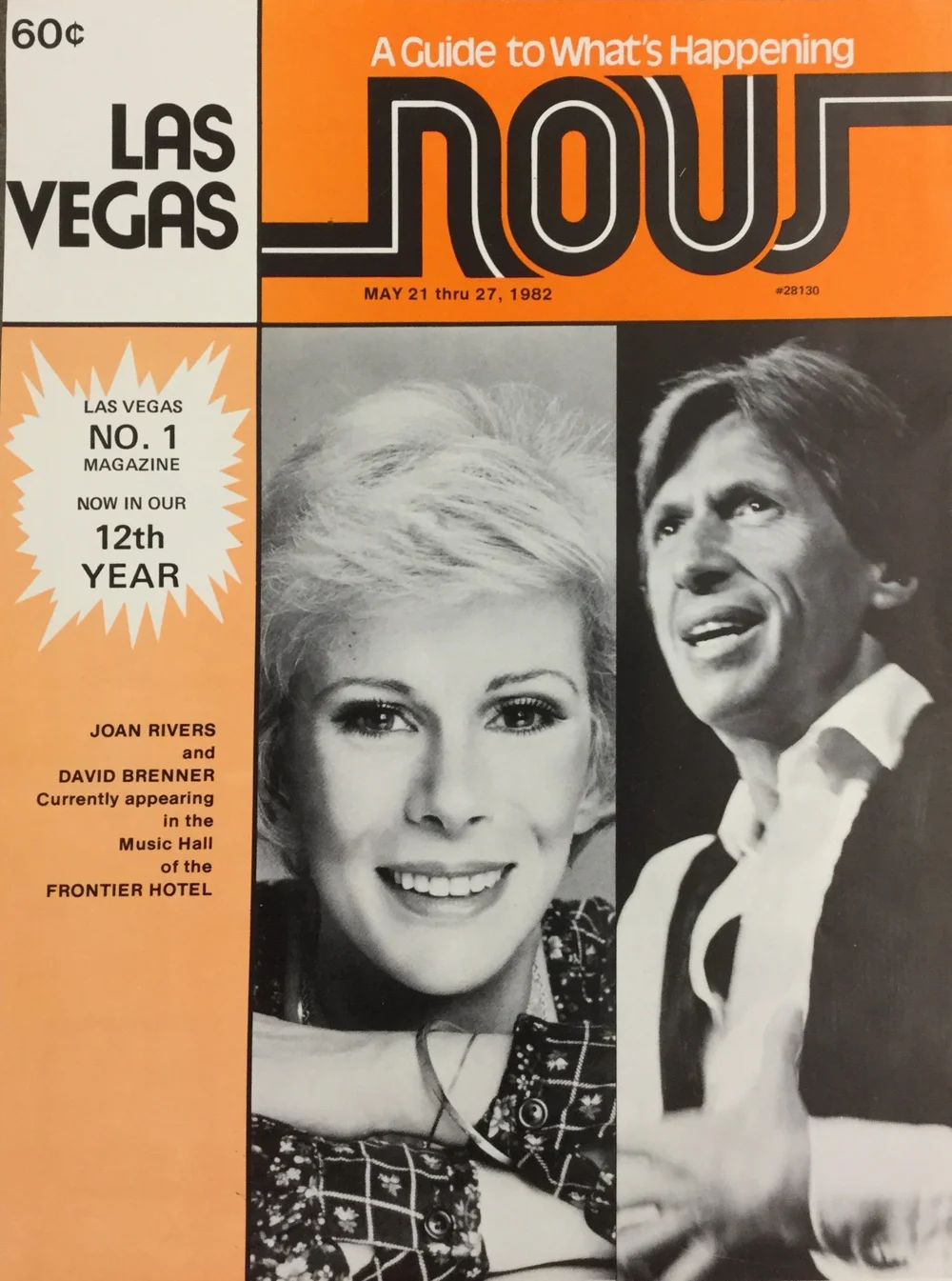
Although comediennes like Diller, Lily Tomlin, Bette Midler, and Boosler invaded the boys’ club by landing television specials on network and/or premium cable, it was Rivers, like Vance, who put major cracks in the glass ceiling. It would be easy to see how Millennials and Gen Zers might know Rivers primarily as a staple on E! red carpets or hawking her wares—like Vance—on QVC, but not from her 43 years of working Vegas, where she declared herself the “slut of the Strip” in 1978. Most likely also don’t realize that she was the first comedienne to host her own late-night network talk show—a mammoth achievement and something still largely out of reach for the ladies. Rivers had been the first permanent guest host of The Tonight Show with Johnny Carson, filling in for the nighttime icon between 1983 and 1986. In my tweendom I would beg my parents to let me stay up and watch her set. My tween self was unimaginably jazzed when I received a crisp envelope from Carson Productions with a signed picture of Rivers in a beaded gown reading: “Kelly, Can We Talk, Joan Rivers.” When she decided to take her career into her own hands and accepted an offer to host her own rival nighttime talk show—The Late Show with Joan Rivers—on the new Fox Network, she faced the ire of the king of late night, and despite her show’s short tenure, was never allowed to appear on The Tonight Show again during the runs of Carson, Jay Leno, or Conan O’Brien. Hacks’ Vance had been sabotaged by her husband’s philandering when she had the chance to land the job as late night’s first female host in the 1970s—far before any woman would land a similar position—but then present-day Vance finds herself hosting the show during season four. It appeared to be a dream come true.
Season five of Hacks picks up right after Vance sacrifices her own success by refusing to fire head writer and four-season foil/confidant/comedy writing Millennial Ava Daniels (Einbinder) from the show for revealing shady free speech restrictions on the part of network bigwigs. Rivers had lost her show shortly after refusing to fire husband Edgar Rosenberg as producer. Like Rivers, Vance suffers the wrath of a high-powered man, not Carson, but media mogul Bob Lipka (Tony Goldwyn) who not only activates her non-compete clause, but scrubs the internet of her past work, spreads word that she’s had a mental breakdown, and buys out Madison Square Garden to prevent her career-defining comeback. It’s here where Hacks gives us the redemption arc somewhat withheld from Rivers. Although Rivers continued to perform standup and frequented Vegas until 2012, her reinvention as a caustic queen of the red carpet obscured her historic comic roots for younger generations. Hacks allows Vance her comeback when she obtains a last-minute permit to perform a huge free show in Central Park, and in the final episode finds not just professional but personal peace. And because we experience Vance as a character of whose life we have intimate knowledge via the magic of television narrative, we experience the nuance of her personal and professional growth in the end, in contrast to glimpses of Rivers’ struggles, reinvention, and ultimate tragic death. Vance was able to control her narrative and (for all we know) rewrite her own obituary. Rivers, dying suddenly because of complications due to an elective surgery, lost that chance, her death initially stirring rumors that she had died during yet another plastic surgery, making her death a tragic punchline. Vance gets the high-profile win Rivers was denied.
But Hacks hasn’t just been the homage to Rivers that we (okay, I) needed. Its multigenerational story of friendship has mirrored the way the show has embraced female comedians writ large. Over five seasons, Daniels learns from Vance about the struggles she and other female comics and writers suffered through in the early years of her career: sexual harassment, the boys’ club, men taking credit for the work of women, and the double-standard of aging; and Vance learns to see the world through a partial lens of a young Millennial, reconsidering attitudes toward the LGBTQIA+ community, considering the ethics of AI, and blowing Ava’s mind when she unpromptedly shouts “this is stolen land!” as she begins her career-defining Central Park show. For five seasons they fought, loved, and made each other into better humans. This complex and narratively satisfying female friendship didn’t stop with the script. Co-Creator Jen Statsky told Backstage, “We talked about how they’ve had to fight against so much and keep their heads down and pound the pavement and fight for their careers—whereas their male counterparts are much more easily given accolades and have a more seamless career path.” The show’s open arms extended its warm embrace to both women of comedy who had battled to the top and those who were still fighting, with cameos by Margaret Cho, Carol Burnett, and Rosie O’Donnell—who was also ousted from the good graces of industry folks, viewers, and fans after coming out in 2002. In addition to such big names, old and young comics alike filled the rosters of major, recurring, and one-off characters. Einbinder (Daniels), Megan Stalter (Jimmy’s unhinged trust fund baby business partner, Kayla), and Robby Hoffman (the charming, neurodivergent super-assistant Randi), all received Emmy nominations for season five. But the list went on with stand-ups like Luenell (as Marcus’s mom’s bestie), Martha Kelly, Iris Bahr, Rekha Shankar, Nina Tarr, Natasha Leggero, and more. Those behind the camera didn’t just talk the talk about women in stand-up. They also walked the walk with their casting.
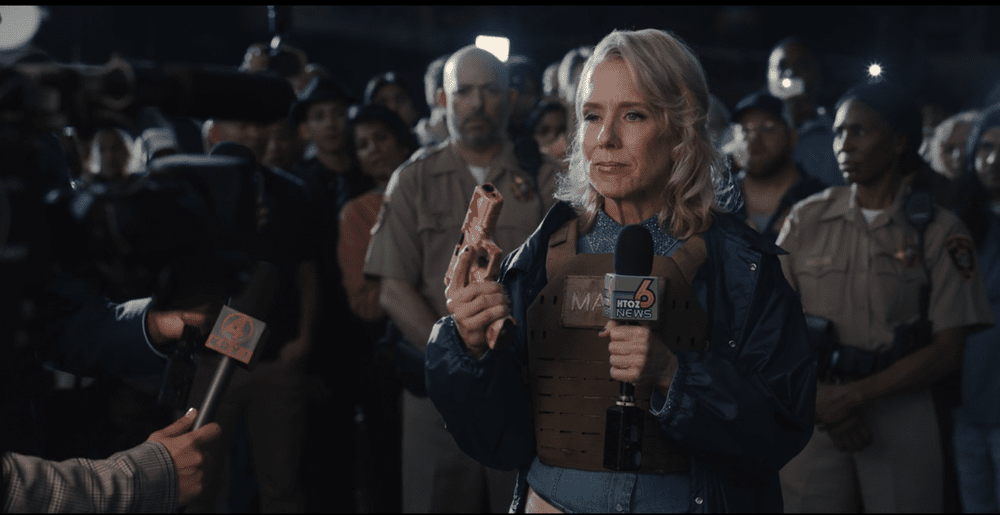
Mayor Joan (Lauren Weedman) promises to shoot Deborah if she falls from the sky in season five’s “The Cube” (Image Credit: HBO Max)
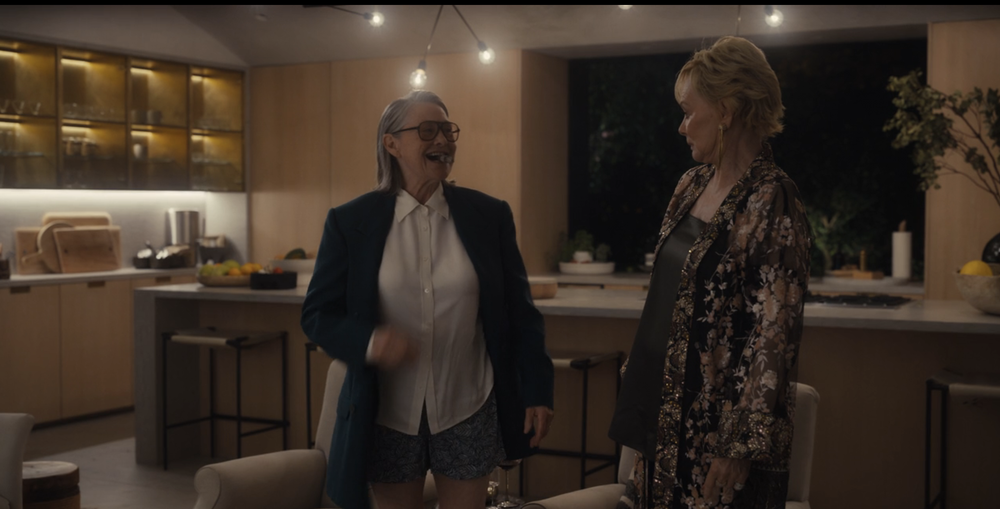
Cigar-smoking, boxers-donning Kelly Kilpatrick (Cherry Jones) attempts to convince Deborah that she doesn’t need a swimming suit to hot tub in season five’s “Montecito.”
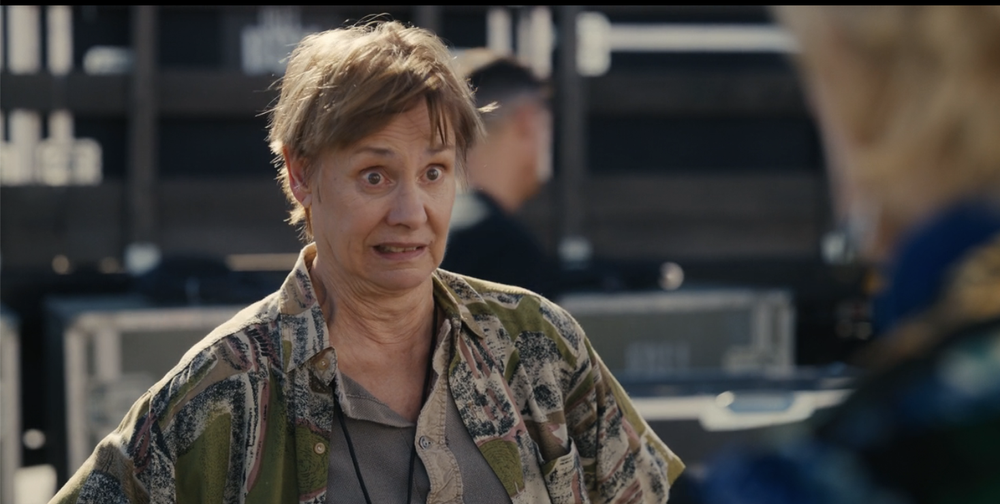
The first lady of the American Theatre, Laurie Metcalf, gives a no holds barred hilariously bizzaro performance as tour manager Weed in season five’s “The Garden.”
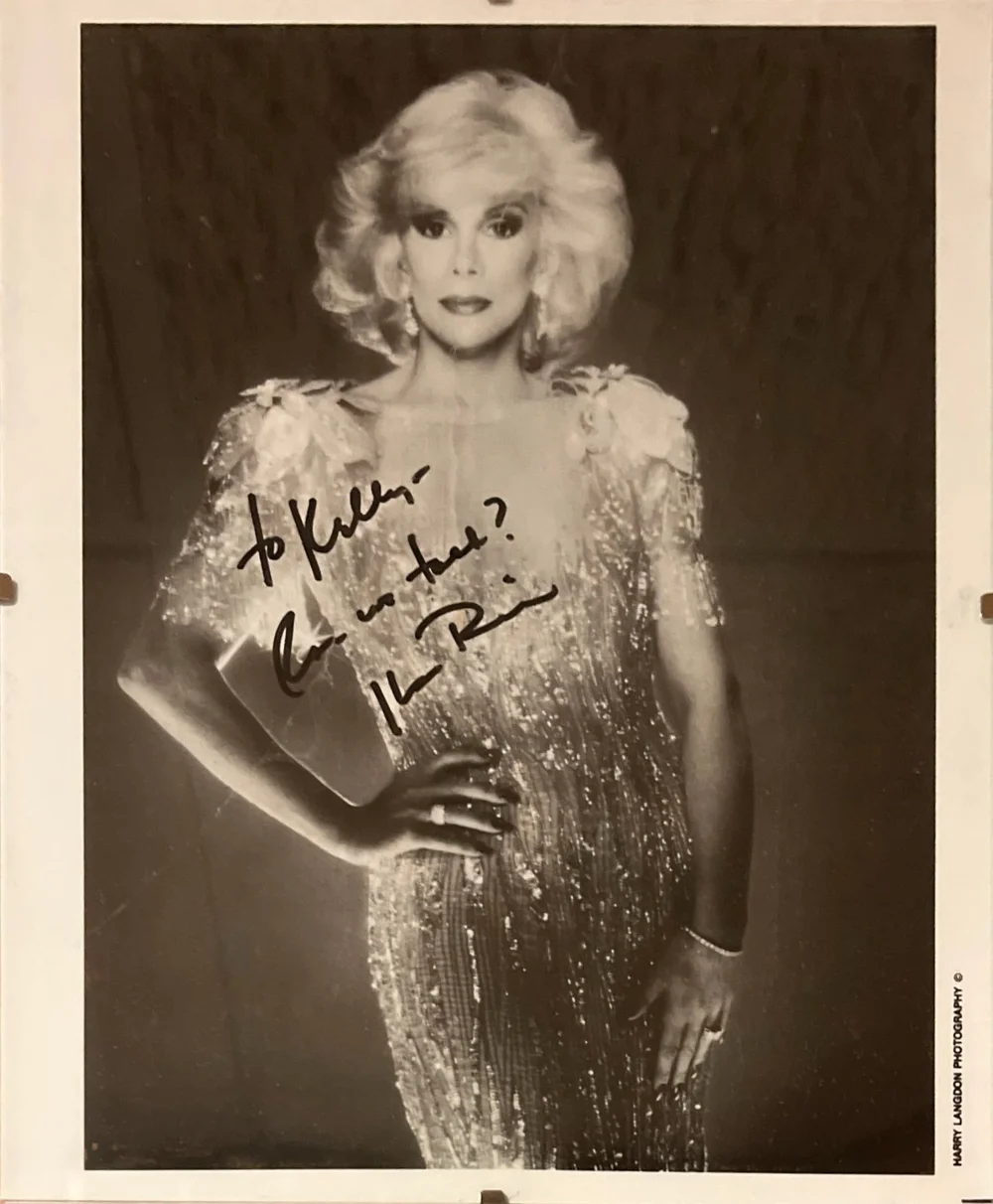
Joan Rivers autograph circa her guest hosting stint on The Tonight Show with Johnny Carson (Image Credit: Personal Collection)
The show’s “women supporting women” ethos rolled over into other types of series casting. Lauren Weedman, the show’s drunk and horny Mayor Joan (also nominated for an Emmy during season five) was diagnosed with a chronic nerve condition, Bell’s Palsy, in 2024 that prevented her from having full movement in her face. She praises the team of Hacks for hiring her, keeping her, and integrating her disability into Mayor Joan’s character. Cherry Jones, when thanking her partner while accepting her Tony award for The Heiress in 1995, became the first out lesbian to win a Tony. A decade later her Tony win for Doubt would out partner Sarah Paulson, who had reflexively kissed her upon hearing her name called. Her portrayal of the aging, out, butch comic Kelly Kilpatrick—and the only thing standing between Vance and the pantsuit her psychic told her she needed to wear at Madison Square Garden—was simply delicious in the context of the public outings of yesteryear. Jones sporting Merv Griffin’s suit jacket and dropping trou to reveal her boxers were absolute perfection, not to mention her both salacious and heartfelt dialogue with playing-gay-for-the-pantsuit Vance and Daniels. Using Jones in this role was a perfect nod to doors queer women have opened across stages and screens. And I would be remiss to overlook Laurie Metcalf, Roseanne breakout star and the 21st century “First Lady of the American Theatre,” as tour manager Weed. Weed returned to Hacks’ fifth season, after her season two introduction, just one month after Metcalf took the Broadway stage in her Tony-nominated role as Linda Loman in Arthur Miller’s Death of a Salesman. On screen for less than three minutes in season five’s episode nine, Metcalf’s monologue of cornrows, burnt eyebrows, and a mysterious Apple TV remote was nothing short of brilliance and displayed yet again the depth and breadth of her talent. She is after all one of the original Steppenwolf Theatre ensemble members (no, it wasn’t just dudes like John Malkovich and Gary Sinise). Hacks let all of its ladies shine.
Sure, Hacks was a riveting story and an amazing platform for the talents of Smart and Einbinder, but when you step back, it’s an even bigger platform for women of comedy: those of the past, those of the present, and those who are on their way. The show’s co-creators and casting directors helped build a love story to women in the industry. The fifth and final season brought together a gorgeously woven plot of friendship, competition, mortality, and conflict, but it also gifted audiences with a comedic marathon and a concrete clapback to any claims that “women aren’t funny” or that women of a certain age should be put out to Hollywood’s pasture. The decision to play out the bittersweet ending to the series with two of America’s most iconic divas of yesteryear—Hollywood casualty Judy Garland and Broadway, Hollywood, Vinyl, TV, and Vegas icon Barbra Streisand singing “Get Happy/Happy Days Are Here Again”—provides one final televisual “let’s hear it for the girls” hug as the camera takes us through the Vegas Strip, which Vance says is “a place to be who you really are, without shame.” Hacks provides that same space for women of the comedy world, often called, as Deborah was “too loud, too tacky, too much.”
Biography
Kelly Kessler is a Professor of Media & Popular Culture at DePaul University. Her research engages with issues of gender and genre in TV and the musical. She is the author of Destabilizing the Hollywood Musical: Music, Masculinity, and Mayhem and Broadway in the Box: Television’s Lasting Love Affair with the Musical, as well as editor of Gender, Sex, and Sexuality in Musical Theatre. Her work can also be found in sources such as Cinema Journal, Television & New Media, and Televising Queer Women. She is thrilled to say that she caught both Joan Rivers and Phyllis Diller live before they passed. She is also glad to have stopped having the recurring dream in which Lily Tomlin does not like her.
 Crikey
 Guide2music
 MSP360 Blog
  Doing Dewey
  Surrogacy Centre Georgia
 Birding Never Sleeps