 The College Investor
International applicants to U.S. colleges fell 10% in the 2025-26 admissions season, according to Common App’s End-of-Season Report released August 20, 2026. The count dropped to 148,780 from 164,443 a year earlier, which is the second consecutive annual decline from the 2023-24 peak of 167,175.
It’s also a reversal for a group of students that had grown almost every year since colleges began competing for full-pay international enrollment a decade ago.
The drop is concentrated in specific countries. Applicants from India fell 15%, from Ghana 34%, from Ethiopia 29%, from Bangladesh 29%, from Nigeria 21%, and from Canada 13%. Africa as a region dropped 17% and Asia 11%. Of the ten countries that send the most applicants through Common App, only Kenya grew, at 30%.
Would you like to save this?
Why It Matters
These are applications (not enrollments) which makes the number an early warning rather than a lagging one. A student who never applies never appears in a visa statistic, never gets denied, never shows up in a fall census. By the time the enrollment data lands, the decision was made a year earlier.
What this report captures is the moment prospective students decided the U.S. wasn’t worth the paperwork, which is the same signal that preceded the wave of university budget cuts and closures now underway.
There is big money involved here too. International students make up roughly 6% of U.S. higher education enrollment but contributed nearly $43 billion to the economy and supported over 355,000 jobs in 2024-25.
Because most pay full sticker price without financial aid, they subsidize domestic financial aid budgets at the schools where they enroll, which is one of the less-discussed mechanics behind how colleges set and discount tuition. Lose that revenue and schools need to find money somewhere else: fewer aid dollars, higher published prices, or program cuts.
The Policy Backdrop
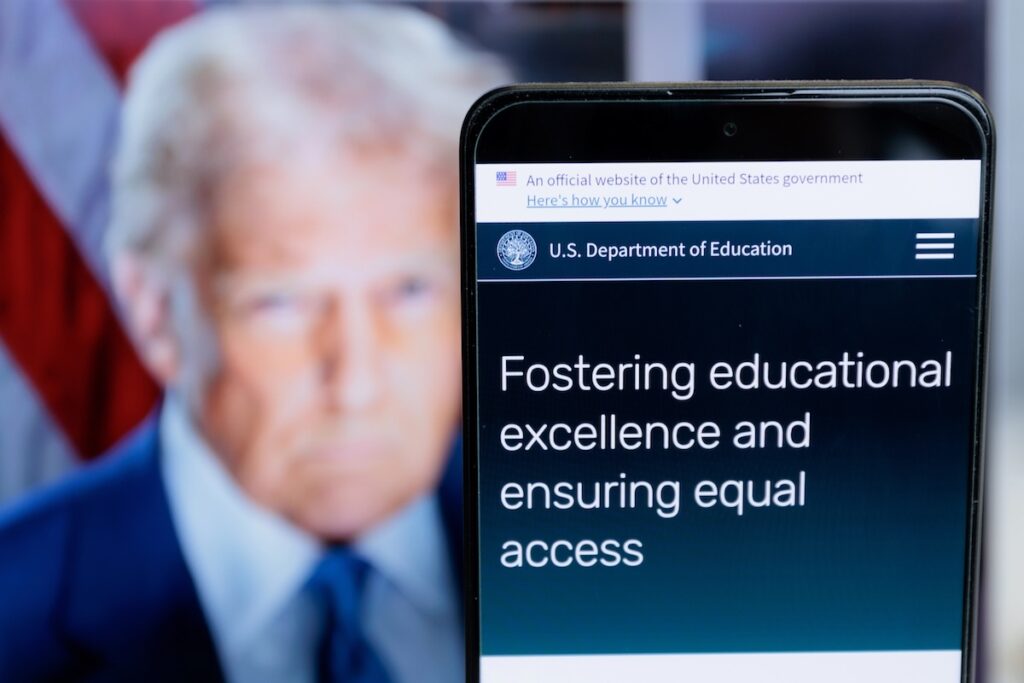
The application decline is the result of specific policy changes by the Trump Administration:
- Summer 2025: New student visa issuance dropped 35.6% after a May 27 to June 18 pause on visa interviews and the addition of social media vetting for all applicants. The State Department also stopped publishing monthly visa data in September 2025.
- 2026 admissions season: The applications counted in this report were submitted during this window, by students who had watched the previous summer unfold.
- August 2026: Thirty senators led by Alex Padilla pressed the State Department to clear the F, M and J visa backlog before fall classes, giving the department 30 days to respond.
- September 15, 2026: A DHS rule takes effect ending “duration of status” and capping F-1, J-1 and I visa admission at four years, requiring $420-plus extension filings and cutting the post-completion grace period from 60 days to 30.
- Now: Colleges and unions have sued to block the four-year cap, with the Presidents’ Alliance representing nearly 600 institutions joining NAFSA and four unions in federal court in Massachusetts.
A NAFSA survey found 49% of current international students said they would not have enrolled under fixed admission periods. DHS’s own filing put the share of students staying beyond typical program completion at 0.1%. The compliance cost lands on students who, unlike their domestic classmates, have no access to federal financial aid to absorb it.
How This Connects
The undergraduate application drop is the leading edge of something already visible at the graduate level, where universities have been cutting jobs and eliminating degree programs as international graduate students stop coming to the US. Graduate programs that relied heavily on international enrollment may stop being worthwhile for the university to offer, and the domestic students who would have taken those courses lose the offering too.
Long term, there’s real brain-drain concerns as well. The countries posting the sharpest declines (India, Nigeria, Ghana, Bangladesh, Ethiopia) have historically been major sources of students for U.S. STEM graduate programs, many of whom stayed and entered the American workforce.
Kenya’s 30% growth on Common App suggests those flows aren’t disappearing so much as redirecting, and other English-speaking destinations have been actively recruiting the same students. Meanwhile the same institutions absorbing the international revenue loss are facing a domestic demographic decline at the same time, with no way to stop that.
What This Means For Domestic Students
What most people don’t realize is that domestic students will be harmed by this drop off as well.
First, fewer international students does mean more spots available for domestic students – but only if the program survives. But families should realize that international enrollment is so small in aggregate that that it won’t move acceptance rates in any meaningful way.
But the bigger issue here is the impact on college financials. International students are nearly always full pay, and the result is that by not having their enrollment, colleges are going to face massive shortfalls. We are already seeing that at several schools.
UT Arlington projected a $13 to $15.6 million tuition revenue shortfall for fiscal 2026, and DePaul laid off 114 staff. When international students don’t show up, schools lose money and programs have to close, which could negatively impact domestic students who were also relying on those same programs.
Families comparing offers should read a school’s international enrollment exposure as a risk factor, and should know what to do when an aid package falls short at a school under budget pressure.
Editor: Colin Graves
The post International College Applications Fall 10% As New Visa Rules Take Effect appeared first on The College Investor.
 I am Aileen Blog
 ReadWrite
  Healing Harvest Homestead
 UPROXX
  Rob Hill Insurance Group Blog
  The Register