
“I believe that every single one of us has aspects inside of us that are monstrous, truly monstrous, that terrify The post The Bride!: Maggie Gyllenhaal and Jessie Buckley on Saying ‘I Do’ to ‘Something Radical’ appeared first on MovieMaker Magazine.
“I believe that every single one of us has aspects inside of us that are monstrous, truly monstrous, that terrify us,” says Maggie Gyllenhaal, writer and director of The Bride!
“I bet there are people reading this that would say, ‘Well, I don’t.’ But I believe maybe you do.”
She pauses, and laughs: “I do.”
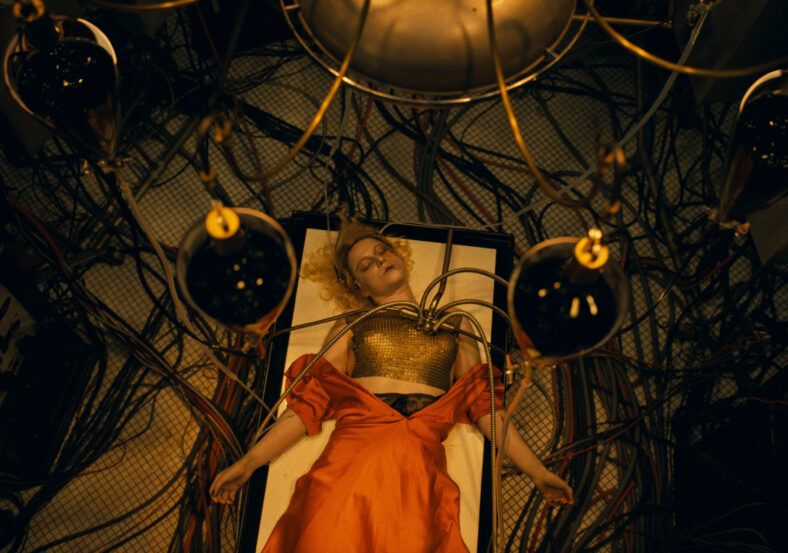
The Bride! stars a face-tattooed Jessie Buckley and barely recognizable Christian Bale as two monsters racing like Bonnie and Clyde, by way of Sid and Nancy, through a world that fears and hates them.
It’s the second major film in the last few months to take inspiration from Mary Shelley’s 1818 Frankenstein, the first being Guillermo del Toro’s acclaimed Netflix adaptation.
Of the two films, Gyllenhaal’s is the far more dramatic departure from Shelley’s book.
Bale plays Frank — aka Frankenstein’s monster — and Buckley is The Bride.
“He’s so lonely,” Gyllenhaal notes. “From the Mary Shelley novel, all he wants is a friend, a lover, a companion. He’s like, ‘I know I’m a monster. I understand. But I can’t be alone. I can’t tolerate it.’ I mean, I really empathize with him: He’s so lonely, he’s not going to survive.
“So he’s going to bring someone back from the dead. But the major question is, what about her? What about the woman that he brings back? What if she has needs, desires, a mind, a heart?”
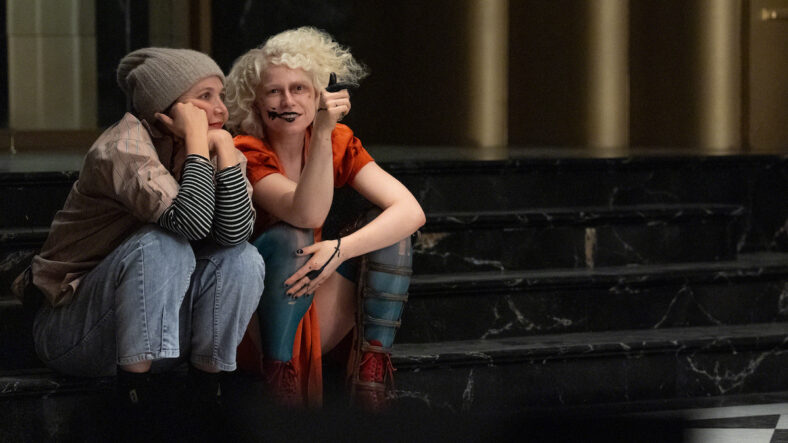
Gyllenhaal was inspired to write The Bride! when a friend mentioned her husband’s Bride of Frankenstein tattoo. She could picture the character from James Whale’s 1935 Frankenstein sequel The Bride of Frankenstein, in which she is played by Elsa Lanchester with a beehive hairdo and silver streaks up the sides. Gyllenhaal’s memories of Lanchester were mixed with those of Madeline Kahn, who played a comic version of the character in Mel Brooks’ 1974 Young Frankenstein.
“She intrigued me immediately. I had never seen Bride of Frankenstein. I just knew the kind of mythology,” Gyllenhaal says.
She was in the middle of press interviews at the time for her 2021 writing and directorial debut, The Lost Daughter. When she found time to watch The Bride of Frankenstein, she was surprised to see that despite its title, the Bride is not its star.
“I was like, ‘Oh, wow — she doesn’t speak,” Gyllenhaal notes. “She’s in the movie for three minutes, and she doesn’t speak one word.”
So she started thinking about what the Bride might say.
The result is a punk 1930s-set story that explodes with ideas and energy, and even manages a pitch-perfect Young Frankenstein homage. Gyllenhaal cast some of her favorite performers in film and life, including Annette Bening, Penelope Cruz, Gyllenhaal’s brother, Jake, and her husband, Peter Sarsgaard.
The film starts with a surprise and barely slows down, even for exposition, because as Gyllenhaal explains: “I think exposition is cheating.”
“I wanted to make something different,” she says. “I think the movie is talking about a kind of unconscious, rumbling need for something radical — for radical change.”
It started with a new look for the Bride. Buckley says the burst of ink across her character’s cheek is “something super alive — which of course the Bride is.”
“The monstrousness of her is the too-much aliveness that is born within her,” Buckley says. “She’s pouring it out — like the ink is pouring out of her. And how beautiful that it was ink, and Mary Shelley and writing and the pen and the inkwell — this is about language, and in some way, the very material that we write from is coming out of her body.”
Maggie Gyllenhaal and Jessie Buckley on Reuniting for The Bride!

Gyllenhaal and Buckley met for the first time over Zoom, when Gyllenhaal was casting The Lost Daughter and considering Buckley to play the younger version of Leda, a woman who feels trapped as a wife and mother. Buckley badly wanted the part but tried not to show it.
“It’s all so scary when you really feel something for a script in those first encounters, because you’re hoping they will call you and say, ‘We want you,’” says Buckley. “But we never want to hope too hard, because it’ll break your heart.”
At one point, Buckley says, she considered texting Gyllenhaal — something like, “Maggie, look: I just know this story is in my bones right now” — but she didn’t have to.
“On that same night, she texts me, saying, ‘Will you be my Leda?’” Buckley recalls. “And I was like, ‘Oh, yes!’”
The Lost Daughter stood out during a pandemic lull in which closed theaters meant countless movies came and went with little recognition. Gyllenhaal got an Oscar nomination for her adaptation of Elena Ferrante’s novel, Olivia Colman was nominated for best actress for playing the older version of Leda, and Buckley was nominated for best supporting actress.
It was a striking success for a debut filmmaker. Gyllenhaal had started as a young actor in the films of her father, filmmaker Stephen Gyllenhaal, and then in cult classics like Cecil B. Demented and Donnie Darko, in which she played the sister of the lead character, played by her real-life brother.
Soon she broke out in bold lead roles in films like Secretary and Sherry Baby, and played fearless prosecutor Rachel Dawes, opposite Bale’s Bruce Wayne/Batman, in the 2008 blockbuster The Dark Knight. For her role the next year in Crazy Heart, she earned a best supporting actress nomination.
She excels at playing complicated, unrelenting characters, like the increasingly desperate lead in 2018’s The Kindergarten Teacher, and the daring sex worker-turned-filmmaker of The Deuce, which ran for three seasons on HBO, and which she also executive produced.
With The Lost Daughter, she enjoyed exploring the transgressive story of a mother who doesn’t love being one.
“I was hoping that doing that, talking about something taboo, would hit a little vein. And it did. And then I thought, ‘Well, what happens if you do that in a more pop way, in a more pop-culture way?”
She wrote The Bride! with Buckley in mind, but didn’t tell her, at first: “Because I’ve been an actress, I was like, ‘I’m not mentioning this to her until I’m absolutely sure,’” Gyllenhaal says. “I have been told, ‘I’m writing something for you,’ and then it didn’t come through. So I told myself I was going to say nothing. But she was in my mind all the time.”
One night she couldn’t resist at least exploring the idea. She, Buckley and Alba Rohrwacher, who also appears in The Lost Daughter, all found themselves in Paris and decided to meet up.
“We had drunk a bottle of wine, and I just couldn’t help myself, and I was like, ‘Let’s read a scene,’ Gyllenhaal laughs.
“She was like, ‘I’m writing something,’” Buckley recalls. “She didn’t tell me what it was or that it was for me or anything. We were in this hotel room and she’s like, ‘Will you just read it?’ I was like, ‘Oh, my God, what is this incredible language?’ You know, it felt so unknowable, but so charged, and so from Maggie’s, like, extraterrestrial imagination. It was — yeah — exciting.”
The scene, which evolved into the opening of The Bride!, confirmed Gyllenhaal’s belief that Buckley was ideal for the lead.
“I’ve certainly worked with directors who were looking for kind of live dolls,” says Gyllenhaal. “That’s not a great collaboration for me. And I have worked with directors who wanted real, artistic, mind-meld collaboration, and that’s what I want from all of my actors. And with Jessie, maybe in particular, I think of her as an artistic sister. It’s a real, real deep collaboration, where I think both of our hearts and minds are being expressed.”
The Fall

Buckley grew up in Killarney, a town of less than 15,000 in southwestern Ireland surrounded by mountains and lakes. She didn’t have a TV until the age of 15, or much interest in watching: “We just had loads of other stuff going on. We were swimming and in bands and going to piano practice and dance classes and going for walks and making up our own plays,” she recalls.
She grew up Catholic, and went to a convent school for five years. There were aspects of it she appreciated — “there’s a lot of beauty in those places and simpleness,” she notes.
But she also found some parts of the religious teachings stifling, like the story of Adam and Eve.
Eve, like the Bride, is born to keep a man company. The Book of Genesis recounts how God creates her as a helper to Adam. Within a few sentences of her introduction, before we even learn her name, she is tempted by the serpent to eat the forbidden fruit in the Garden of Eden, which brings about The Fall.
“Eve was the first sinner, because she saw something that she was curious about, and took a bite out of it, and was kind of the first to sin,” notes Buckley. “That’s kind of stigmatized so much of the fullness of woman, and the curiosity of being a woman, and how we are to remain pure and a bit innocent and ignorant — to just being human, to just wanting to know, to be alive, and maybe something more than in a garden and with one man.”
She adds: “There’s lots of stuff — like the community that Catholicism or religion can bring — that is so beautiful and so healing. There are stories within there that can be very healing. But I think there are also stories that we’ve recreated for ourselves that have become repressive, especially for women,” she continues. “In my experience, when I was growing up, it detached me from my body. It made me think I needed to be smaller and be scared, more scared of my body, more scared of my sexuality and hunger and curiosity. And actually, that’s not my story.
“You know, I want to eat the apple. I love apples,” she says. “I want to see what’s down under. I’m not scared of the dark monster side. Who knows what we could find in ourselves in that world, too?”
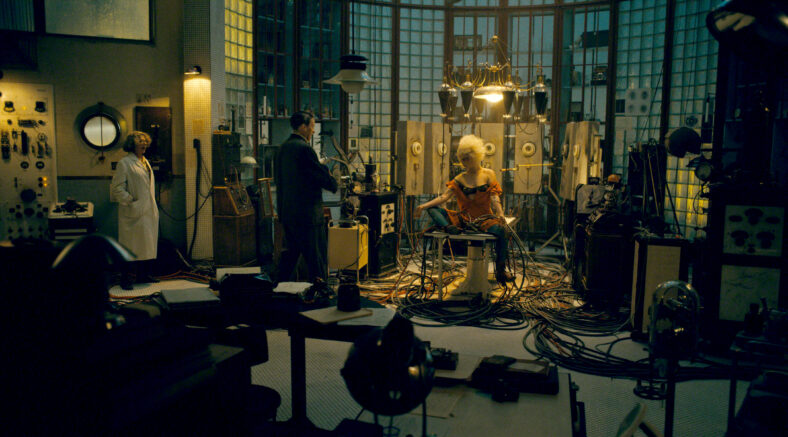
Courtesy of Warner Bros. Pictures.
Buckley first broke out as an artist by competing on the BBC talent show I’d Do Anything. Later she earned acclaim on the stage, and in BBC dramatic productions including War & Peace and Taboo, and then as the lead in the 2017 film Beast, in which she plays a troubled young woman with a violent past who meets a man who may be a serial killer. A run of highly praised roles followed, including in Chernobyl, Fargo, The Lost Daughter, and Women Talking.
One of her Women Talking costars, Frances McDormand, once gave her a book, Elizabeth Lesser’s Cassandra Speaks, which re-examines the oldest myths about women. It is named for Cassandra, who in Greek mythology was a Trojan princess cursed with the power to see the future, but never be believed.
Lesser’s book includes a re-evaluation of The Fall, in which she describes Eve not as the first sinner, but as “humankind’s first grown-up.”
“The ‘temptation’ she succumbs to is the most fundamental human yearning — to know oneself, to find one’s own path, and to courageously engage with the big world beyond the garden of childhood.”
Buckley says making art helped her emerge from the depression of her early years.
“I think my experience as a young woman was I had a kind of volcano feeling inside me, and at that time, I didn’t feel like there was enough space for me to express what that really was in the world. There were kind of very singular ideas of what it would be to be accepted by the world, in a way, and I just couldn’t align myself to that. I felt like I was about to explode,” she says. “It felt too narrow for me, and I think that’s where I kind of got lost and got depressed.
“Stories, storytelling, singing, poetry, films — they’ve been the greatest vessel to recognize something that’s bigger,” she says. “I need stories to make me feel full.”
Revenge

Gyllenhaal notes that in writing her film,“I didn’t explicitly think about Adam and Eve — but I did think about the experience of being a woman in the world.”
She had initially set the film in the 1880s, a few decades after the original Frankenstein takes place.
“Because of the Civil War and so many men dying — fathers, brothers, husbands — and also so many women losing children in childbirth, there was this kind of cultural thing, probably as normal as therapy is for us, of what they called spiritualism, where there would be mediums who came to your house,” she explains. “They were almost always women, and they would speak to the dead for you.”
She liked the idea of setting the film at the peak of spiritualism. But then it occurred to her that someone as lonely as Frank might find peace in the darkness of a movie theater.
“I started realizing Frank needed to love a movie star,” she says. “And then I was like, ’Oh s---, no movies in the 1880s.’ So I thought, ‘Well, what happens if I shift it to the ’30s, a kind of golden era for fantasy movies, right?’”
So she imagined Frank idolizing a Fred Astaire type, dancing through Depression-era escapism. He is played in The Bride! by Jake Gyllenhaal.
“It fit right in,” she says.
While making the awards-season rounds for The Lost Daughter, she often crossed paths with writer-director Adam McKay, who was promoting his end-of-the-world comedy Don’t Look Up. She asked him to read a draft of The Bride!, and he offered one note: Had she ever thought about setting it in 1980s downtown New York?
“And I thought about it for a few days, and then I texted him,” Gyllenhaal says. “And I was like, ‘It is set in 1980s downtown New York.”
To be clear: The movie takes place in the 1930s. But Gyllenhaal’s ’30s are infused with the early ’80s.

“So, yes, it’s 1936, but he hit on something that was already happening. It is punk, 1980s New York, right? It’s 1981, but it’s 1936 — by way of right now.
“Because there’s also this aspect of — no matter what side of these lines you’re on — a massive dissatisfaction with the establishment, right? There’s corruption that we just can’t take any longer. And what happens when people decide that they won’t accept it any longer?”
She and McKay share a fascination with the New York City of the 1970s and early ’80s. She attributes her interest partly to being born in New York in the late ‘70s. But she is also drawn to the sense of possibility in that era.
“It was a time that was a little bit lawless, where it was not corporate,” she says. “You could live in a way that was not constantly surveilled. You could squat in an apartment if nobody was there.”
She adds: “I needed that in this movie. I needed some straight punk.”
Just as 1967’s Bonnie and Clyde hovers over The Bride!, so does 1986’s Sid and Nancy, the tragic tale of Sid Vicious and Nancy Spungen that starred Gary Oldman, who was Bale and Gyllenhaal’s Dark Knight co-star.
Gyllenhaal recalls that early in their collaboration on The Bride!, Bale sent her a reference point: Sid singing Frank Sinatra’s signature song, “My Way.”
“Sometimes I think we need a revolution,” she says. “I don’t believe in revenge. And I think that that is where some of the modern feminist stuff went wrong. But I do think that some kind of punk, really disobedient aspect is called for.”
She adds: “I’m talking about an active, brave form of disobedience. … I think where we go wrong is when it becomes about revenge, when it becomes about, ‘Anyone who ever did anything wrong, let’s put them on an island.’ And I don’t believe in that. But I do believe we need something radical to happen.”
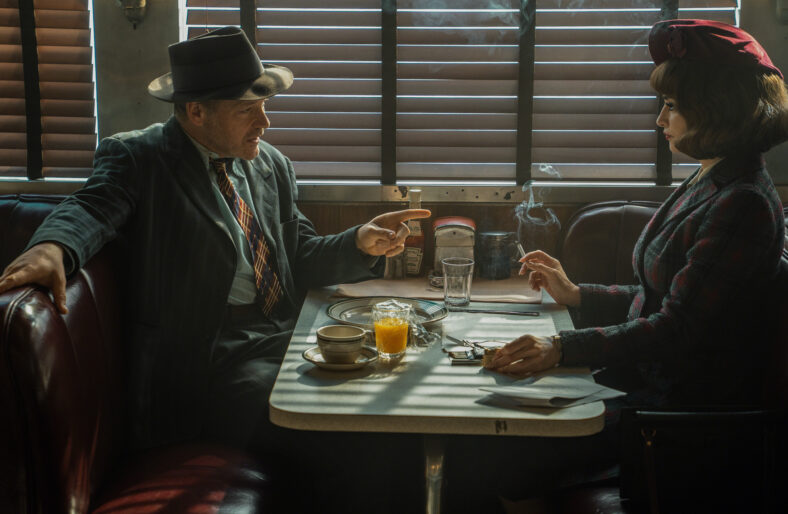
She notes that Bonnie and Clyde had audiences “kind of rooting for the bank robbers,” and she picked up on a similar energy in the widespread fascination with the October Louvre heist, in which thieves stole more than $100 million in jewels in a daylight robbery.
“It’s kind of what captured everyone about the Louvre: You can do that?” she says. “The fact that it was even possible in this world that is so tightly managed, where everyone’s watching you all the time.”
She adds: “I’m not saying steal things from the Louvre, OK?“ and notes that of course there’s plenty of lawlessness today — “but it’s a kind of corporate lawlessness.”
Bonnie and Clyde have become symbols of rebellion because they robbed banks at a time when many Americans felt banks were robbing them. Gyllenhaal wanted the monsters of her film to be similarly complex.
“They both do violent, awful things,” she says. “But they are also, I think, the most human, compassionate characters in the movie.
She says we all can be monstrous and human at the same time.
“You can run from those monstrous things, or you can turn around and shake hands with that monster inside you and get to know that monster,” she says. “And really, to me, that’s the only choice. Otherwise you spend your whole life running.”
Double Feature
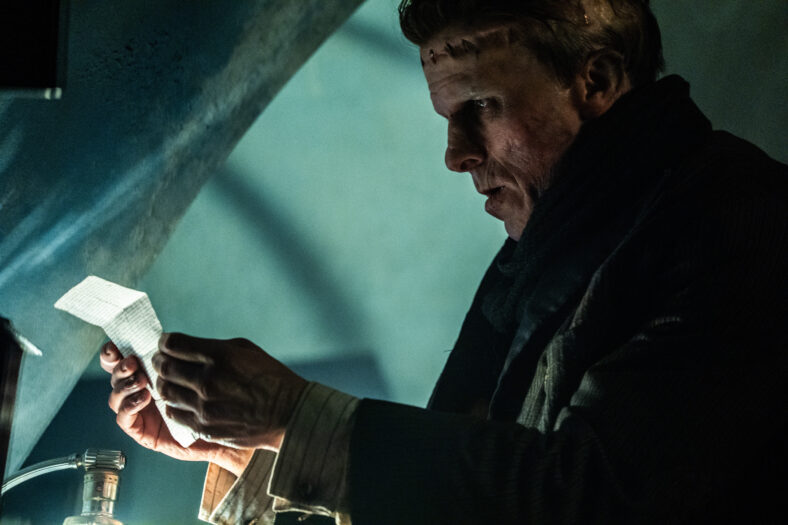
On the day Buckley spoke with Moviemaker for The Bride!, she was also in the midst of the publicity campaign for Hamnet, in which she plays Agnes, who mourns the death of her son alongside her husband, William Shakespeare. The film has earned high awards expectations for both her and the film’s director, Chloé Zhao.
She mentions that she and Zhao have been talking lately about volcanos. Zhao recently visited Pompeii, the ancient Roman city buried in ash by the eruption of Mount Vesuvius, two millennia ago. And Buckley recently visited another Italian volcano, Mount Edna.
“They’re deeply feminine, volcanoes,” says Buckley. “And the landscape of a volcano is so alive. It’s changing all the time, because every flow creates a new pattern in the landscape.”
Gyllenhaal, meanwhile, had just sat alone in a massive theater in Manhattan’s Lincoln Square to do quality control on the IMAX 1.43:1 aspect ratio version of The Bride! She found the experience “something very intellectual and something very emotional at the same time.”
She hadn’t yet seen del Toro’s Frankenstein, but was looking forward to it. She remembers him being a strong supporter of The Lost Daughter.
“I feel so thrilled that Guillermo and I were living in the same kind of mythological space,” she says. “I’m so excited by the fact that he and I have both been thinking about similar things, and I can’t wait to hear what he thinks of this movie. … I’m going to call him and be like, ‘Let’s do a double feature.’”
She is fascinated by how myths travel, and returns to the idea of Adam and Eve and whether the story influenced her.
“Not consciously,” she says. “But all of it’s connected. Mary Shelley comes back to talk through me. Me talking through Jesse. It’s like all these women kind of coming together, I think, to say something new. To create a new mythology.”
The Bride! arrives in theaters March 6, from Warner Bros.