

Commercial real estate (CRE) investing can serve as a powerful engine for long-term wealth creation, portfolio diversification, and passive income. Although it often demands more capital and specialized knowledge than residential real estate, CRE also offers unique advantages, including potentially higher returns and significant tax benefits. Whether you’re just exploring investing in commercial real estate ... Read More The post Commercial Real Estate Investing: A Comprehensive Guide appeared first on PropertyMetrics.
Commercial real estate (CRE) investing can serve as a powerful engine for long-term wealth creation, portfolio diversification, and passive income. Although it often demands more capital and specialized knowledge than residential real estate, CRE also offers unique advantages, including potentially higher returns and significant tax benefits.
Whether you’re just exploring investing in commercial real estate or already have a property or two, understanding core principles can dramatically increase your success. By understanding the fundamentals of different property types, analyzing deals carefully, applying suitable financing strategies, and executing disciplined management, investors can tap into the enduring value of commercial property.
This comprehensive guide provides the essential knowledge and actionable insights you need to know to navigate the commercial real estate landscape, from understanding CRE’s basic categories and benefits, to performing due diligence, devising exit strategies, and beyond.
executive summary
Commercial real estate (CRE) investing is an effective strategy for building long-term wealth, generating stable passive income, and diversifying investment portfolios. While CRE generally demands higher capital, specialized knowledge, and active management compared to residential real estate, it also provides distinct advantages, including higher potential returns and substantial tax benefits.
This comprehensive guide equips investors at any stage—from beginners to those with existing portfolios—with essential insights to succeed in commercial real estate. It covers fundamental property types and classifications, investment strategies, financial analysis, market evaluation, due diligence processes, financing options, property management practices, and optimal tax planning strategies.
Key Highlights:
- CRE Fundamentals: Understand core property types (office, retail, industrial, multifamily, and special-purpose) and classifications (Class A, B, or C), which significantly impact investment risks and returns.
- Investment Approaches: Evaluate direct ownership, offering higher control but greater responsibilities, versus indirect investments like REITs, funds, and syndications, which provide diversification and reduced day-to-day involvement.
- Financial Analysis and Proformas: Master critical financial metrics including Net Operating Income (NOI), capitalization rates (cap rates), Internal Rate of Return (IRR), Debt Service Coverage Ratios (DSCR), and sensitivity analysis to rigorously assess investment opportunities and risks.
- Market and Due Diligence: Understand macroeconomic indicators (GDP growth, interest rates, demographics) and micro-level factors (local employment trends, zoning, infrastructure) to identify promising markets. Conduct thorough due diligence, examining financial records, physical conditions, tenant profiles, and regulatory compliance.
- Financing and Leverage: Navigate traditional commercial loans and alternative financing options (bridge loans, syndications, mezzanine debt). Learn to use leverage strategically, balancing increased returns with associated risks.
- Management and Tax Strategies: Implement effective property management practices to optimize performance, tenant relations, and asset value. Employ advanced tax strategies—depreciation, cost segregation, 1031 exchanges, Opportunity Zones—to enhance after-tax returns significantly.
- Exit Strategies: Strategically plan exits, whether through property sales, refinancing, 1031 exchanges, or recapitalizations, to maximize returns and minimize tax implications.
By combining disciplined financial analysis, proactive management, and strategic planning, investors can navigate CRE’s complexities and leverage its unique strengths for sustained, long-term wealth creation.
Table of Contents
- What is Commercial Real Estate?
- Benefits of Investing in Commercial Real Estate
- Breaking Down CRE by Class and Condition
- Ways to Invest in Commercial Real Estate
- Considerations for Direct CRE Investing
- Considerations for Indirect CRE Investing
- Commercial Real Estate Investment Strategies
- Importance of a Real Estate Proforma
- Key Investment Metrics in CRE
- Commercial Real Estate Valuation
- Market Analysis: Macro vs. Micro Trends
- Sourcing Properties
- Due Diligence: Evaluating a Commercial Property
- Financing CRE Investments
- CRE Management and Operation
- Tax Implications and Strategies
- Exit Strategies
- Conclusion
What is Commercial Real Estate?
Investing in commercial real estate (CRE) is about acquiring property used primarily for business or income-generating purposes. It encompasses a wide range of asset types, including:
- Office Buildings: From urban high-rises to suburban business parks.
- Retail Spaces: Strip malls, shopping centers, stand-alone stores, and anything designed for consumer-facing businesses.
- Industrial and Warehouses: Manufacturing facilities, distribution centers, and logistics hubs.
- Multifamily (5+ Units): Larger apartment complexes that, for lending and investment, are categorized as commercial.
- Hotels/Hospitality: Hotels, motels, extended-stay facilities, etc.
- Special-Purpose Properties: Self-storage, medical facilities, data centers, and other niche uses.
- Mixed-Use Developments: Buildings that blend retail, office, residential, and/or hospitality in one project.
- Land: Raw or partially developed land intended for future commercial projects.
Key Distinctions from Residential
While residential rental property primarily focuses on housing and personal living spaces, commercial real estate investing involves business-oriented properties designed to generate income. Below are the key differences to keep in mind before diving into CRE.
- Complexity & Scale: CRE transactions tend to be larger, involve more complex lease structures, and can yield higher returns—while also carrying more risk.
- Purpose: While residential real estate is designed primarily for housing, CRE is about tenant businesses or organizations that pay rent (or other fees) to operate in the space. However, multifamily properties (usually with five or more units) are treated as commercial real estate for lending and investment purposes
- Financing: Commercial loans usually depend on the property’s income potential (Net Operating Income, Debt Service Coverage Ratio) rather than just the borrower’s personal credit.
Benefits of Investing in Commercial Real Estate
Commercial real estate investing isn’t just about acquiring properties—it’s a strategic way to generate stable cash flow, leverage unique tax advantages, and diversify an investment portfolio. Here are some compelling reasons why CRE stands out.
- Steady Cash Flow: Long-term leases and multiple tenants can provide predictable income streams.
- Potential for Appreciation: Well-chosen properties in growing markets can appreciate significantly over time.
- Tax Advantages: Depreciation, mortgage interest deductions, cost segregation, and 1031 exchanges can substantially reduce taxable income.
- Diversification: CRE often has a low correlation with traditional asset classes like stocks and bonds, helping reduce overall portfolio risk.
- Leverage Opportunities: Borrowing against the value of the property can magnify returns—but also carries inherent risks.
Breaking Down CRE by Class and Condition
Beyond just the property type (office, retail, industrial, etc.), commercial real estate is often graded by Class (A, B, or C) and overall condition. When investing in commercial real estate, understanding property classes helps gauge a building’s quality, risk profile, and renovation potential.
- Class A: Newer, well-located properties in prime areas with top-notch amenities and the best tenants. They command the highest rents and typically represent lower risk but also lower cap rates.
- Class B: Slightly older or less centrally located than Class A properties but still generally well-maintained. These can be good value-add opportunities if upgraded to Class A standards.
- Class C: Older buildings in less desirable locations, often needing significant renovations. They can be riskier but may offer higher yields if repositioned successfully.
Class A/B/C labels are most commonly associated with office properties but are also used, sometimes less formally, for multifamily, retail, and even industrial assets. The exact criteria can vary by sector and market, but the overall concept of using building “classes” to convey quality, location, and amenities is a common practice.
Why Classification Matters
A property’s class can impact financing options, management strategies, and overall investment outcomes. Keep in mind that class distinctions aren’t fixed. Local market nuances, renovations, and subjective assessments can all shift a property’s status. Nonetheless, knowing how others view a property’s class matters.
- Financing: Lenders and investors often view Class A as “safer” collateral, offering better loan terms. Class B and C properties may require larger down payments or higher interest rates.
- Investment Strategy: A “core” (Class A) building may suit an investor seeking steady income with less involvement. A Class C “opportunistic” property might attract those comfortable with more risk, hands-on management, and renovation.
Section recap: Intro to cre
- Definition & Scope: CRE is property primarily used for business or income generation (offices, retail, industrial, multifamily, etc.).
- Key Benefits: Potential for stable, long-term cash flow, significant tax advantages (depreciation, 1031 exchanges), and portfolio diversification.
- Classes & Condition: Properties are often graded as Class A (prime location/amenities, lower risk), Class B (moderate quality), or Class C (older, more risk but possible value-add upside).
Ways to Invest in Commercial Real Estate
Commercial real estate investing isn’t one-size-fits-all. Some investors prefer total control over their asset—handling tenant negotiations, property improvements, and financing strategies themselves—while others gravitate toward more passive options that require less day-to-day involvement. This spectrum of strategies ranges from direct investment (purchasing properties or serving as a sponsor) to indirect investment (utilizing REITs, funds, or crowdfunding platforms).
Direct Investment
Direct ownership means purchasing and controlling the property yourself. You handle (or outsource) all the operational responsibilities, from financing to leasing and property management. This model can also include owner-occupied real estate, where your own business is the primary tenant.
- Individual Ownership
- Greatest control over property management, renovations, and tenant selection.
- Potential for higher returns, but also higher risk, capital requirements, and time commitment.
- Owner-Occupied Properties
- A business buying its own facility locks in occupancy costs and builds equity.
- Useful for entrepreneurs who prefer stability.
- Ties up capital that might otherwise expand the core business.
- Sponsorship (General Partner Role)
- Running a business that sources multiple deals, raises capital from outside investors, and oversees every element, from acquisitions to exit.
- In addition to property-level cash flow, GPs typically charge fees (acquisition, asset management, disposition) and earn a “promote” or disproportionate share of profits once certain returns are met.
- Requires advanced underwriting, deal structuring, capital-raising, project management, and investor relations—plus the ability to lead teams and navigate complex legal/regulatory issues.
Indirect Investment
Indirect investment offers exposure to real estate without direct property ownership. These methods often require less capital and management commitment but provide limited control.
- Real Estate Investment Trusts (REITs)
- Publicly traded and must distribute at least 90% of their taxable income to shareholders.
- Highly liquid, easy entry and exit, but share prices can track the broader stock market.
- Public Real Estate Companies
- Listed firms focused on real estate development, property management, or services.
- Not all function as REITs; they can reinvest more earnings but also fluctuate in stock market sentiment.
- Real Estate Mutual Funds and ETFs
- Baskets of multiple REITs and real estate–focused stocks.
- Automatically diversified, but returns can be diluted by management fees.
- Syndications and Partnerships
- A “sponsor” (general partner) pools investor (limited partner) capital for a specific property.
- Investors share in profits proportionate to their investment.
- Sponsor experience and integrity are critical.
- Real Estate Crowdfunding
- Online platforms aggregate smaller amounts from many investors.
- Often have lower minimum investments, though deal quality and due diligence standards vary widely.
- Private Equity Real Estate Funds
- Typically for accredited or institutional investors.
- May pursue multiple properties or strategies (development, value-add, etc.).
- Usually illiquid until the fund closes or sells assets.
Accredited Investor Requirements
In the United States, many private offerings (syndications, private equity funds, certain crowdfunding deals) are available only to accredited investors. Generally, an individual qualifies if they:
- Have an annual income of at least $200,000 (or $300,000 jointly with a spouse) in each of the last two years, with the expectation of earning the same or more this year, OR
- Have a net worth exceeding $1 million, excluding the value of their primary residence.
This limitation is intended to protect less experienced investors from higher-risk private placements, though critics argue it restricts opportunities to wealthier individuals.
Challenge of Beating Publicly Traded Options
Academic research often concludes that publicly traded REITs—due to professional management, diversification, and cost efficiencies—are challenging to outperform on a risk-adjusted basis. While private deals can yield outsized gains (especially with local market expertise), they also introduce higher risk, higher fees, greater exposure to sponsor mismanagement or fraud, and bigger capital commitments.
For many investors, diversified REITs can be an excellent benchmark or even the central vehicle for CRE exposure. However, if you possess the expertise, resources, and network to identify undervalued local opportunities, direct or private non-publicly traded strategies could pay off handsomely.
Pros and Cons of Direct vs. Indirect Investment
When investing in commercial real estate, deciding whether to invest directly in properties or opt for a more indirect approach is an important choice (though not mutually exclusive). Below is a side-by-side comparison to help you weigh the trade-offs.
| Direct | Indirect | |
| Pros |
|
|
| Cons |
|
|
Considerations for Direct CRE Investing
Owning commercial property outright is the most hand-on route to commercial real estate investing, and it can provide tremendous upside. But it also means taking on more risk and responsibility. Below are some important factors to evaluate before going the direct route.
- Capital & Financing
- Expect higher down payments (20–35%+), plus closing costs and cash reserves for repairs/vacancies.
- Commercial lenders often require personal guarantees and focus heavily on Debt Service Coverage Ratios (DSCR).
- Control & Management
- You make all decisions about tenant mix, leasing terms, and renovations—offering greater upside if done well.
- Day-to-day responsibilities—like filling vacancies and coordinating maintenance—can be time-intensive unless you hire a property manager.
- Risk & Complexity
- Concentrated risk (one property or a small portfolio) means a single vacancy or market downturn can significantly impact returns.
- Must navigate local regulations, zoning, and compliance; budget carefully for major capital expenditures (roof, HVAC, rebranding, etc.).
- Tax Advantages
- Direct owners gain full benefits of depreciation, cost segregation, and 1031 exchanges, which can enhance after-tax returns.
Considerations for Indirect CRE Investing
If you’d rather avoid the hands-on demands of directly investing in commercial real estate, indirect strategies can offer diversification and professional management—albeit with less control. Here’s what you should know first.
- Lower Capital & Less Hands-On
- Options like REITs, real estate funds, and syndications typically have smaller minimum investments.
- Professional managers handle leasing, repairs, and day-to-day issues—ideal for those wanting a passive approach.
- Reduced Control & Potential Fees
- You won’t dictate property-level decisions; the sponsor or fund manager calls the shots.
- Expect management fees (e.g., REIT expenses, sponsor fees) that can reduce overall returns.
- Liquidity & Risk Profile
- Publicly traded REITs and certain funds are more liquid, but share prices may correlate with broader stock markets.
- Private offerings (syndications, private equity funds) can lock up your capital for years.
- Limited liquidity but potentially higher returns.
- Due Diligence on Sponsors
- When investing in syndications or crowdfunding deals, a sponsor’s track record, transparency, and fee structures are crucial.
- Fraud risks are higher in private deals, so thoroughly vet any sponsor or platform before committing funds.
Section recap: Investing Approaches
- Direct Ownership: Offers full control and higher return potential but requires hands-on management, larger capital, and deeper expertise.
- Indirect Vehicles: REITs, syndications, and crowdfunding platforms let investors be more passive, with lower minimums but less control.
- Accredited Investor Rules: Many private syndications or funds restrict participation to those meeting income or net worth thresholds.
Commercial Real Estate Investment Strategies
CRE strategies can be broadly grouped by property risk level and return potential, primarily based on the property’s condition and how much improvement or repositioning is needed. By understanding these categories, you can more easily match potential projects to your resources, expertise, and objectives.
Identifying Investment Objectives
Before committing capital to a commercial property, clarify what you hope to achieve—steady cash flow, a major renovation, or a long-term development play. These goals shape everything from financing to exit strategy.
- Income Generation (Stabilized Properties): Focuses on properties with established tenants and minimal repositioning needs. Ideal for investors seeking predictable cash flow.
- Light Renovation / Minor Repositioning: Involves improving underperforming buildings with moderate enhancements, such as upgrading common areas or rebranding. Moderate risk and moderate-to-higher returns.
- Heavy Renovation / Major Repositioning: Requires significant capital expenditures or structural changes. Higher risk but potentially higher rewards if executed properly.
- Ground-Up Development: Building from scratch or a full-scale redevelopment. High risk, high upside. Demands expertise in entitlements, construction, and lease-up.
Core, Core-Plus, Value-Add, and Opportunistic
These terms are often used by institutional investors to categorize CRE properties by overall stability, potential for improvement, and inherent risk levels. They generally map onto the objectives above:
- Core: Class A or top-tier assets, fully leased, stable. Lowest risk, lower returns.
- Core-Plus: Good properties needing minor improvements or slight lease-up, offering moderate upside.
- Value-Add: Properties with visible upside but requiring management improvements, renovations, or re-tenanting. Medium-high risk, higher return potential.
- Opportunistic: New developments, major redevelopments, or distressed assets. Highest risk, highest potential returns.
Importance of a Real Estate Proforma
A real estate proforma is a forward-looking financial model designed to project a property’s future performance based on assumptions about income, expenses, and market conditions. When you’re considering a potential commercial real estate investment—whether it’s a stabilized asset or a complex value-add opportunity—the proforma often becomes your primary roadmap for evaluating the feasibility and profitability of the deal. A well-crafted proforma is indispensable for anyone investing in commercial real estate. Below are the key reasons why a proforma is essential, along with tips on how to examine one critically.
Understanding Future Cash Flows
A proforma’s first job is to project how much money the property could realistically bring in, from base rents to ancillary income, minus operating costs.
- Income Projections: A proforma typically starts by laying out anticipated gross income, which may include base rents, reimbursements (for NNN leases), parking income, storage fees, or other ancillary revenue streams. Understanding each source—and its underlying assumptions—helps you see how total revenue might grow or shrink over time.
- Expense Projections: Operating costs like property taxes, insurance, utilities, maintenance, and management fees are then subtracted to derive Net Operating Income (NOI). Pay special attention to any assumptions about expense growth. For example, property taxes might rise after a sale, or insurance premiums could spike in areas prone to natural disasters.
Evaluating Deal Viability
Once you have projected cash flows, the next step is to see if they’ll cover debt and generate desirable returns.
- Net Operating Income (NOI) and Debt Service Coverage: Lenders look closely at a property’s ability to service debt from cash flow. A well-prepared proforma calculates the projected NOI and shows whether it meets the bank’s Debt Service Coverage Ratio (DSCR) requirements (commonly around 1.25–1.3 or higher).
- Return Metrics: From the proforma’s cash flow, you can calculate critical metrics like cap rate, cash-on-cash return, and Internal Rate of Return (IRR). These metrics help you compare different deals on an apples-to-apples basis.
Identifying Value-Add Opportunities
For properties needing renovation or repositioning, the proforma can highlight exactly where strategic improvements could ramp up revenue.
- Scenario Planning: In a value-add or opportunistic deal, the proforma often models different renovation or repositioning strategies. It might show a “current state” (existing rents, occupancy) versus an “improved state” (higher rents post-renovation, stabilized occupancy). Seeing both versions clarifies how potential upgrades and rebranding could drive revenue growth.
- Timing and Phasing: If renovations occur in phases, the proforma can illustrate how each phase might temporarily reduce income (due to tenant displacement) and when the higher rents are expected to kick in.
Stress Testing and Sensitivity Analyses
Markets fluctuate, tenants come and go, and renovation costs can spike. Running multiple “what-if” scenarios can reveal whether a property’s income will hold up under different conditions.
- Why Sensitivity Matters: A proforma is built on assumptions—such as rent growth of 3% per year or stable occupancy at 95%. If these assumptions miss the mark, your actual returns will differ substantially.
- Common Stress Tests
- Occupancy Drop: What if occupancy falls to 85% instead of 95%?
- Rent Growth Slowdown: Instead of a 3% annual increase, what if the market permits only 1%?
- CapEx Overruns: How would higher renovation costs affect cash flow and debt coverage?
- Scenario Comparisons: Running multiple “best case,” “base case,” and “worst case” scenarios reveals your deal’s resilience or vulnerability to adverse changes in market conditions.
Spotting Overly Optimistic Assumptions
A rosy projection might look great on paper, but unrealistic rent increases or underestimated expenses can lead to disappointment. Be on the lookout for these red flags in any proforma.
- Market Rent vs. Actual Rent: Compare the proforma’s proposed market rents with realistic comparables. Some sponsors or sellers inflate projected rents to make the deal look more attractive.
- Expense Underestimation: Historically, operating expenses tend to increase over time, and large capital expenditures (roof, HVAC) can appear unexpectedly. If the proforma’s maintenance costs seem suspiciously low, ask for detailed justification.
- Overly Compressed Cap Rates: Sponsors might assume a more favorable cap rate at exit than the current market supports. A small change in cap rate can drastically change the projected sales price and, thus, your returns.
A proforma is not a static guarantee of returns; it’s a living document that captures your best estimate of how a property will perform under certain assumptions. Conducting a thorough review—especially with sensitivity analyses—helps you understand potential upsides and downsides. The more realistic and data-driven your proforma, the less likely you are to encounter surprises once you own the property.
Section recap: strategies & proformas
- Strategy Types: Range from “core” (high-quality, stabilized assets) to “opportunistic” (ground-up development or heavy repositioning). Each approach offers different risk/return profiles.
- Role of a Proforma: A forward-looking financial model that projects rental income, operating expenses, NOI, and potential returns. Useful for stress-testing assumptions (e.g., occupancy changes, rent growth) and identifying risks and opportunities.
Key Investment Metrics in CRE
In commercial real estate, certain metrics serve as the backbone of investment analysis, valuation, and risk management. Understanding how to calculate and interpret figures like NOI, Cap Rate, DSCR, and IRR helps investors compare properties, forecast returns, and make better-informed decisions.
Net Operating Income (NOI)
Formula: NOI = Effective Gross Income (EGI) – Operating Expenses
Why It Matters: Net Operating Income (NOI) measures a property’s profitability before financing and taxes, providing a clear indicator of operational efficiency. NOI is foundational to valuation methods like Cap Rate and risk metrics like DSCR, making it one of the most critical metrics in commercial real estate analysis. However, it excludes debt payments, capital expenditures, depreciation, and taxes.
Example: If a property generates $200,000 in effective gross income and has $75,000 in operating expenses, the NOI is: 200,000 – 75,000 = $125,000
Effective Gross Income (EGI)
Formula: EGI = Potential Gross Income – Vacancy and Collection Losses + Other Income
Why It Matters: Effective Gross Income (EGI) reflects the actual revenue a property generates, accounting for vacancies, uncollected rent, and supplemental income sources like parking or laundry fees. It provides a realistic baseline for calculating NOI and evaluating overall property performance.
Example: A property with a potential gross income of $250,000, vacancy losses of $20,000, and additional income of $10,000 has an EGI of: 250,000 – 20,000 + 10,000 = $240,000
Capitalization Rate (Cap Rate)
Formula: Cap Rate = Net Operating Income (NOI) ÷ Property Value
Why It Matters: The cap rate is commonly used to estimate property value based on its income. It helps investors compare properties quickly without considering financing. However, it only accounts for a single year of income and does not include debt financing, making it less useful for leveraged investments.
Example: If a property generates $100,000 in NOI and is valued at $1,250,000, the cap rate is: 100,000 ÷ 1,250,000 = 8%
Internal Rate of Return (IRR)
Formula: IRR is the discount rate that makes the net present value (NPV) of all future cash flows equal to zero.
Why It Matters: It accounts for the timing of cash flows, making it useful for comparing investments. However, IRR does not specify where interim cash flows are reinvested or at what rate, which can lead to misleading comparisons. Additionally, IRR reflects a periodic rate based on cash flow timing, so it may need to be annualized for proper comparison. The XIRR and MIRR are often used to overcome some of the limitations of IRR.
Example: A property with an initial investment of $500,000 generates the following cash flows:
- Year 1: $50,000
- Year 2: $60,000
- Year 3: $70,000
- Year 4: $80,000
- Year 5: $90,000
- Sale Proceeds at End of Year 5: $600,000
The 16.29% IRR is calculated using an online IRR calculator, a handheld financial calculator, specialized Proforma Software or Excel.
Equity Multiple
Formula: Equity Multiple = Total Cash Received ÷ Total Equity Invested
Why It Matters: The Equity multiple measures how many times an investor’s equity is returned throughout the investment period. It provides a straightforward view of overall investment performance but does not account for the timing of cash flows.
Example: If an investor contributes $250,000 and receives total distributions of $750,000 over the life of the investment, the equity multiple is: $750,000 ÷ $250,000 = 3.0x
Cash on Cash Return
Formula: Cash on Cash Return = Annual Pre-Tax Cash Flow ÷ Total Equity Invested
Why It Matters: The cash on cash return measures the return on actual cash invested, accounting for financing. It is useful for evaluating leveraged investments but does not consider property appreciation or long-term cash flows.
Example: If an investor puts $250,000 into a property and earns $20,000 in pre-tax cash flow annually, the cash-on-cash return is: 20,000 ÷ 250,000 = 8%
Yield on Cost (YOC)
Formula: Yield on Cost = Net Operating Income (NOI) ÷ Total Project Cost
Why It Matters: Yield on Cost (YOC) measures the return generated on the total invested capital for a property, including acquisition, development, or renovation costs. It helps investors compare the potential return of a project against current market cap rates, indicating whether development or value-add strategies are financially attractive.
Example: If a project’s total cost is $2,000,000 and the projected NOI is $150,000, the yield on cost is: $150,000 ÷ $2,000,000 = 7.5%
Loan to Value Ratio (LTV)
Formula: LTV = Loan Amount ÷ Property Value
Why It Matters: Lenders use LTV to assess loan risk. A higher LTV means greater financial leverage but also higher risk for both the lender and borrower. Lower LTV ratios may qualify for better loan terms.
Example: If a lender provides a $400,000 loan on a property valued at $500,000, the LTV is: 400,000 ÷ 500,000 = 80%
Debt Service Coverage Ratio (DSCR)
Formula: DSCR = Net Operating Income (NOI) ÷ Annual Debt Service
Why It Matters: DSCR is critical for lenders evaluating a borrower’s ability to meet debt obligations. A DSCR below 1.0 indicates that a property’s income does not fully cover its debt payments, increasing risk.
Example: If a property generates $120,000 in NOI and has an annual debt payment of $100,000, the DSCR is: 120,000 ÷ 100,000 = 1.2
Commercial Real Estate Valuation
Accurate valuations are the backbone of commercial real estate investing—they inform everything from loan approvals to sale price negotiations. Accurate valuation is critical for financing, deal structuring, and ensuring you don’t overpay or leave money on the table. Below is a high-level overview of the core CRE valuation concepts and methods.
Market Value vs. Investment Value
Sometimes, the price you’re willing to pay doesn’t align with the broader market because of your specific goals or unique resources. Distinguishing between “market value” and “investment value” is key to smart deal-making.
- Market Value: The likely price a property would fetch in an open, competitive market under fair conditions. Lenders, appraisers, and brokers typically reference market value when determining loan amounts or pricing recommendations.
- Investment Value: The specific value of a property to a particular investor, based on unique objectives, risk tolerance, financing terms, or operational strengths. Two buyers may view the same property differently—if one has special tax advantages or local expertise that boosts returns, their investment value might be higher than the broader market value.
Primary Valuation Approaches
Commercial properties can be evaluated in several ways, from comparing local sales to factoring in future cash flows. Below are the three widely used valuation methods in commercial real estate.
- Income Approach
- Direct Capitalization: Divides the property’s Net Operating Income (NOI) by a market-derived cap rate to estimate value. Suited for stabilized properties with predictable cash flows.
- Discounted Cash Flow (DCF): A DCF analysis projects multi-year cash flows (including a hypothetical sale at the end of the holding period) and discounts them back to the present. Ideal for value-add or complex assets where future cash flows vary significantly.
- Sales Comparison Approach
- Uses recent sales of comparable properties—adjusting for differences in location, size, condition, and lease terms—to estimate value.
- More common for smaller commercial deals and in markets with sufficient transaction data.
- Cost Approach
- Estimates the cost to replace or reproduce the building (minus depreciation) plus land value.
- Often used for special-purpose properties (e.g., a hospital or data center) where comparable sales may be scarce.
Reconciling the Methods
Appraisers and investors often use multiple approaches. For example, you might calculate an Income Approach valuation and then check local comp sales for confirmation. A final value is derived by reconciling the findings, emphasizing the method most relevant to the property type and market conditions.
Section recap: metrics & valuation
- Core Metrics: Net Operating Income (NOI), cap rate, IRR, DSCR, and others help you gauge profitability and compare properties.
- Valuation Approaches:
- Income Approach (direct capitalization, discounted cash flow)
- Sales Comparison (recent comparable sales)
- Cost Approach (replacement cost minus depreciation).
- Market Value vs. Investment Value: A property’s “market value” may differ from the unique “investment value” you assign based on your goals, finances, or operational advantages.
Market Analysis: Macro vs. Micro Trends
Commercial real estate (CRE) does not operate in a bubble. External factors—ranging from broad economic cycles to localized demographic shifts—can dramatically impact supply, demand, and property values. And of course, real estate market analysis informs all the assumptions that go into a proforma. By studying both macro (national or global) and micro (local) trends, investors can make data-driven decisions about where and when to deploy capital. Staying on top of economic shifts is vital for investing in commercial real estate, as GDP changes, interest rates, and local job growth directly affect property demand.
Macro Trends
Broad economic forces—from GDP growth to interest rate shifts—can set the tone for the commercial real estate market nationwide. Understanding these bigger-picture trends is essential for timing and strategy.
Economic Growth
Economic expansion can turbocharge commercial real estate demand, as rising employment and consumer spending often translate to new leases and higher rents. Keeping a close eye on GDP, unemployment rates, and corporate earnings can signal when the CRE market is poised for growth—or contraction.
- Key Indicators: GDP growth, employment rates, consumer spending, and corporate profitability.
- Why It Matters: Expanding economies typically support new leases, higher occupancy, and potential rent growth; economic slowdowns can reduce demand across CRE sectors.
Interest Rates
Fluctuations in interest rates directly impact both property values and investors’ ability to secure loans. By monitoring rate hikes or cuts, you can better time your acquisitions, reevaluate debt strategies, and position yourself for higher returns in changing market conditions.
- Influence on Property Values: Rising rates increase borrowing costs, which can temper property prices as investors factor in higher debt service.
- Investor Strategy: In a rising-rate environment, risk-averse investors may seek stable cash flows; during low-rate periods, they may pursue more leveraged or value-add deals.
Demographics
Population trends—like aging baby boomers or migrating millennials—shape the types of properties in highest demand, from medical offices to urban multifamily units. Understanding where and why people are moving helps pinpoint emerging hot spots and avoid areas likely to stagnate.
- Population Shifts: Aging populations may boost demand for senior housing or medical office, while younger demographics might favor urban multifamily near amenities.
- Migration Patterns: States with net in-migration often see elevated CRE demand, especially for housing, retail, and industrial.
Technological Change
Technological shifts such as e-commerce growth, automation, and remote work patterns are redefining commercial real estate needs. Investors who stay ahead of these disruptions can spot new opportunities in logistics, mixed-use developments, and flexible office spaces.
- E-Commerce & Automation: Increased online shopping fuels demand for industrial and warehouse properties; automation may reduce the need for certain types of office or factory space.
- Remote Work: Widespread acceptance of remote/hybrid models can reduce overall office demand but may spur suburban coworking or flexible space formats.
Where to Find Macro Data
Reliable data sources—like government agencies, major brokerage reports, and Federal Reserve updates—offer valuable insights into national economic trends. Regularly consulting these resources equips investors with the information they need to adjust strategies and identify promising markets.
- Government agencies: Sources like the U.S. Bureau of Labor Statistics and U.S. Census Bureau offer employment data, population forecasts, and other critical economic indicators.
- Industry Research: Large brokerage firms (e.g., CBRE, JLL) and private research organizations frequently publish macroeconomic and sector-specific real estate reports.
- Federal Reserve Announcements: The Federal Reserve’s interest rate decisions and economic outlooks provide early signals on borrowing costs and overall market sentiment.
Micro (Local) Market Trends
At the local level, granular analysis is key. Even if the broader economy is robust, a submarket could lag—or outperform—due to unique drivers.
Employment Growth and Key Industries
When it comes to understanding a submarket’s economic engine, look first at major employers and dominant sectors. Tech-heavy cities might require modern office space, while manufacturing hubs often boost demand for industrial properties.
- Local Job Drivers: Tech, healthcare, tourism, or manufacturing hubs can each create distinct CRE demands. Tech-heavy cities might need modern office spaces, while logistics corridors favor warehouse development.
- Location Quotient (LQ): A location quotient measures how concentrated an industry is in a region compared to the national average. An LQ > 1.0 indicates an above-average concentration. This helps investors spot specialized local economies (e.g., strong aerospace sector) that may spur demand for specific property types.
Tools for Assessing Economic Base
Beyond simply noting which industries dominate, specific analytical tools let you quantify the depth and resilience of local economies:
- Economic Base Analysis: This approach divides industries into “basic” (export-oriented) and “non-basic” (local consumption) activities, showing which sectors drive outside money into the region, which is key for predicting CRE demand.
- Shift-Share Analysis: Shift-share breaks down regional job growth into national, industry, and local competitiveness factors. If a city outperforms the nation in a particular industry, it often signals strong local demand for related commercial space.
Infrastructure and Transit
Infrastructure can be the make-or-break factor for a local real estate market. Easy access draws tenants, raises rents, and boosts property values.
- Accessibility & Traffic Flows: Commercial properties near major highways, public transit routes, or airports often garner higher rents and lower vacancies.
- Public Investments: New rail lines or improved highways can transform undervalued submarkets into prime investment destinations.
Zoning Changes or Major Projects
Local land-use regulations and large-scale developments can rapidly transform entire neighborhoods.
- Entitlements & Repositioning: Investors who understand local zoning codes can convert old industrial sites into creative office or mixed-use (if permitted).
- Catalyst Developments: A new university campus, sports arena, or large employer headquarters can boost nearby property values and spark new development opportunities.
Neighborhood Demographics
From income levels to lifestyle preferences, local demographics heavily influence the type of real estate in demand.
- Income Levels & Age Distribution: Areas with higher incomes may support upscale retail or Class A office; younger neighborhoods might push demand for trendy micro-apartments or coworking spaces.
- Consumer Preferences: If locals value walkability, mixed-use developments offering live-work-play environments may command premium rents.
Where to Find Micro Data
Pinpointing submarket nuances requires both statistical data and on-the-ground intel:
- Local real estate brokerages (market reports, property comps)
- City/county economic development offices and Chambers of Commerce
- On-the-ground research: site visits, conversations with residents, brokers, or property managers
Sourcing Properties
One of the biggest challenges in commercial real estate investing is finding properties. Just tracking down the right deal in commercial real estate can be half the battle. From working with brokers to exploring off-market leads, here’s how investors find properties that match their goals.
- Commercial Brokers
- Expert Knowledge: Seasoned brokers can offer insights into market rent trends, tenant demand, and upcoming developments.
- Off-Market Deals: Many higher-value or complex CRE transactions never appear online; brokers often maintain direct relationships with owners.
- Negotiation Support: Brokers can help structure offers and facilitate discussions about seller financing or due diligence timelines.
- Online Listings
- Popular Platforms: Websites like LoopNet, Crexi, and CoStar aggregate commercial properties nationwide.
- Initial Screening Tool: While many premium deals may not be listed, online platforms let you quickly gauge local pricing, cap rates, and property types in a given area.
- Local Networking
- Meetups & Clubs: Real estate investor groups, conferences, and business-chamber events can connect you with potential partners, brokers, or even sellers.
- Direct Outreach: Attending local city council or planning board meetings sometimes uncovers early info on rezoning or large projects that might create acquisition opportunities.
- Direct Marketing and Other Channels
- Mail Campaigns: Sending letters or postcards to owners of properties in target neighborhoods can occasionally yield off-market leads.
- Auctions & Bank REOs: Distressed properties or bank-owned assets can offer below-market opportunities—though these often require faster closing and more thorough due diligence.
Section recap: market trends & finding deals
- Macro Forces: GDP growth, interest rates, demographics, and technology shifts affect overall CRE demand.
- Local Drivers: Job growth, zoning, population shifts, and infrastructure improvements often dictate which submarkets thrive.
- Finding Deals: Use commercial brokers, online platforms (LoopNet, Crexi), networking, direct mail, and off-market leads to discover the right opportunities in a competitive market.
Due Diligence: Evaluating a Commercial Property
Before locking in financing and finalizing your purchase agreement, thorough due diligence ensures the property’s financials, condition, and legal standing match your expectations. A rigorous due diligence process is essential in investing in commercial real estate, helping uncover hidden issues and validate financial projections.
Why Due Diligence Matters
Spending time and resources on due diligence upfront can save you from costly mistakes later. A thorough investigation helps you confirm the property’s financials, condition, and legal standing.
- Risk Management: Uncover hidden issues (e.g., structural defects, environmental hazards) that can derail your investment.
- Accurate Valuation: Verify financial statements and tenancy details so you don’t overpay.
- Negotiation Power: If you find problems, you can potentially renegotiate the purchase price, secure seller credits, or walk away.
- Financing Requirements: Lenders often demand certain inspections (e.g., Phase I ESA) and financial verifications before committing funds.
Due Diligence Checklist
Below is a high-level overview of the key categories. For an expanded version, download our free Commercial Real Estate Due Diligence Checklist.
| Due Diligence Area | Key Documents/Actions | Primary Goal |
Financial Analysis
RelatedMore News From PropertyMetrics Blog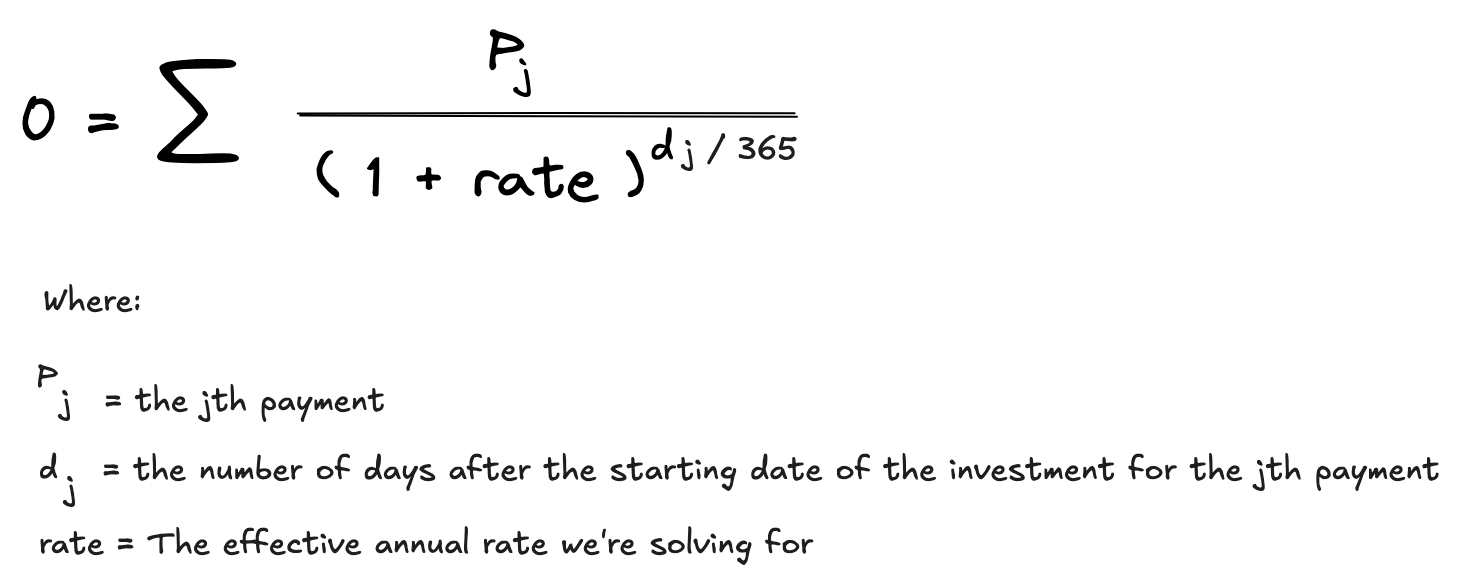
XIRR: What You Should Know
2 years ago
Popular |