Trending
Congo-Kinshasa: New Centre Opens At Heart of Record Ebola Outbreak is trending now Vet Debunks Rabies Myths, Urges Vaccination is trending now Nigeria: NAFDAC Joins £3.7m Global Vaccine Safety Project to Combat Fake, Substandard Vac… is trending now Iberia to charter a special plane for the total solar eclipse is trending now Previously Unknown Layer of DNA Repair Control Occurs Outside the Nucleus is trending now Venus rings found high above planet’s thick clouds is trending now New genomic approach links rare immune cells to autoimmune disease risk is trending now Junior D’Tigers, D’Tigress Land In Côte D’Ivoire For 2026 FIBA U18 AfroBasket Challenge is trending now Arokodare Scores on Ajax Debut in Pre-Season Victory is trending now Osimhen now under pressure to quit Galatasaray is trending now Mr P alleges Jude Okoye threatened him over US property dispute is trending now FG fine on sponsor forced ‘Who Wants To Be A Millionaire’ off air — Frank Edoho is trending now Congo-Kinshasa: New Centre Opens At Heart of Record Ebola Outbreak is trending now Vet Debunks Rabies Myths, Urges Vaccination is trending now Nigeria: NAFDAC Joins £3.7m Global Vaccine Safety Project to Combat Fake, Substandard Vac… is trending now Iberia to charter a special plane for the total solar eclipse is trending now Previously Unknown Layer of DNA Repair Control Occurs Outside the Nucleus is trending now Venus rings found high above planet’s thick clouds is trending now New genomic approach links rare immune cells to autoimmune disease risk is trending now Junior D’Tigers, D’Tigress Land In Côte D’Ivoire For 2026 FIBA U18 AfroBasket Challenge is trending now Arokodare Scores on Ajax Debut in Pre-Season Victory is trending now Osimhen now under pressure to quit Galatasaray is trending now Mr P alleges Jude Okoye threatened him over US property dispute is trending now FG fine on sponsor forced ‘Who Wants To Be A Millionaire’ off air — Frank Edoho is trending now
Technology

Squeezing Fluids With the Right Peristaltic Pump for the Task

Squeezing Fluids With the Right Peristaltic Pump for the Task

Peristaltic pumps are a very simple and effect device for transferring fluids without said fluid ever coming into contact with any part of the pump mechanism. At their core they …read more

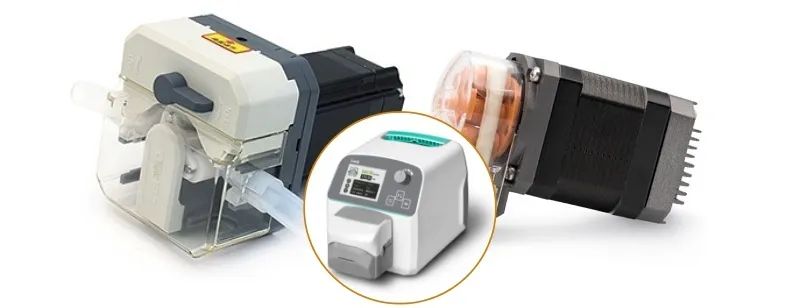
Peristaltic pumps are a very simple and effect device for transferring fluids without said fluid ever coming into contact with any part of the pump mechanism. At their core they involve a mechanism squeezing fluids through compressible tubing, but there are various implementations of such a mechanism that all have their pros and cons. In a recent article by [T. K. Hareendran] over at EDN these types are discussed and when you’d want to pick one over the other.

Also known as a roller pump, these positive displacement pumps have been known since the 19th century, finding uses in industrial, medical, research, agriculture and many other fields. Each of these fields have different requirements with the use of a peristaltic pump as a dosing pump being a specific application whereby e.g. a stepper motor can be used to provide exact dosing.

For industrial settings the typical rollers that compress the tube are replaced with shoes that provide higher pressures and endurance, with overall a bewildering number of motor types and tubing materials available. Depending on what your project needs, you may opt for continuous flow, fine control over dosing, the ability to reverse the flow, etc.

Unless your project is particularly rugged, a roller-based mechanism should be fine, while silicone tubing is great for biocompatibility and PVC is a cheaper tube material option. If you intend to transfer certain kinds of chemicals that will react with each of these there are some more exotic tubing options available as well.

We have previously covered projects that use a peristaltic pump for rather interesting things, such as DIY pharmaceutics, in a home-grown flow battery, not to mention creating DIY peristaltic pumps from first principles.


View original source →

Related

More from Hackaday Blog