 The World Association of Newspapers - IFRA
 Statistically, when compared to other occupations, journalism is not considered deadly, or even high risk; labour-intensive sectors such as construction, commercial fishing, mining, etc., reflect consistently higher fatality rates per capita.
The danger in threats to journalists is that any attacks go beyond individual physical harm to include a broader, deliberate attack on press freedom – and impunity for these acts have ramifications on any society.
“Impunity anywhere is not only an injustice to the victims and their families – it is an assault on press freedom, an invitation to further violence, and a threat to democracy itself,†reads UN Secretary General António Guterres’ statement to mark International Day to End Impunity for Crimes Against Journalists on Sunday, 2 November.
This year, for the first time, there is no global conference; instead, a campaign on AI-facilitated gender-based violence will aim to highlight the threats women journalists face in the digital space and the chilling effect this can have on freedom of expression.
UNESCO’s theme this year, Chat GBV: Raising Awareness on AI-facilitated Gender-Based Violence Against Women Journalists, reflects a startling acceleration in the number, type and placement of threats, attacks, detentions and killings of journalists – with impunity, around the world – along with an increase in the forces and crisis factors impacting that impunity.

The exact number of unresolved cases of journalists killed worldwide varies according to research time frames, with UNESCO reporting a global impunity rate of 85% for the period between 2006 and 2024.
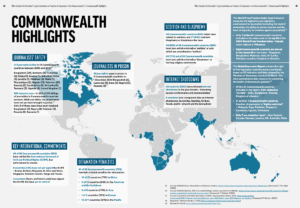
In September, the Commonwealth Human Rights Initiative released a report, Who Controls The Narrative? Legal Restrictions On Freedom Of Expression In The Commonwealth, finding impunity rates for killings of journalists at 96%, with only eight in 213 cases between 2006 and 2023 resolved.
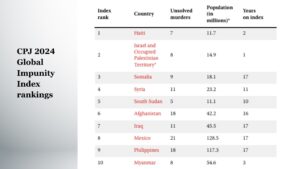
Independent advocacy group the Committee to Protect Journalists has been documenting and tracking cases of journalists detained, missing or killed in the line of duty since 1992, and launched their annual Impunity Index in 2008. In 2024, CPJ recorded an impunity index of 77%.
Last year, Haiti – first listed on CPJ’s Index in 2023 – took the top ranking; Israel appeared on the list for the first time ever, as the second highest perpetrator, for the record number of Palestinian journalists killed in one year.
Also last year, which CPJ ranked as the second consecutive deadliest year for journalists, 361 journalists were documented as imprisoned worldwide on 1 December 2024 – the second-highest number ever.Â
CPJ will not be releasing an index this year, but the shift in rankings over the past few years also reflects a change in the nature of attacks, which have escalated on all fronts – from war zones and conflict areas to homes and cyberspace.  Â
“In the first half of 2025, the climate facing journalists darkened to levels not seen in decades, reflecting a coordinated escalation of violence, intimidation, and censorship,†Phil Chetwyn, global news director at Agence France-Presse, wrote for World News Day, highlighting the widening geographical spread of violence and intimidation.
According to real-time monitor Reporters Without Borders, 50 journalists were killed between January and October 2025 alone.
Unesco’s Observatory of Killed Journalists puts that number at 84 for this year. Â
And the rising number of online attacks against women journalists has been steadily documented – even in Ukraine’s war zones .
The impact on journalism and newsrooms is devastating.
Yet somehow, journalists and journalism persevere – even as the factors contributing to those attacks escalate, and accountability is rare.
According to Article 19’s Global Expression Report 2025:
- More than 5.6 billion people have experienced a decline in their freedom of expression over the last 10 years. Scores have sunk in 77 countries, and only 35 countries are now ranked as ‘Open.’
- Only 4% of us – fewer than 300 million people – across just 15 countries have experienced improvements in freedom of expression over the last decade.
- Â In the last decade, for every 1 person who has experienced improvement in their freedom of expression, 19 people have experienced deterioration.
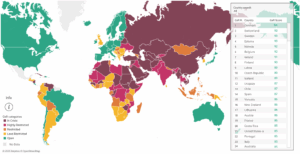
Who Controls the Narrative? also outlines a global decline in freedom of expression, finding that “repression has increased for 80% of the global population“.Â
Four of 37 countries are listed as ‘in crisis’ (Bangladesh, Kingdom of eSwatini, India, Rwanda) and only seven countries are classified as ‘open’ (Australia, Canada, Jamaica, Malta, New Zealand, Vanuatu and the UK). Â
Despite a tenuous ceasefire,international journalists are still not allowed into Gaza.
Then there’s the United States, former bastion of democracy and free speech, with a new administration that routinely attacks the press, has done so from the instep – and is renowned for manipulating the media and using lawfare against critics.
In September, the White House imposed sanctions on three prominent human rights organisations engaging in war crimes investigations with the International Criminal Court (ICC).
This may well have affected the decision by Mali, Burkina Faso and Niger to withdraw from the ICC, citing “neo-colonial†bias.Â
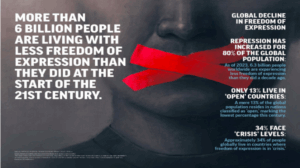
Source: Global Expression Index
Much has, and is being done to tackle impunity. International frameworks are in place. But much more is needed to effect meaningful change.
With no single solution to ensuring justice for these crimes, advocacy and awareness remains crucial.
How you can help
- Republish any or all of our three op-eds
- Share UNESCO’s campaign materials
- Join advocacy groups and help promote awareness: See The Coalition for the ICC, and their Making Justice Work campaign

The post Journalism in an Age of Impunity appeared first on WAN-IFRA.
 Harvard Business Review
  Young Upstarts
  Health Care News
  Sports News Ireland
 Tim Ferriss
 Rejuvenate - Hair Transplant Centre