

The Harvard study describes a bleak care future. And the NORC study�underscores�the housing problem for the�Forgotten Middle.� Life expectancy for the 65+ is another 20 years on average.��But only 14% of Americans can afford long-term care in the home....
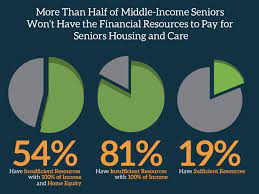 The Harvard study describes a bleak care future. And the NORC study�underscores�the housing problem for the�Forgotten Middle.� Life expectancy for the 65+ is another 20 years on average.��But only 14% of Americans can afford long-term care in the home. And if they could afford it, only 4% of their homes are aging-ready. Nor are they telehealth-ready � where 36% of Americans do not have high-speed internet in the home. For low-income individuals, home and community based services may have a 3-year wait to obtain them. Further, 42% of women aged 75+ live alone.�
So by now, you�d expect lots of helpful ideas to proliferate.� Maybe there will be new remote monitoring technologies, proliferation of software � the AI Caregiver as one example � to help.� Or the tech-powering of home health and home care agencies (soon?) to supplement in-person care. We�re still (mostly) talking about tech in the home to help family caregivers.� The shortage of care workers within the next decade is daunting � it spans all aspects of care.
By now you would think closing these gaps in care would be likely.� You would be wrong.� Housing alternatives (like cohousing or multi-generational housing) would be well publicized and on the way to broad adoption. Yet all still seemed like niche ideas, not helping those women aged 75+. Senior living � unless a very expensive house is sold �� is not within reach. Home remodeling for aging in pace?� Expensive for many types of homes with second story bedrooms and inaccessible bathrooms.
Into this picture, what tech can be somewhat helpful?�Maybe wearables, remote monitoring, telehealth, voice tech � individually fairly inexpensive and prescribed by a doctor or recommended by a family member or neighbor.� Maybe soon, integration of inexpensive smart home technologies into a hub � as proposed by Joseph Coughlin�at the MIT AgeLab or described at the UPitt Healthy Home Laboratory. �By now, all of these should be integrated into a low-cost platform, as a plug-in suite sold by Amazon, Best Buy, Walmart or Home Depot, spanning broadband access, lighting, sound, temperature control, health and safety status monitoring. You should be able to obtain a�cheap package, perhaps subsidized if needed. In what year? And from whom?