
 Alexander Stories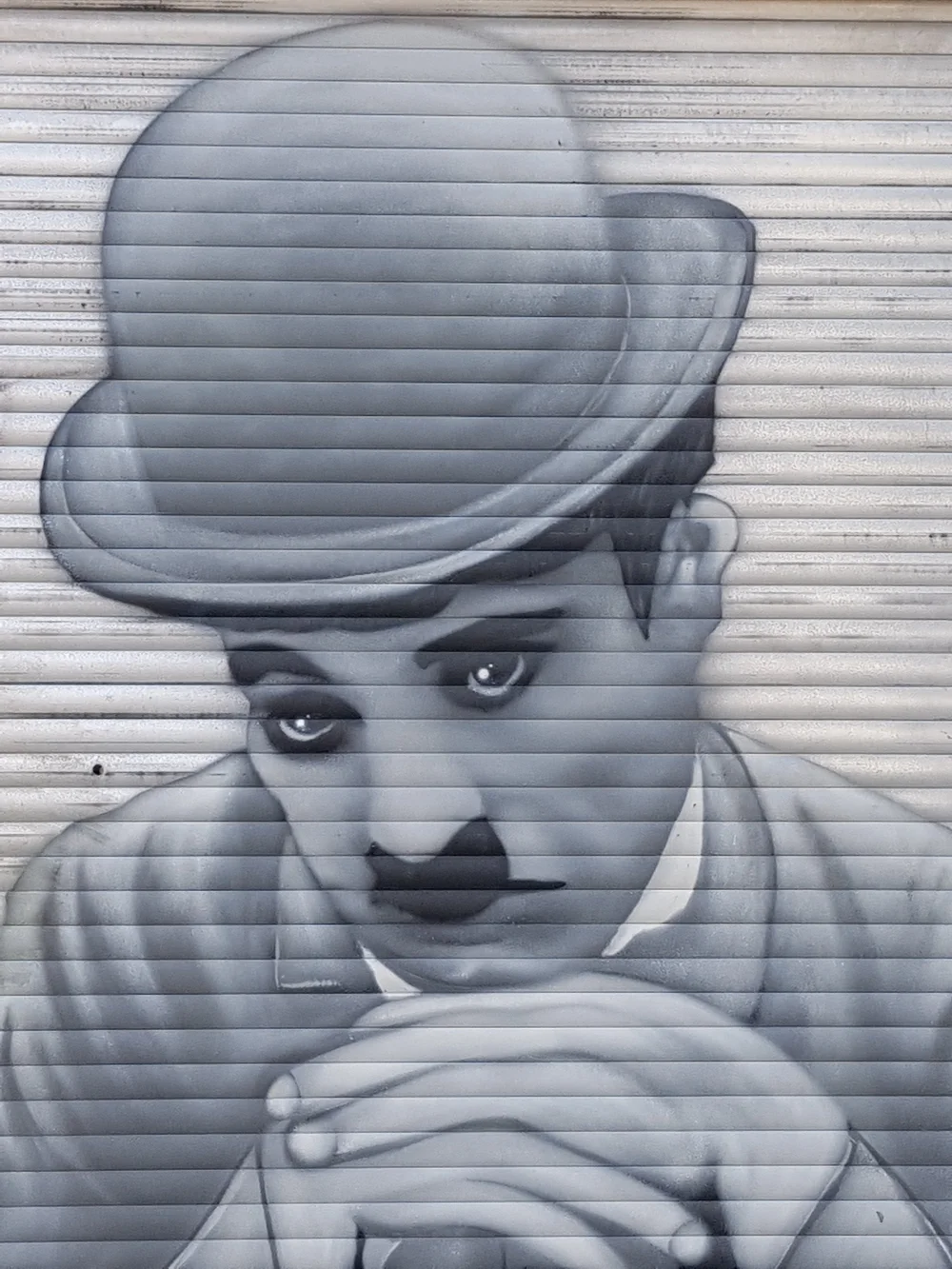
How we use our eyes is a good way of knowing what’s going on with our posture. I’ll show you what I mean using some London street art.
In the photo above Charlie Chaplin’s eyes are lowered and his face is downcast. In looking down with his eyes he has also dropped his head. Now he has to support the whole weight of his head on his hands. His eyes have a glazed look. He seems lost in thought and oblivious to the outside world. It’s not just his face that tells us this. We can read it in how he holds himself - what we might call his posture.Â
Â
The creases in his jacket tell us he's narrowing across the shoulders and chest. He has probably also stiffened his neck muscles as part of this whole pattern. The end result is that everything about him is pulling him inwards and downwards. There seems to be a strong correlation between his physical and emotional states.
Using the eyes to look outÂ
Â
Changing what he does with his eyes would be a good first step to come out of this slump. Allowing the eyes to lead he could start to look out and re-engage with the world. There would be a corresponding release in his head and neck and his head would feel lighter. His whole demeanour would change.Â
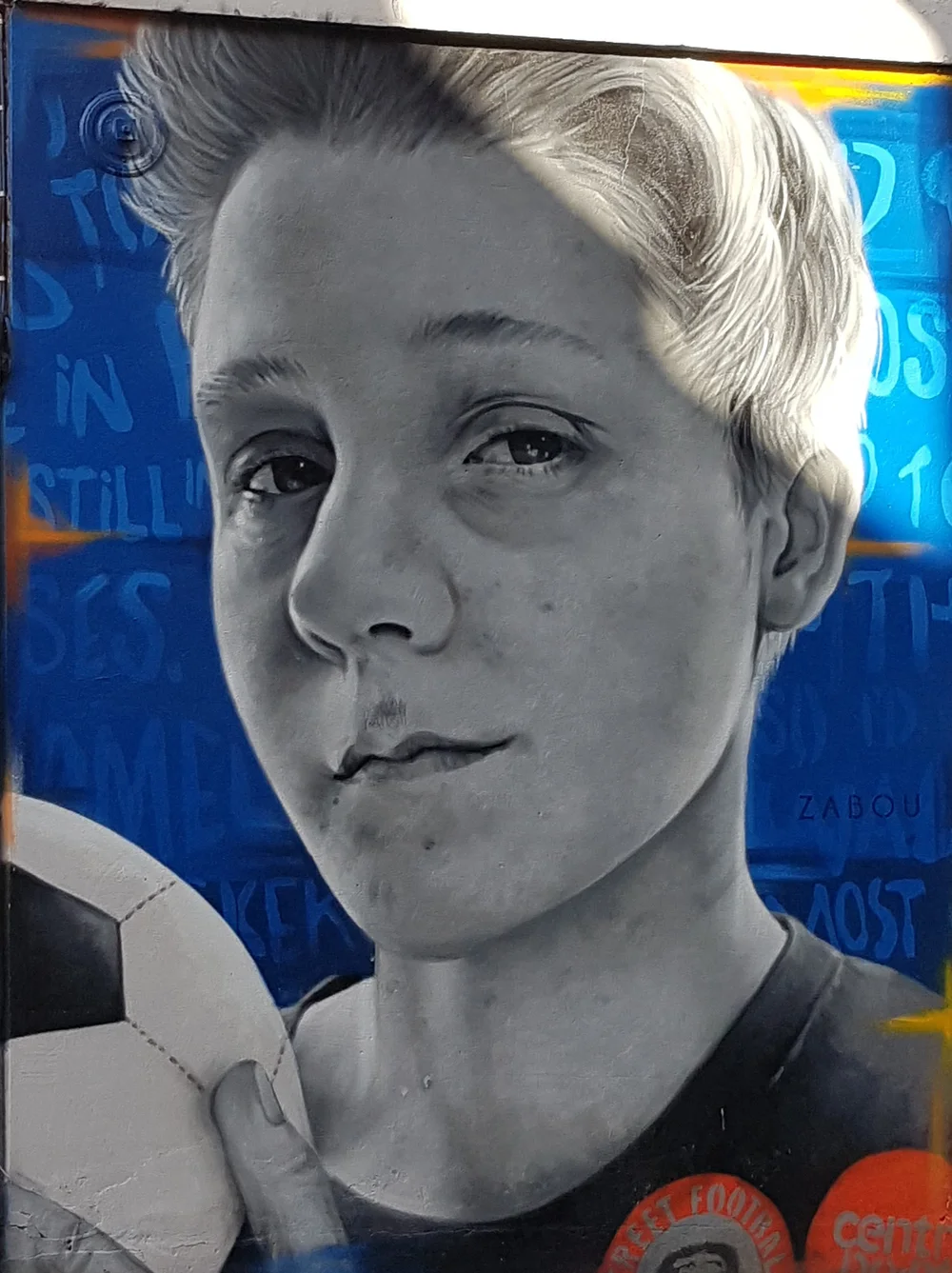
By contrast Becca's eyes and posture are very different. You can read her backstory here. Perhaps it’s understandable why she regards us with a degree of suspicion.
Balanced and readyÂ
She is using her eyes to look out and engage with the world. As a footballer (she was selected for the Homeless World Cup) she needs to pay attention to what’s going on around her. She seems alert, balanced and ready for action with senses engaged. Compared with Charlie Chaplin's imminent collapse she has an air of being self-supporting.Â
Her head is lightly balanced on her neck and her shoulders are open. Rather than needing her hands to support her head she’s carrying a football. In a moment she will let the ball drop to her feet as she moves into action on the field. She’s poised, ready and available for movement.Â
Soft, open and receptive Â
Eyes provide a clue to what's going on with posture. We can use our eyes as an indirect way of changing our posture. In general we want eyes to be soft, open, receptive and looking out.
Glazed or fixed eyes can mean we've become drawn in to our thoughts. Our posture will reflect this
Closing our eyes shuts the world out. It deprives us of essential information about where we are in space and will affect our balance
Over-focussing the eyes narrows our gaze and reduces our awareness and visual field. This is what happens when we use a screen for a long time
Darting eyes that can't stay quiet mean our attention is over-active. We're out of balance in some way
This isn't about correcting or doing special exercises to improve eyesight. It's more a reminder that we operate as a whole. The way we use our eyes is a fundamental part of our postural, balance and movement system. It's worth paying attention to.Â
 Teacher Network
  The Educators Room
  Bloomberg Blog
 TechHive
  Ditch That Textbook By Matt Miller