

38 tribes would like to co-manage land near their villages, to have their say over federal acreage that's been in land-use limbo since 1971.
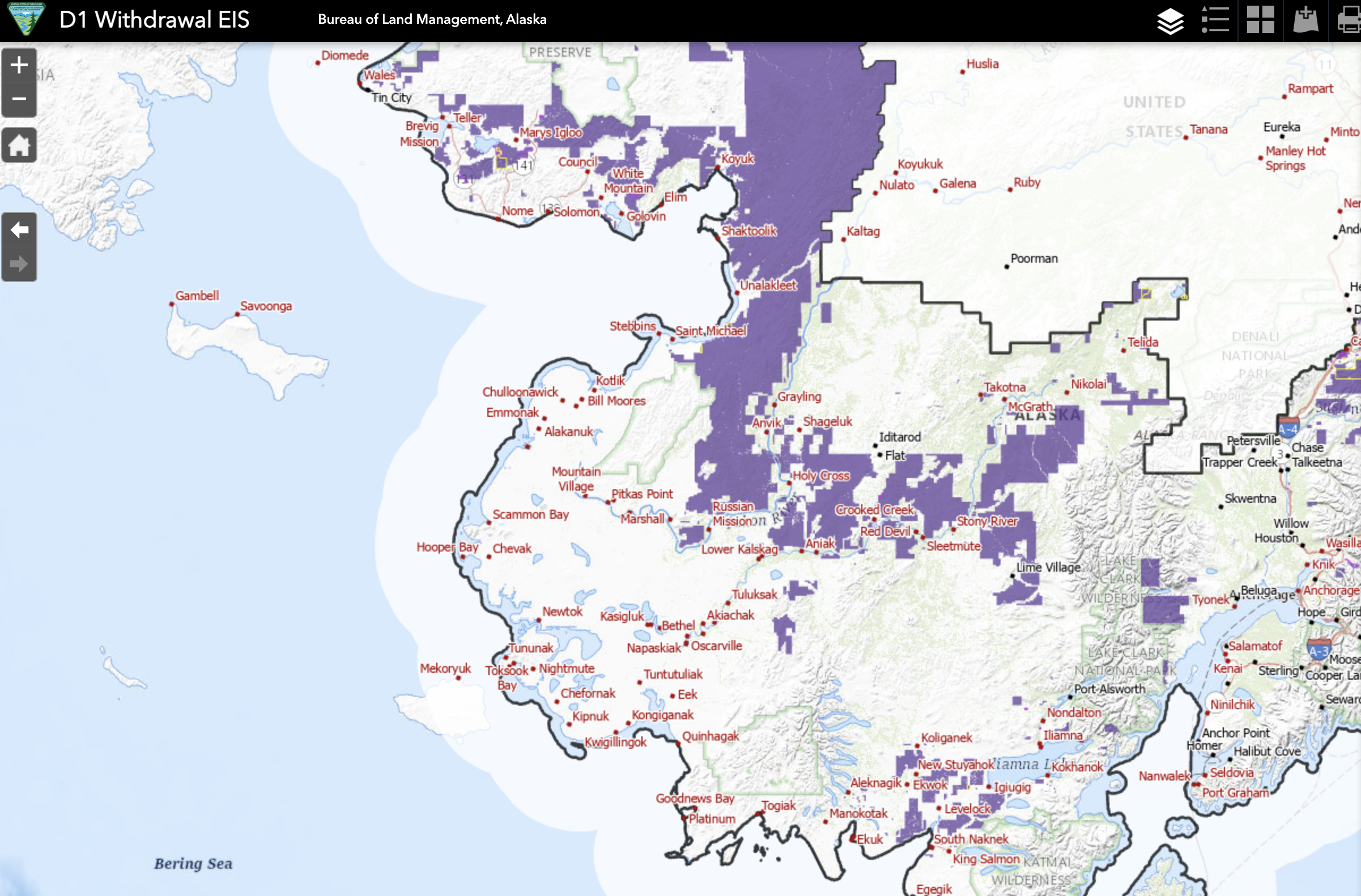
The tribe of the village of Holy Cross, near the Yukon River, has won a $1.2 million dollar federal grant to organize a multi-tribe conservation district across a wide swath of Alaska, from the Bering Sea to the Central Interior.�
The proposal goes by a long name: The First Indigenous Sovereign Habitat Tribal Conservation District � Mountains to Sea � Alaska.
Holy Cross tribal chief Eugene Paul said the 38 tribes that make up the new Bering Sea-Interior Tribal Commission are seeking co-management agreements with the Bureau of Land Management and other federal agencies.
�We want to be at the table and making those decisions that would impact our villages,� he said.
The co-management initiative is an attempt by tribes in the area to gain more say over some of the millions of acres of federal land that were set aside under section D-1 of� the Alaska Native Claims Settlement Act of 1971. These so-called D-1 withdrawals were meant to last 90 days so that the federal government could decide what to do with them, but they�ve been in land-use limbo ever since.
The Trump administration tried to revoke the D-1 withdrawals. Holy Cross and other partner tribes asked the BLM for additional protection. The Biden administration is�collecting public comments�about whether to lift the D-1 status, which could open the area to potential mining. More than 13 million acres of D-1 land are in the Bering Sea-Western Interior area.
Chief Paul said the Bering Sea-Interior Tribal Commission wants to co-manage some of the land and resources in the area, particularly in watersheds and other zones important for subsistence, hunting, fishing and berry-picking.�
�We wanted just these sections of lands around our community, because we�re really close to BLM land. I could step out my back door and step right on BLM land,� he said.
Paul said he�s particularly concerned that the land might be opened to mining or other extractive industries.
The Alaska Outdoor Council, a sportsmen�s organization, has raised objections to the tribal co-management proposal. It is leery of tribal management of public resources. In a�blog post, Outdoor Council policy director Rod Arno said fish and game management belongs to the state and wonders where the co-management arrangement leaves non-tribal members.�
The governor�s office and media contacts at state agencies did not respond to emails on the subject.�