

The development sector�s premier annual conference hosted by ACFID was held in October. Oxfam was thrilled to lead five sessions and feature in the closing plenary.� We led challenging conversations, posed big ideas and provided cut-through insights in the...
The development sector�s premier annual conference hosted by ACFID was held in October. Oxfam was thrilled to lead five sessions and feature in the closing plenary.�
We led challenging conversations, posed big ideas and provided cut-through insights in the influential conference attended by thought leaders across the development sector and government.�
Tax can be a powerful tool to redistribute extreme wealth
In Oxfam�s session titled �Tackling poverty through redistribution: what�s tax got to do with development?� we challenged the development sector to consider how tax can be a powerful tool in redistributing extreme wealth to where it�s really needed � to eradicating poverty, reducing inequality and tackling climate change.
Oxfam�s Policy & Advocacy Lead, Josie Lee said �Currently, the world�s poorest bear the cost of climate change. A just transition demands rich polluters pay to fix the harm they have caused.��
Carbon offset projects are failing
We continued our focus on climate in our session �Carbon Offsets are failing us, what is the alternative?� Here Oxfam led discussions about how projects designed to reduce carbon pollution in the atmosphere, often through protecting forests in developing countries, are failing. We presented Oxfam�s alternative vision for �carbon contributions� that ensure good outcomes for people and the planet.
Rod Goodbun, Executive Lead � Public Engagement, said �The voluntary carbon market is being held up as a solution to the climate crisis, but we know there are loopholes and regulatory failures being ruthlessly exploited by people seeking to make a fast dollar and corporations greenwashing to their customers. What we need is policy that drives the big polluters to reduce their emissions in the first place.��
Recognising unpaid care work in the economy is vital
Oxfam Australia�s Gender Justice Strategic Lead, Anila Aftab Schroers, co-led a session with Oxfam Timor Leste and Oxfam Fiji named �Care matters � Advocating for an economy that works for all�. In this session Oxfam highlighted that transforming the way we think about the economy and women�s unpaid care work is central in the struggle for women�s equality.
Anila highlighted that provision of care is not �women�s burden� but a societal issue requiring acknowledgement and action from a broad range of actors to invest in care services and infrastructure.
In this session, Oxfam presented a toolkit called Rapid Care analysis that can enable the user to generate a knowledge base in care work patterns that is locally-led and contextually informed, which can inform policies and investments on care work.�
We also featured in sessions �Let�s Talk about Locally-Led Action � why and how it can happen� and hosted the session �Creating a Loss and Damage Compass: navigating our way through complex accountability and finance�, where Oxfam�s expertise in these areas came to the fore.��
From band-aid solutions to systems change
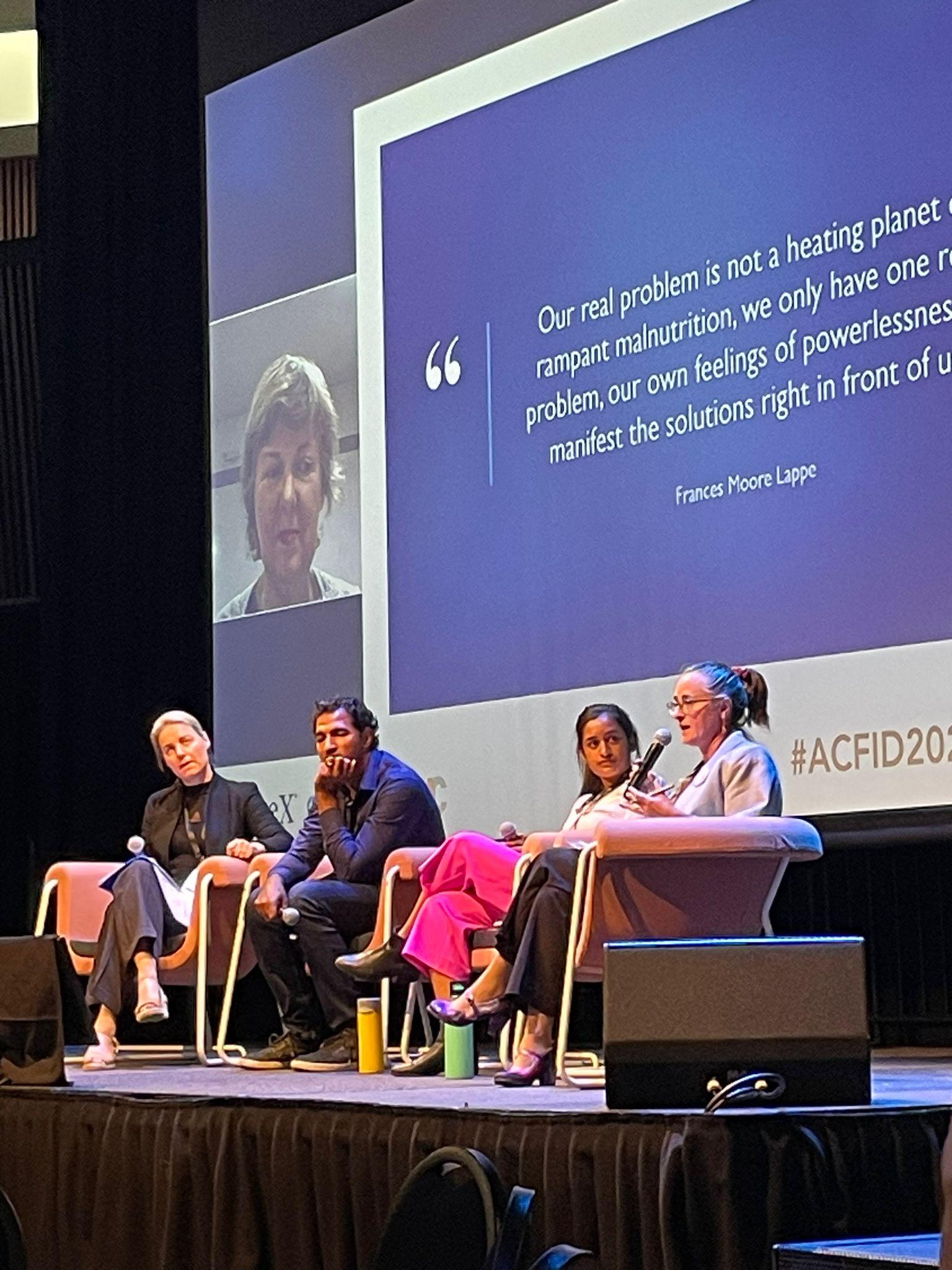
Oxfam�s Director of Programs, Anthea Spinks, rounded out a big contribution from Oxfam by speaking at the closing plenary �From band-aid solutions to systems change�, where there were many insightful comments on how we can create a bold new vision for aid that aims to shift the structures that keep people in poverty.�
Her powerful message to close the day was: �We often misjudge short-term gains and lose sight of long-term shifts in thinking that are critically important. Let�s focus on a 10-year vision for locally-led programs that put gender justice, First Nations justice and a safe climate at the heart of our work.��
What a great conference. Thank you ACFID.�
The post Oxfam leads with big ideas at the 2023 ACFID Conference first appeared on Oxfam Australia.