
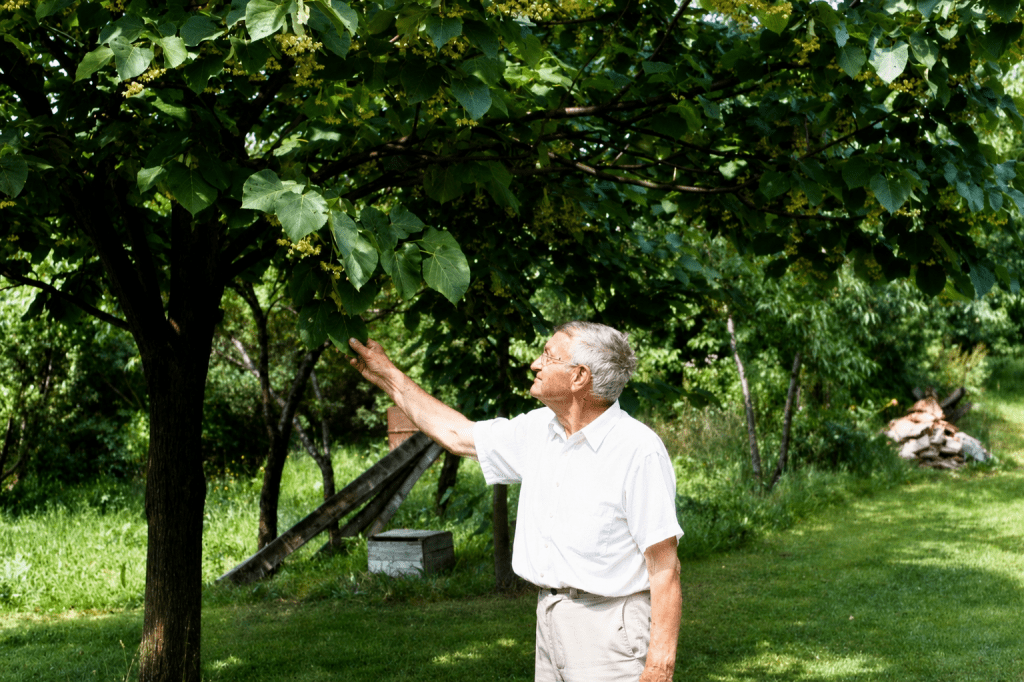
Basswood is nice, if you don’t mind hanging around with a tree accused of murdering millions of bees. Falsely accused. For over a hundred years, people have found dead bumble bees under basswood trees. Starved? Poisoned? Do you remember the Great Bee Poisoning of 2013, over in Oregon? Over 50,000 dead bumble bees were found under basswood trees in a Target store parking lot. You might want to blame the tree’s poisonous nectar, but should you? Maybe the deaths are the result of the world-wide neonicotinoid conspiracy to end life on Earth. My own thoughts are leaning that way.
I have just released a timely podcast episode about basswood, which is either blooming or just finishing its blossoms today across most of the northern hemisphere. I hope you can listen, maybe on your way to work, to the bee yard, while washing your hair, or driving over to Papa John’s for pizza.
Basswood, also known as linden or lime, is so special that it needs at least three names. Actually five names, if we include the scientific Tilia and the colloquial Bee Tree.
During ideal weather, big beautiful bountiful basswood blossoms pump out astonishing amounts of nectar, yielding one of the world’s finest white honeys. Early beekeepers told stories of colonies gaining more than 600 pounds per colony in a single season during exceptional basswood flows.
Yet the tree gives more than honey. Across Europe, families have long gathered its blossoms to make sleepy-time linden-flower tea. Woodcarvers like its soft, workable wood, while Indigenous peoples used its strong inner bark (called bast) to make ropes, baskets, and shoe laces for the snowshoes they invented.
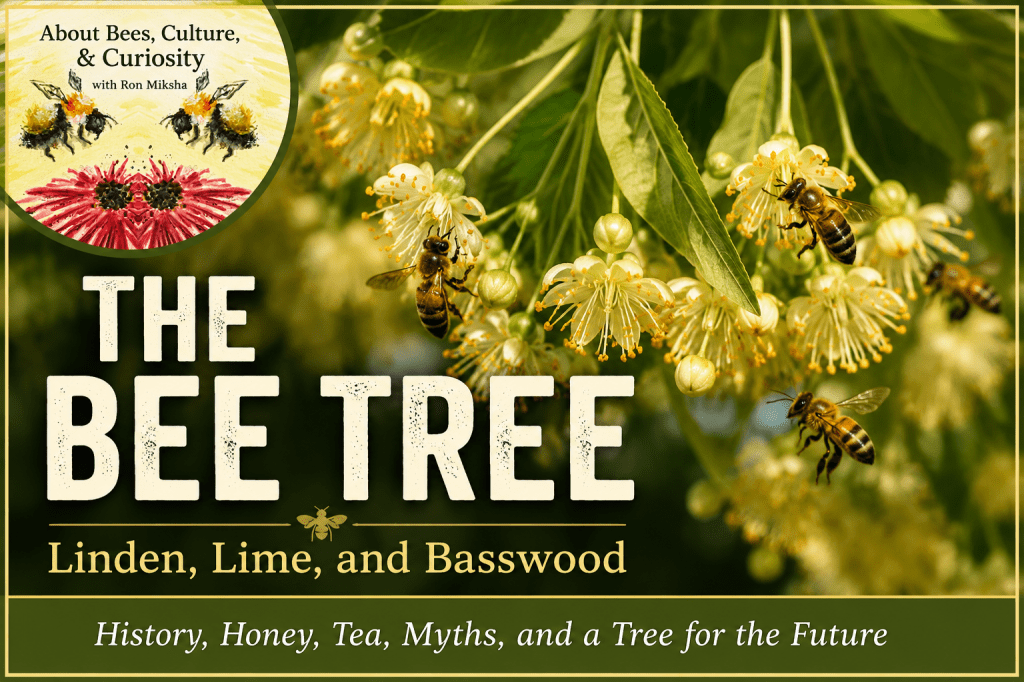
I won’t detail everything there is to know about basswood on this blog, but my About Bees, Culture, and Curiosity podcast goes into insufferable fatiguing detail, so I invite you to listen and enjoy. I researched botany, history, beekeeping, and beekeepers and I revived memories from Scotland, Germany, Pennsylvania, Florida, and Alberta to tell the story of basswood.
Perhaps, after listening, you’ll plant one of these trees yourself.
I hope you enjoy this blog and the podcast episode – available everywhere you get your podcasts, and at this link.
https://podcasts.apple.com/us/podcast/about-bees-culture-curiosity/id1760959092