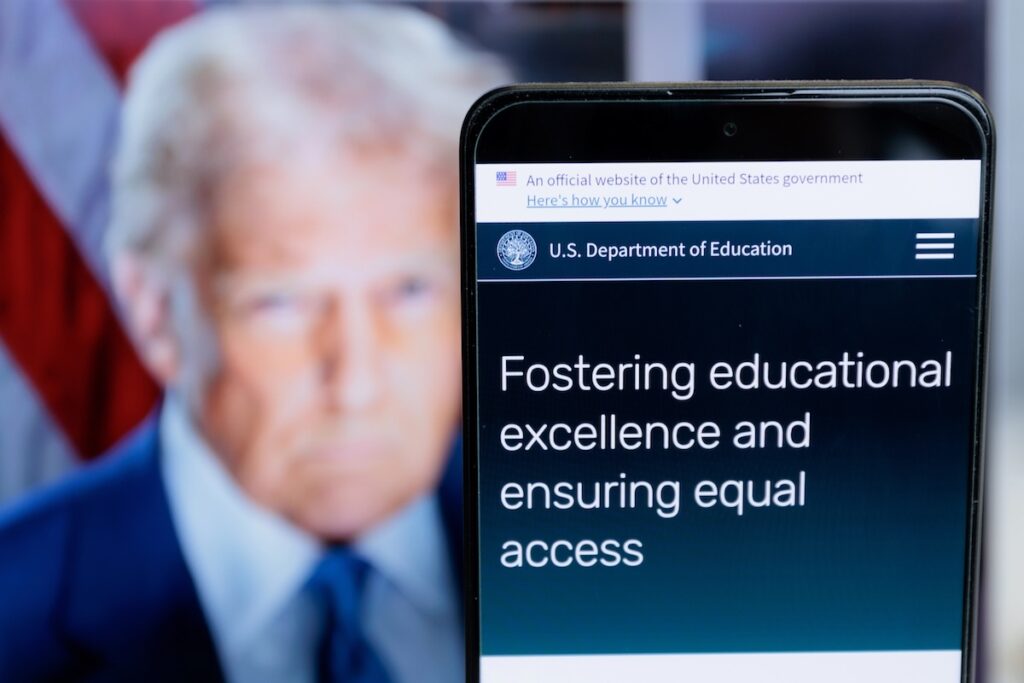
The Justice Department filed complaints last week against Hawaii, Utah, Arkansas and the District of Columbia over laws that let students without lawful immigration status pay in-state resident tuition rates at public colleges. Those four filings bring the department’s total to 25 cases, and every state with a similar law has now been sued.
Each complaint focuses on two issues: the residency provisions that set the tuition rate, and the separate state scholarship and grant programs that run alongside them.
“This is a simple matter of federal law: colleges cannot provide benefits to illegal aliens that they do not provide to U.S. citizens,” Assistant Attorney General Brett A. Shumate said in the department’s announcement. Associate Attorney General Stanley E. Woodward, Jr. said the filings mean “no more placing illegal aliens over American citizens on this Department of Justice’s watch.”
The same two-count structure appeared in the late-August suits against Arizona, New Mexico, Oregon and Washington, which took the count to 21.
Would you like to save this?
Why It Matters
The money at stake is the tuition differential, and it is large. Average published tuition and fees at public four-year schools ran $11,950 for in-state students in 2025-26 and $31,880 for out-of-state students, according to the College Board’s Trends in College Pricing 2025. That’s a gap of $19,930 a year before housing.
At individual flagships the spread runs wider still: Arizona State’s resident and non-resident rates differ by roughly $14,800.
Students in this group also have no access to federal aid programs. They cannot receive Pell Grants or Direct Student Loans, so a reclassification means this group of students would have to make up the difference with cash or private scholarships.
The Scoreboard So Far
- Six state laws already enjoined: Texas, Kentucky, Oklahoma, Nebraska, Illinois and Kansas.
- Kansas lost in court the day before this round of filings. U.S. District Judge Holly Teeter entered a permanent injunction against KSA 76-731a on September 10, ruling the 2004 statute preempted because it “confers a postsecondary education benefit on an unlawfully present alien based on a state-defined residency conclusion without making that same benefit generally available to United States citizens,” Kansas Reflector reported. Governor Laura Kelly criticized the outcome and efforts by students to intervene were denied.
- The Fifth Circuit closed the door in Texas on September 8, denying petitions for reconsideration of its July 9 decision, according to the Presidents’ Alliance litigation tracker. MALDEF is seeking further review.
- Kentucky ended by consent decree on March 31, 2026, with an appeal noted days later. Illinois lost its tuition and related aid provisions on July 24 and did not appeal. Oklahoma’s order dates to August 2025.
- Minnesota is the outlier. A district court dismissed the federal challenge there on March 27, 2026, finding that federal law does not preempt the state’s eligibility criteria. The government appealed to the Eighth Circuit on May 1.
- Fifteen cases remain active, including California, New York, Virginia, Colorado, Maryland, New Jersey and the four Western states sued in August.
That record is lopsided but not unanimous, and Minnesota is the reason the question is still open at the appellate level. A circuit split between the Fifth and Eighth would be the cleanest path to Supreme Court review.
The Legal Argument
Every complaint is about 8 U.S.C. § 1623(a), the 1996 provision barring a state from making an unlawfully present immigrant eligible “on the basis of residency” for a postsecondary benefit unless citizens qualify for the same benefit regardless of where they live.
The DOJ pairs that with the Supremacy Clause and asks for declaratory judgments plus permanent injunctions. The mechanics matter for anyone tracking residency requirements at public universities: the theory targets residency-based classification itself, not immigration status as an eligibility screen, which is why the scholarship counts travel with the tuition counts.
How This Connects
The College Investor has followed these cases since it stood at 12 states with the Massachusetts and Rhode Island filings, through the August round that reached 21.
That residency classification has become the pressure point in public college pricing, which is the same mechanism families use when they chase tuition reciprocity agreements between states to get a resident rate away from home.
What’s Next
Watch the Eighth Circuit briefing in the Minnesota appeal, any petition out of the Texas case, and whether the newly sued states answer or settle. For example, Kentucky and Kansas both resolved by consent rather than trial.
California and New York carry the largest affected populations and the biggest state grant programs, so their dockets set the practical stakes.
Students enrolled in any of the 25 states should be pricing the non-resident number for next year now, and asking financial aid offices in writing what happens to institutional awards if a court order lands mid-term.
Editor: Colin Graves
The post DOJ Sues Hawaii, Utah, Arkansas And D.C. Over In-State Tuition, Reaching 25 States appeared first on The College Investor.