
Discover how the power of participation reshapes education, turning students into active co-creators of their learning experiences. The post The Power of Participation: Why Public Leadership and Civic Readiness is a Solution to our Schools’ Engagement Problem appeared first on Getting Smart.
Education is at an inflection point. For decades, we have structured learning around content delivery—standardized, decontextualized, and increasingly disconnected from the real world. But a rapidly changing global landscape demands something different: an approach to learning that is immersive, relational, and participatory. It requires a shift from passive knowledge absorption to active engagement, from students as recipients of information to young people as co-creators of their own learning pathways.
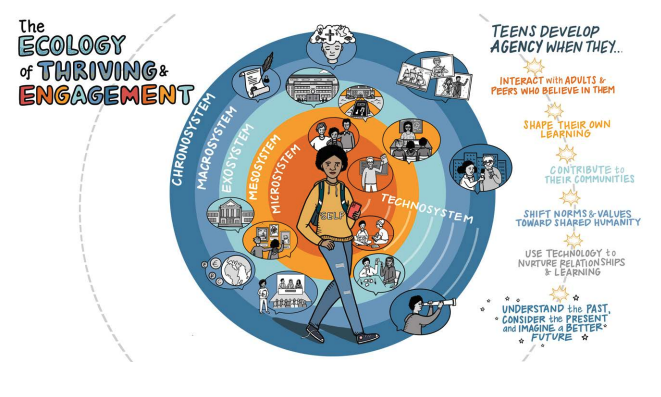
We are interested in the power of participation—how learning transforms when students engage deeply with their communities, when schools become hubs of civic and economic vitality, and when education is designed as a living, breathing ecosystem of relationships. By weaving together insights from place-based education, learning science, democracy education, and systems change, we believe that participation is not just an instructional strategy—it is the foundation of a thriving democracy, a resilient society, and a sustainable future. Schools must shift from institutions of preparation to communities of participation.
Where Traditional Civics Falls Short
Civics education in the United States—and globally—has historically emphasized the transmission of information about political structures and the theoretical rights and responsibilities of citizens. While this approach aims to equip students with foundational knowledge, it fails to activate their curiosity and full potential as engaged, critical, and creative co-creators of participatory governance and problem-solving systems.
Several key failures of traditional civic education have become increasingly apparent:
- A confined participatory framework: Traditional civics has operated within a narrow framework where participation is reduced to voting and occasional public service, rather than a dynamic, ongoing process of engagement. The rise of neoliberalism further shifted power to markets, leaving ordinary citizens feeling powerless in governance and community decision-making.
- Outdated civic structures in a digital age. The original structures of democracy were not designed for broad popular participation. Historically, this was acceptable because access to political influence was limited. However, with the rise of digital communication and social media, the gap between public expectations, readily available information, and the reality of actual influence has widened, leading to widespread disillusionment and frustration.
- The NCLB/RTT Shift toward testing over character: The education policy shifts under No Child Left Behind and Race to the Top emphasized standardized testing at the expense of holistic civic engagement. Character development, ethical reasoning, and participatory skills were sidelined in favor of test-based accountability, leaving students unprepared for democratic participation.
- The distrust of student activism: Historically, student activism has played a crucial role in social change, from the Civil Rights Movement to contemporary climate justice advocacy. However, institutions have responded with caution, often suppressing student agency rather than fostering it. This hesitation has resulted in civic education that avoids empowering young people as change-makers, with student government relegated to managing social events.
- Failure to connect civic learning with design and systems thinking: Research across disciplines highlights the power of systems thinking and network-based collaboration in solving complex problems. Yet, traditional civics remains siloed, failing to connect young people with an understanding of how systems evolve, or with the broader civic, economic, and community-based networks that can empower them to take meaningful action.
- Neglect of the interconnected human fabric that enables thriving: Civics education typically isolates democracy from broader social and economic structures, ignoring the role of mutual aid, redistribution, and community networks in civic engagement.
- Failure to acknowledge the connection of civics to planetary health: As climate change and global challenges redefine citizenship, civic education must prepare students for participation in governance that extends beyond national borders and considers planetary stewardship, with an understanding of economics that goes beyond the narrow metric of GDP.
- Lack of a two-way street and respect: Civic participation should not be about compliance or static roles. Instead, it should be a two-way street of respect, compromise, empathy, understanding, and communication. Power is multi-dimensional, spanning personal wellbeing, relationships, organizational transformation, society, and meaning-making. Without a learning model that fosters relational power, we cannot expect young people to develop a sense of agency and co-ownership in democratic life.
To address these shortcomings, we must reimagine civics as a participatory and relational process that aligns with how young people develop agency and belonging in the world today.
Why Participation Matters Now
Three intersecting crises underscore the urgency of this shift:
- The Disconnection Crisis: Young people today report unprecedented levels of loneliness and aloneness, anxiety, and disengagement. Much of traditional schooling has failed to address the deep human need for belonging and purpose and has failed to support young people in building valuable social networks that enable possibility..
- The Democracy Crisis: The erosion of civic trust, political polarization, and the rise of disinformation threaten democratic institutions. Civic education has long been passive and abstract, failing to prepare students for the complexities of real-world governance and collective problem-solving.
- The Future of Work and AI Disruption: As automation and artificial intelligence reshape the economy, the most essential skills will be those uniquely human: adaptability, collaboration, ethical reasoning, entrepreneurial mindset, agency and systems thinking. These are not skills that can be developed in isolation; they emerge through participation in meaningful, real-world challenges.
A New Learning Model: The Five Dimensions of Participatory Learning
To reimagine learning as a participatory act, we propose five core dimensions, mapped to key principles from learning science (Pam Cantor and Helen Immordino-Yang) and place-based learning (Tom Vander Ark and Nate McClennen):
Participation as Learning of Skills and Knowledge
Active engagement in real-world contexts is the most effective way to develop essential skills. Whether through hands-on projects, civic action, or collaborative problem-solving, participation cultivates critical thinking, communication, adaptability, and resilience. Combined with a rich understanding of history, politics, and civics, these experiences increase the power of participation.
- Learning Science Principle: Skill-building is most effective when learning is embedded in meaningful, real-world experiences.
- Power of Place Principle: Community as Classroom—engaging with local experts, experiences, and contexts as a foundation for learning.
Participation as Expression of Genius
Every young person possesses unique strengths and insights. Participation creates the conditions for young people to discover and express their innate genius, whether through storytelling, innovation, activism, or artistic creation.
- Learning Science Principle: Learning is driven by identity, purpose, and meaning, which fuel deep engagement.
- Power of Place Principle: Learner-centered—education that is personally relevant and driven by student agency.
Participation as Contribution
Learning must be deeply connected to the collective well-being of society and must be rooted in an entrepreneurial mindset (problem spotting and solutionary thinking). When students engage in projects that address the needs of their local community or the global goals (i.e. environmental sustainability, community resilience, and social equity) they develop a sense of responsibility and purpose that extends beyond individual achievement.
- Learning Science Principle: Context and relationships shape the learning process, connecting students to their broader world.
- Power of Place Principle: Local to Global—learning that starts in the local community and extends to broader global challenges; Inquiry- curiosity, observation and questioning; and Design Thinking-building creative solutions
Participation as Co-Creation and Community Fabric Weaving
Learning does not happen in isolation. Participatory education fosters relationships across generations, ensuring that young people engage with and learn from elders, mentors, and diverse community members to co-create solutions and sustain a shared civic fabric.
- Learning Science Principle: The brain is a social organ; learning flourishes through rich, intergenerational relationships.
- Power of Place Principle: Interdisciplinary Learning—integrating diverse subjects and perspectives through collaborative learning.
Participation as Expression of Voice and Needs of Young People
Young people must be able to articulate their perspectives, concerns, and aspirations. Education should create spaces where students feel heard, can advocate for themselves and their peers, and shape the institutions that impact their lives.
Participation as Navigation of an Increasingly Challenging Media Landscape
The superpower of the current generation and those to come will be the ability to find truth within the exponentially increasing amount of information in the technosphere. Without this, participation becomes skewed and biased.
Participation invites young people into doing work that matters and enables them to experience both success and failure in the act of value creation, a critical experience for the age of AI. The future of learning—and the future of democracy—depends on rethinking education as a participatory act.
The post The Power of Participation: Why Public Leadership and Civic Readiness is a Solution to our Schools’ Engagement Problem appeared first on Getting Smart.