 Money Smart Guides
 Saving money doesn’t have to mean living on ramen noodles or giving up everything you enjoy.
In fact, some of the best savings come from making a handful of small changes that barely affect your daily life.
In this guide, I’m sharing 101 creative ways to save money, from quick five-minute wins to bigger strategies that can save you hundreds, or even thousands, of dollars each year.
Some are ideas you’ve probably heard before. Others are simple tricks most people never think to try.
The best part?
You don’t have to use every tip. Pick a few that fit your lifestyle, stack them together, and watch your savings grow faster than you expected.
Let’s get started.
What Is the Best Way to Save Money?

The best way to save money is to pay yourself first.
Instead of trying to save whatever is left at the end of the month, move money into savings as soon as you get paid.
Even if it’s only $10 or $25 per paycheck, building the habit matters more than the amount.
From there, focus on the expenses that have the biggest impact.
Cutting one recurring monthly bill often saves more than clipping dozens of coupons.
Automating your savings, paying off high-interest debt, and avoiding impulse purchases can all dramatically increase how much money you save over time.
The key isn’t finding one perfect trick. It’s combining several small changes that work for your lifestyle.
The 5 Best Ways to Start Saving Money Today
If you’re feeling overwhelmed by a list of 100+ tips, start with these five. They’re simple, effective, and can make a noticeable difference right away.
1. Automate Your Savings
Set up an automatic transfer every payday, even if it’s only $10.
Saving becomes effortless when you remove the temptation to spend first.
2. Cut One Recurring Monthly Bill
Review your subscriptions, streaming services, insurance, internet plan, or phone bill.
Eliminating or reducing just one recurring expense can save hundreds of dollars every year.
3. Create a Simple Spending Plan
You don’t need a complicated budget.
Knowing where your money goes each month makes it much easier to spot expenses you can reduce without sacrificing the things you enjoy.
4. Pay Down High-Interest Debt
Every extra dollar you put toward high-interest debt is money you won’t have to pay in future interest charges.
It’s one of the best guaranteed returns you’ll ever earn.
5. Pick One Savings Challenge
Whether it’s a 52-week challenge, a no-spend challenge, or simply saving every $5 bill you receive, turning saving into a game makes it easier to stick with.
Now, let’s dive into the complete list of creative ways to save money.
101 Creative Ways to Save Money
Build Better Money Habits

#1. Pay Yourself First
One of the biggest mistakes people make is waiting until the end of the month to save whatever money is left over.
The problem is, there usually isn’t any left.
Instead, flip the process.
As soon as you get paid, move money into savings before you pay bills, buy groceries, or spend on anything else.
Even if it’s only $10 or $20 per paycheck, you’re building the habit of saving first instead of hoping you’ll have enough left over later.
When I first started saving, I wasn’t putting away hundreds of dollars each month.
I started with just $10 a month and increased the amount over time.
Looking back, the habit mattered far more than the dollar amount.
Once saving became automatic, increasing the amount was easy.
I was motivated to see my savings balance increase and I turned it into a game to see how much I could save.
If you struggle to save money, this one habit alone can completely change the way you manage your finances.
#2. Automate Your Savings
The less you have to think about saving, the more successful you’ll be.
Set up an automatic transfer from your checking account to your savings account every payday.
Treat it like any other monthly bill.
Once the transfer happens automatically, you stop relying on willpower and remove the temptation to spend the money first.
I also recommend reviewing your automatic transfer once a year.
Every time your income increases, even if it’s just from a small raise, bump your savings by another $10 or $25 per paycheck.
Most people never notice the difference in their spending, but after a few years, those increases add up to thousands of extra dollars.
Automation isn’t exciting, but it’s one of the easiest and most effective ways to save more money.
#3. Create a Simple Spending Plan
Many people avoid budgeting because they picture complicated spreadsheets and tracking every penny.
It doesn’t have to be that difficult.
The goal isn’t to restrict yourself. It’s simply to know where your money is going.
Once you can see your spending clearly, the opportunities to save become obvious.
Start budgeting by looking at the last month or two of your bank and credit card statements.
Highlight anything that surprises you.
Maybe it’s how much you spend eating out, how many small online purchases you’ve made, or how much your monthly subscriptions have grown.
You don’t need a perfect budget to save money.
You simply need a plan that tells your dollars where to go instead of wondering where they went.
#4. Set Savings Goals You Can Actually Reach
It’s hard to stay motivated when your only goal is “save more money.”
Instead, give every dollar a purpose.
Maybe you’re building a $1,000 emergency fund.
Maybe you’re saving for a vacation, a down payment, or paying cash for your next car.
Whatever the goal is, break it into smaller milestones so you can celebrate progress along the way.
For example, if your goal is to save $5,000, don’t focus on the entire amount.
Celebrate when you reach your first $250, then $500, then $1,000.
Small wins create momentum, and momentum makes it much easier to stick with your plan.
The more specific your goal, the more likely you are to reach it.
#5. Create Long-Term Financial Goals
Saving money becomes much easier when you know what you’re working toward.
When I first started taking my finances seriously, I wasn’t just trying to save because someone said I should.
I wanted financial freedom. I wanted the flexibility to make career decisions based on what I wanted to do, not just what paid the bills.
Your goals might look different.
Maybe you want to:
- Retire early
- Travel more
- Help pay for your kids’ college
- Stop living paycheck to paycheck
Write those goals down somewhere you’ll see them regularly.
Then, before making a purchase, ask yourself one simple question: “Does buying this move me closer to my goal, or farther away from it?”
You’ll be surprised how many impulse purchases disappear once you start thinking this way.
#6. Separate Needs From Wants
One of the fastest ways to save more money is learning to recognize the difference between a need and a want.
Housing, groceries, utilities, insurance, and transportation are generally needs.
Eating out three times a week, upgrading your perfectly good phone, or buying another pair of shoes because they’re on sale usually fall into the “want” category.
That doesn’t mean you should eliminate every want from your life.
Spending money on things you genuinely enjoy is part of living a balanced life.
The trick is making sure you’re spending intentionally instead of automatically.
The next time you’re about to buy something, pause and ask yourself if it’s something you truly need or simply something that sounds nice in the moment.
That small habit alone can save hundreds of dollars each year.
#7. Review Your Spending Habits
Sometimes the biggest opportunities to save aren’t large expenses, they’re the little habits you’ve stopped noticing.
Maybe you grab coffee every morning without thinking about it.
Maybe you always stop for a snack when you fill up your car.
Maybe Amazon packages show up on your porch so often that they no longer feel like spending money.
Spend a week paying attention to your routines. Write down purchases as you make them or review your transactions each evening.
You’re not trying to judge yourself. You’re simply looking for patterns.
I think you’ll be surprised by how many habits have quietly become expensive routines over the years.
The good news is that changing just one or two of them can make a noticeable difference in how much money you save every month.
And when you do change one, move some of the money you are not spending into savings!
#8. Spend Money on What You Actually Value
One of the biggest lessons I’ve learned over the years is that saving money isn’t about spending as little as possible.
It’s about spending on the things that actually make your life better.
For me, I’d rather spend money on experiences with my family than constantly upgrade my gadgets.
Someone else might value travel, while another person values hobbies or fitness.
Figure out what genuinely matters to you, then cut back aggressively on the things that don’t.
This approach makes saving much easier because you don’t feel like you’re constantly sacrificing.
You’re simply redirecting your money toward the things that bring you the most happiness.
It also makes the trap of keeping up with others much easier to ignore.
#9. Try a Money-Saving Challenge
If you’ve struggled to save consistently, turn it into a game.
Savings challenges give you a simple goal to follow without having to think about it every day.
You can try a classic 52-week challenge, save a set amount every day, or create your own challenge based on what fits your budget.
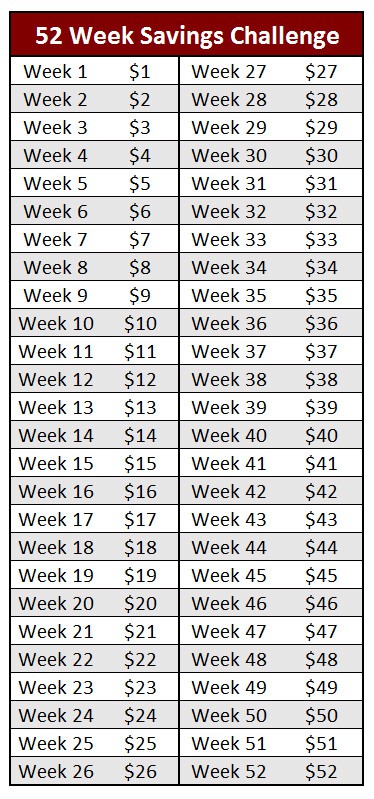
There are countless money saving challenges for you to try.
I’ve found that challenges work especially well because they provide structure and let you see your progress.
Instead of wondering if you’re saving enough, you simply follow the plan.
Saving money doesn't have to be boring. Turn it into a game with 20+ fun savings challenges that keep you motivated, build better habits, and help you reach your financial goals faster.
Everyday Money-Saving Strategies
#10. Save Unexpected Money Instead of Spending It

When most people receive a tax refund, work bonus, birthday check, or other unexpected money, their first instinct is to spend it.
Since it wasn’t part of their regular paycheck, it feels like “extra” money.
I challenge you to think about it differently.
Whenever you receive money you weren’t expecting, save at least half of it before you do anything else.
Better yet, save all of it if you can.
Since a tax refund is most likely your biggest windfall, here is how I would treat it:
- Take 70% and put it toward debt.
- Put 20% in your emergency fund or other savings
- Spend 10% however you want.
So if your refund is $2,000 this year, you put $1,400 towards your debt, $400 into savings, and spend $200.
Doing this lets you feel good because you get to spend some money, no questions asked while also getting ahead financially.
#11. Save Part of Every Raise
One of the easiest ways to save more money without feeling like you’re sacrificing anything is to increase your savings every time your income goes up.
When I was working a traditional job, every raise I received came with one simple rule: before I got used to the extra money, I increased my retirement contribution by 1%.
It took less than five minutes to fill out the paperwork, and because I never became accustomed to spending the extra income, I never missed it.
This strategy also helps prevent lifestyle inflation, the tendency to spend more simply because you earn more.
If you save part of every raise and enjoy the rest, you’ll steadily build wealth while still rewarding yourself for your hard work.
#12. Build an Emergency Fund
Unexpected expenses aren’t a matter of if, they’re a matter of when.
Your car will eventually need repairs. Something in your house will break. A medical bill will show up when you least expect it.
An emergency fund keeps these situations from becoming financial disasters.
If you’re just getting started, don’t worry about saving six months of expenses overnight.
Focus on reaching your first $500 or $1,000.
That alone can cover many of life’s smaller emergencies and help you avoid relying on credit cards.
Once you’ve reached that milestone, continue building your emergency fund until you have three to six months of essential living expenses.
Knowing you have money set aside for emergencies doesn’t just improve your finances.
It gives you peace of mind.
#13. Use a High-Yield Savings Account
If your savings account is earning next to nothing, your money is quietly losing purchasing power to inflation.
A high-yield savings account won’t make you rich, but it allows your money to earn significantly more interest while remaining safe and easily accessible.
It’s one of the simplest financial upgrades you can make, and it takes very little effort.
I recommend keeping emergency savings and short-term savings goals in a separate high-yield account rather than your everyday checking account.
It helps your money grow while also reducing the temptation to spend it.
To find the best high yield savings account, check out my savings account comparison page.
#14. Question Every Purchase
Impulse buying is one of the biggest obstacles to saving money.
I’ve found that asking myself a few simple questions before buying something dramatically cuts down on unnecessary spending.
- Do I actually need this?
- Would I rather have this item or make progress toward one of my financial goals?
- If I walk away today, will I still want it tomorrow?
Many purchases lose their appeal after a day or two.
Giving yourself a little time creates just enough distance to separate genuine needs from emotional spending.
I’ve talked myself out of countless purchases simply by waiting until the next day.
In almost every case, I was glad I didn’t buy it.
#15. Wait Before Buying
Retailers are experts at creating urgency.
“Today’s only.” “Limited-time offer.” “Only three left.”
The goal is to get you to make a decision before you’ve had time to think.
Unless you’re buying a necessity, give yourself a waiting period.
It could be 24 hours for smaller purchases, 48 hours for medium-sized purchases, or even a week for larger ones.
If you still want the item after that time has passed and it fits your budget, go ahead and buy it.
More often than not, you’ll realize the excitement has faded, and you’ll happily keep your money instead.
#16. Unsubscribe From Marketing Emails
Companies spend billions of dollars convincing you to buy things you weren’t planning to buy.
One of their favorite tools is your inbox.
You’ve probably received emails announcing a flash sale, a coupon code, or an “exclusive offer” that somehow convinced you to spend money you never intended to spend.
Take ten minutes today and unsubscribe from the retailers you rarely shop with.
Keep emails from stores you genuinely use if they help you save on planned purchases, but remove the constant temptation from everyone else.
You’ll likely spend less simply because you’re no longer being reminded to shop every day.
#17. Spend Less Time on Social Media
Social media doesn’t just consume your time. It constantly encourages you to spend money.
Every scroll introduces another product, another influencer recommendation, or another person showing off a lifestyle that makes your own seem lacking.
It’s easy to convince yourself you need the latest gadget, nicer clothes, or a more expensive vacation when that’s all you see.
I’m not saying you need to delete every social media app.
But if you find yourself buying things because you saw someone else with them, it may be worth limiting your time online.
The less often you’re exposed to advertising and comparison, the easier it becomes to make spending decisions based on your own priorities instead of someone else’s highlight reel.
To make this easier, check out apps like Freedom, AppBlock, and OneSec.
#18. Stay Home More Often
One of the biggest surprises for me was realizing that some of my favorite memories didn’t come from expensive nights out.
They came from simple evenings at home with friends and family.
Years ago, my friends and I started rotating who hosted dinner.
Whoever was hosting would make something simple, and we’d spend the evening talking, playing board games, or watching a movie.
Not only did we save a lot of money compared to going out, but we actually enjoyed ourselves more.
There was no rush, no waiting for a table, and no expensive restaurant bill at the end of the night.
Saving money doesn’t mean giving up your social life. Sometimes it just means changing where you spend it.
#19. Prevent Lifestyle Inflation
One of the biggest reasons people struggle to build wealth isn’t because they don’t earn enough, it’s because they spend more every time they get a raise.
Maybe you upgrade your car, move into a bigger house, or start eating out more often.
None of these decisions seem expensive on their own, but together they quietly absorb every extra dollar you earn.
The next time your income increases, resist the urge to immediately increase your spending.
Instead, put part of that raise toward savings, retirement, or paying off debt before you get used to having the extra money.
It’s perfectly fine to reward yourself for working hard. Just make sure your savings grow along with your paycheck.
#20. Take Advantage of Employee Benefits
Many people never take the time to learn about all of the benefits their employer offers.
Beyond health insurance and retirement plans, many companies provide discounts on cell phone service, travel, gym memberships, entertainment, computers, vehicles, and even local attractions.
Some employers also offer tuition reimbursement, commuter benefits, wellness programs, or matching contributions for charitable donations.
Spend a few minutes reviewing your employee benefits or talking with your HR department.
You may discover discounts that save you hundreds of dollars each year without changing your spending habits.
These benefits are part of your compensation package, so don’t let them go to waste.
Lower Your Monthly Bills
#21. Rotate Your Streaming Services
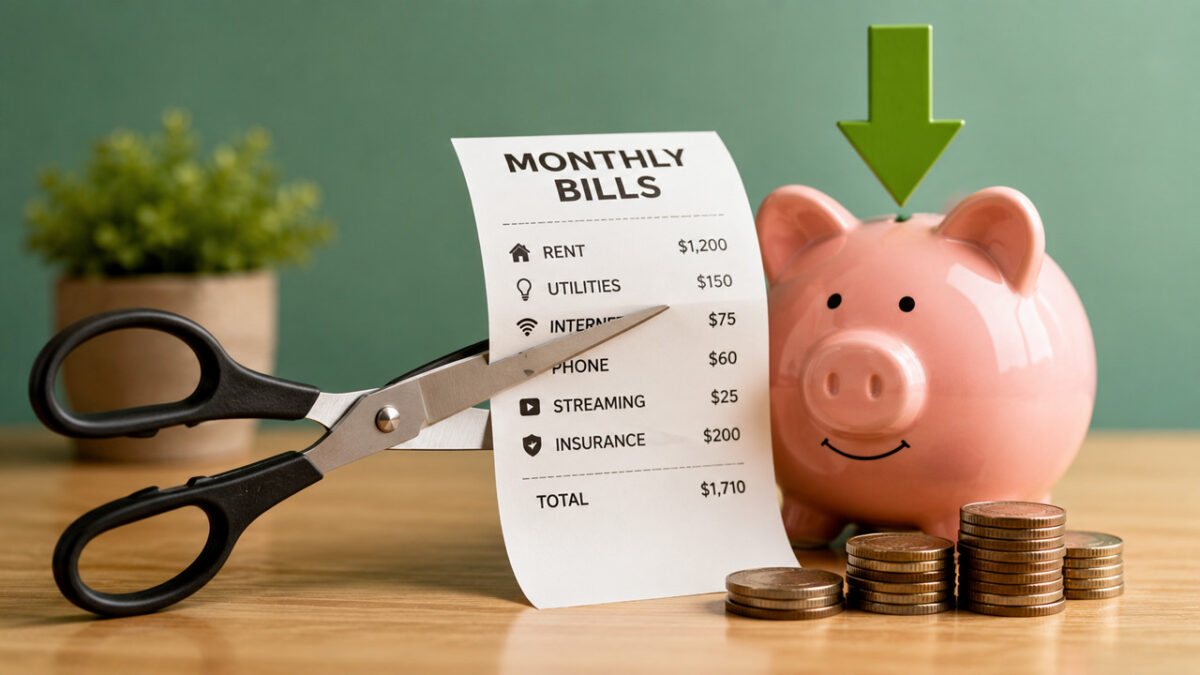
Streaming was supposed to save us money after we canceled cable. Instead, many households now pay for;
- Netflix
- Disney+
- Max
- Hulu
- Peacock
- Paramount+
- Apple TV+
- Amazon Prime Video
- And more…
Take a look at what you’re paying for each month. Ask yourself how often you actually watch each service.
Instead of subscribing to everything year-round, try rotating them.
Watch everything you want on one service over a month or two, then cancel it and switch to another.
Most streaming services make it easy to restart your subscription whenever you’re ready.
You’ll still get to watch the shows you enjoy, but you’ll likely cut your entertainment bill in half.
And here is a bonus tip: many services offer incredible deals around Black Friday/Christmas.
I routinely renew during this time for the next year and save 50-75% off the regular annual price.
Finally, if you are worried about not having anything to watch after canceling some services, check out the many free streaming sites to watch movies and TV shows.
#22. Review Every Recurring Bill Once a Year
Many companies count on one thing: your inertia.
Insurance premiums quietly increase. Internet bills creep up. Cell phone plans get more expensive.
Streaming services raise prices by a dollar or two here and there until you’re paying much more than you originally signed up for.
I schedule one afternoon each year to review every recurring bill. I compare prices, look for promotions, and call companies if necessary.
Even if you only save $20 per month across all your bills, that’s $240 every year for just a couple hours of work.
Set a reminder on your calendar so it becomes an annual habit instead of something you always mean to do “later.”
#23. Negotiate Your Bills
Many people never realize that monthly bills are often negotiable.
Cable, internet, cell phone service, and even some medical bills may have room for discounts if you simply ask.
Be polite, explain that you’re comparing competitors, and ask if there are any promotions or loyalty discounts available.
You don’t always have to threaten to cancel.
Sometimes simply asking, “Is this the best price you can offer?” is enough to uncover savings you didn’t know existed.
But here is a trick I found to save you more money: never agree to the first discount they offer.
Simply say, “do you have anything else?”
Many times they have other promos that are better deals.
They just offer the least best discounts first, hoping you will bite.
The worst outcome is they say no. The best outcome is you lower a bill you were already paying anyway.
#24. Shop Your Insurance Every Renewal
Insurance companies know most people don’t switch providers.
So they increase your price by a little bit each year.
As with many other companies, loyalty doesn’t save you money. Being a new customer does.
Every time your policy renews, compare quotes from multiple companies using the same coverage limits and deductibles.
Don’t just compare the monthly premium. Make sure you’re looking at equivalent policies.
I’ve saved anywhere from $500 up to $1,000 a year by switching.
It does take some time to compare, but the savings are worth it.
If this tip interests you, here is a guide I created to help you save money on car insurance.
Alternatively, you can check out my car insurance quote comparison to help you get started with finding some savings!

If you haven't shopped for auto insurance in the last two years, you are probably overpaying - sometimes by hundreds of dollars per year. Take 10 minutes to get free quotes and put money back into your pocket. Many people save $500 a year or more!
#25. Bundle Insurance Policies
If you own a home and a vehicle, or have multiple insurance policies, it pays to ask about bundling.
Many insurance companies offer discounts when you combine homeowners, renters, auto, umbrella, or other policies under one provider.
Bundling isn’t always the cheapest option, so compare the bundled price against separate quotes from other companies.
But it’s often worth checking because the savings can be significant, especially if you’ve never asked before.
This is another task that only takes a few minutes but could save you hundreds of dollars each year.
#26. Lower Your Heating and Cooling Costs
Heating and air conditioning usually account for the largest portion of a home’s energy bill.
Fortunately, you don’t need to make dramatic changes to lower those costs.
In the winter, try lowering your thermostat by a degree or two and wear a sweatshirt or use a blanket until you get used to the new temperature.
During the summer, raise the temperature slightly when you’re away from home.
Also look for easy improvements like:
- Replacing weather stripping around doors
- Sealing drafts around windows
- Changing your HVAC filter regularly
These small changes help your system work more efficiently and cost very little to implement.
Most people won’t notice a one- or two-degree difference in temperature, but they’ll certainly notice the savings over an entire season.
#27. Reduce Your Electricity Bill
There are dozens of ways to lower your electric bill, but you don’t need to do all of them to see results.
Start with the easy wins.
Replace frequently used bulbs with LEDs.
Unplug electronics you rarely use or plug them into a smart power strip to eliminate phantom power.
If your utility company offers a free home energy audit, take advantage of it.
They often identify simple improvements that pay for themselves quickly.
When I got our free energy audit, not only did it give me a plan for things to do to lower our costs, but they gave me some free LED bulbs and coupons for savings on other products.
I know this can feel overwhelming, so start small.
Replace the lights in the rooms you frequent most.
Pay attention to the weather and turn off your air conditioner or heat when temperatures are mild.
For most people, their HVAC unit is the biggest user of electric.
If you can do these things, you will see your electric bill drop without changing your lifestyle.
#28. Lower Your Water Bill
Water is one of those expenses that’s easy to overlook because it usually isn’t as expensive as electricity or housing.
But over time, small changes can still add up.
Fix dripping faucets, repair running toilets, and install low-flow showerheads if you have older fixtures.
Run full loads in your dishwasher and washing machine whenever possible instead of several smaller loads.
If you water your lawn, do it early in the morning or later in the evening to reduce evaporation.
None of these changes are difficult, but together they can noticeably reduce your water usage over the course of a year.
#29. Challenge Your Property Tax Assessment
Most homeowners assume their property tax bill is set in stone.
It isn’t.
If your home has been assessed for more than it’s actually worth, you may be paying more in property taxes than necessary.
This is something I experienced myself.
After buying our home, our realtor pointed out that our assessment seemed unusually high compared to similar homes nearby.
We hired an attorney who specialized in property tax appeals.
They handled almost everything, and our assessment was reduced enough to save us about $1,200 per year.
The best part is this savings continues every year.
When our taxes go up, the increase is smaller since our assessment is lower.
When I recently looked at our annual tax bill, it is now where it was when we moved in, 10 years later.
It’s worth checking your local assessment, especially if home values in your neighborhood have changed or your property seems overvalued compared to similar homes.
Simply reaching out to a real estate attorney is free and they will only appeal if they are confident they can reduce your taxes.
Shop Smarter
#30. Buy Quality Instead of the Cheapest Option

Buying the cheapest version of something often feels like you’re saving money, but in many cases, you’re actually spending more.
Years ago, when I bought my first house, I furnished it on a tight budget.
I grabbed the least expensive bath mats I could find, figuring they were all basically the same.
Within a few months, they were falling apart after just a handful of washes, and I had to replace them.
I eventually bought a better-quality set that lasted for years.
The same thing happened with T-shirts.
I was buying $3 shirts because I thought I was getting a great deal.
A few months later, they were stretched out, faded, or full of holes.
I switched to higher-quality shirts that cost more upfront, but they lasted years instead of months.
Instead of asking, “What’s the cheapest option?” ask yourself, “Which option will cost me the least over the next five years?”
Buying quality isn’t about spending more, it’s about replacing things less often.
#31. Always Shop with a List
Walking into a store without a list is one of the easiest ways to overspend.
In fact, a recent study showed that close to 50% of people who shop with a list spend less money.
Another study showed that shopping with a list is tied to a healthier diet, which save money on healthcare costs.
Stores are carefully designed to encourage impulse purchases.
End-cap displays, checkout items, seasonal promotions, and strategically placed products all exist to convince you to buy things you didn’t intend to purchase.
A shopping list keeps you focused.
And I’m not just talking about groceries.
Make a list before going to the hardware store, Costco, Target, Walmart, or even shopping online.
I keep a running shopping list in my phone throughout the week.
When it’s time to shop, I already know exactly what I need, and I’m much less likely to wander the aisles looking for ideas.
The fewer decisions you make while shopping, the less likely you are to overspend.
#32. Buy Items on Sale
There’s a big difference between saving money and spending less than full price.
A 40% discount on something you didn’t need isn’t saving money. It’s still spending money.
Instead, keep a list of items you know you’ll eventually need.
When one of those items goes on sale, that’s when you buy.
This strategy works especially well for clothing, household supplies, paper products, toiletries, and pantry items that don’t expire quickly.
Over time, you’ll stop paying full price for many of the things you were already planning to buy.
#33. Compare Prices Before You Buy
It only takes a couple of minutes to compare prices, but those few minutes can save you a surprising amount of money.
Before making a larger purchase, check several retailers, look for coupon codes, and compare shipping costs.
You might also find the exact same product available refurbished or open-box for a significant discount.
Price comparison has never been easier, yet many people still buy from the first website they visit.
The larger the purchase, the more valuable those extra few minutes become.
#34. Don’t Be Afraid to Ask for a Discount
One of the easiest ways to save money is simply asking.
It feels uncomfortable the first few times, but you’d be surprised how often businesses have flexibility on price.
Furniture stores, appliance stores, independent retailers, contractors, hotels, and even some medical offices may offer discounts if you ask politely.
I’ve found that I don’t always get a discount, but I get one often enough that it’s worth asking every time.
Even saving 5% or 10% on larger purchases adds up quickly over the course of a year.
The worst they can say is no.
And do you know what I do with the money I saved? I put it into savings.
So if I saved $10 by asking for a discount, I don’t just let that $10 sit in my checking account, waiting to be spent.
I act like I spent it by moving it to savings.
It’s a simple trick that can quickly boost your savings.
#35. Use Rewards Programs Strategically
If a store you already shop at offers a free rewards program, sign up.
The important word is free.
Many grocery stores, pharmacies, home improvement stores, and retailers offer discounts, digital coupons, or cash-back rewards simply for being a member.
Just don’t let the rewards program become a reason to spend more money.
The goal isn’t to earn points. The goal is to lower the cost of purchases you were already planning to make.
#36. Use Cash Back Shopping Sites
If you’re shopping online anyway, don’t leave free money on the table.
Cash back shopping sites like Rakuten and Swagbucks pay you a percentage of your purchase simply for clicking through their website before you shop.
It only takes a few extra seconds, and you’ll earn cash back on purchases you were already planning to make.
The savings can be surprisingly large during the holidays and special promotions.
While many stores offer 2% to 10% cash back throughout the year, it’s not uncommon to see rates jump to 15%, 20%, or even 25% during major shopping events.
This includes when Amazon runs its Prime Days.
I’ve been using these sites for years, especially when buying Christmas gifts.
Between holiday promotions and everyday purchases, I’ve earned a few hundred dollars back over the years.
One of my biggest wins came when I bought a laptop during a special promotion and received more than $200 in cash back.
Just remember that cash back isn’t a reason to buy something you don’t need.
But if you’re already planning to make the purchase, spending a few extra seconds clicking through a cash back portal is one of the easiest ways to save money.
#37. Shop Your Home First
Before buying something new, take a few minutes to see if you already own it.
Most of us have partially used cleaning supplies, forgotten gift cards, extra office supplies, duplicate tools, or unopened toiletries sitting around the house.
The same goes for your pantry and freezer.
You may have enough ingredients to make several meals without going to the grocery store.
Whenever we’re trying to cut back on spending, one of the first things my family does is challenge ourselves to use what we already have before buying more.
It’s amazing how often the solution is already sitting in a cabinet or closet.
#38. Declutter Your House
Most people have hundreds, if not thousands, of dollars’ worth of unused items sitting around their home.
Take a weekend and go room by room.
If you haven’t used something in years and it’s still in good condition, consider selling it.
Facebook Marketplace, local buy-and-sell groups, and online marketplaces make it easier than ever to turn unused items into cash.
Use that cash to pay down debt or boost your savings.
If an item isn’t worth selling, donate it, and then write the donation off to lower your taxes.
Decluttering does more than free up space.
It also reminds you how much money you’ve spent on things you no longer use.
That realization alone can change the way you shop in the future.
Here is a great guide of the best things to sell around your house.
#39. Borrow Before You Buy
Not everything needs to be owned.
If you’re tackling a one-time home improvement project, do you really need to buy a specialty tool you’ll probably never use again?
Before making a purchase, see if you can borrow it from a friend, family member, neighbor, or local tool library.
The same idea applies to party supplies, camping gear, pressure washers, ladders, and dozens of other items people only use occasionally.
Buying used is another great option when borrowing isn’t possible.
Ownership is expensive. Access is often much cheaper.
#40. Maximize Memberships You Already Pay For
Many people pay for memberships but never use all of the benefits that come with them.
Amazon Prime isn’t just free shipping.
Depending on your membership, you may also have access to Prime Video, Prime Reading, Amazon Music, cloud photo storage, and exclusive discounts.
Warehouse clubs often include discounted gift cards, cheaper prescriptions, travel discounts, and reduced gas prices.
AAA members receive discounts on hotels, attractions, rental cars, and many local businesses.
Before signing up for another service, take a closer look at the memberships you already have.
You might discover benefits you’re paying for but never using.
#41. Remove Saved Payment Methods
Online shopping has never been easier.
In fact, it’s almost too easy.
Many websites store your credit card information so you can complete a purchase with a single click.
While it’s convenient, it also makes impulse buying much more likely.
Take a few minutes to remove your saved payment information from your favorite shopping websites and apps.
Having to walk across the room to grab your wallet gives you a few extra seconds to think about whether you really need what you’re about to buy.
Sometimes that’s all it takes to stop an unnecessary purchase.
#42. Remove Shopping Apps From Your Phone
If your phone is full of shopping apps, you’re carrying around a mall in your pocket.
Every notification about a flash sale or limited-time offer is another temptation to spend money.
Ask yourself how often you actually use those apps.
If the answer is “once in a while,” delete them.
You can always visit the website if you truly need something.
By removing easy access, you’ll likely find yourself making fewer impulse purchases and spending less overall.
And at the very least, consider turning off notifications so you aren’t alerted to “sales” intended to get you to impulse spend.
#43. Buy Refurbished When It Makes Sense
Not everything has to be brand new.
Many electronics, appliances, and tools are available as refurbished or open-box items for significantly less than the original price.
In many cases, they look and perform just like new.
I’ve purchased refurbished items over the years and have been pleasantly surprised by both the condition and the savings.
Just make sure you’re buying from a reputable retailer that includes a warranty or return policy.
When you do, buying refurbished can be an easy way to stretch your money further.
Save Money on Food and Groceries
#44. Plan Your Meals Before You Shop

One of the easiest ways to waste money at the grocery store is walking in without a plan.
Before you leave the house, decide what meals you’ll make for the week and write down every ingredient you need.
Then check your pantry, refrigerator, and freezer to see what you already have.
Meal planning helps in three ways:
- You buy fewer unnecessary items
- You waste less food because everything has a purpose
- You’re much less tempted to order takeout because dinner is already planned
It doesn’t have to be complicated either.
Even planning four or five dinners each week can make a noticeable difference in your grocery bill.
#45. Build Your Grocery List Around the Weekly Sales
Instead of deciding what you want to eat and then paying whatever the grocery store charges, reverse the process.
Start by looking at your store’s weekly sales flyer.
If chicken is on sale, build a few meals around chicken. If pasta or frozen vegetables are deeply discounted, stock up while prices are low.
After you’ve done this for a few months, you’ll start to notice that many sales follow predictable cycles.
That makes it much easier to know when to buy extra and when to wait.
After doing this for a few weeks, I came home one day with an entire cart full of groceries that would have cost well over $100 for around $30 because nearly everything I needed was either buy-one-get-one-free or deeply discounted.
My wife couldn’t believe how much food I brought home for so little.
Buying what’s on sale instead of insisting on a specific brand or meal can dramatically reduce your grocery bill over time.
#46. Buy More When Prices Are Low
Some sales are too good to ignore.
If an item you regularly use is heavily discounted and has a long shelf life, buy enough to last until the next sale.
This strategy works well for canned goods, pasta, rice, paper products, toiletries, frozen foods, coffee, and many household supplies.
The key is only stocking up on things you know you’ll actually use.
Buying ten jars of a sauce your family doesn’t like isn’t saving money, it’s wasting it.
Think of your pantry as a small store.
The more often you buy items at their lowest price, the less often you’ll be forced to pay full price.
#47. Shop Generic Brands First
Many store-brand products are made in the same factories as national brands, yet cost significantly less.
That doesn’t mean every generic product is better, but it’s worth giving them a try before automatically reaching for the name brand.
Start with pantry staples like flour, sugar, canned vegetables, pasta, spices, and cleaning products.
If you notice no difference, you’ve found an easy way to lower your grocery bill every month.
Save the premium brands for the products where taste or quality genuinely matters to you.
#48. Stop Buying Food You Throw Away
Food waste quietly drains hundreds of dollars from many family budgets every year.
According to one study, a family of four averages close to $3,000 a year in food waste!
Pay attention to what gets thrown away most often in your house.
Is it bagged salad that spoils before you eat it? Produce you bought with good intentions? Leftovers that disappear into the back of the refrigerator?
Once you identify the pattern, adjust your shopping.
Buy smaller quantities, freeze extra portions, or plan meals that intentionally use leftovers before they spoil.
The cheapest food you’ll ever buy is the food you actually eat.
#49. Pack Your Lunch More Often
Buying lunch every workday doesn’t seem expensive until you do the math.
Even spending $12 a day adds up to more than $3,000 a year if you’re buying lunch five days a week.
You don’t have to pack lunch every single day to save a meaningful amount.
Even bringing lunch two or three times a week can save hundreds of dollars over the course of a year.
One of the easiest ways to make this habit stick is cooking a little extra at dinner and packing the leftovers before you even sit down to eat.
The next day’s lunch is already taken care of.
#50. Buy Used First
Before paying full price for something new, spend a few minutes looking for a used version.
Furniture, tools, sporting equipment, bicycles, baby gear, and even lawn equipment can often be found in excellent condition for a fraction of the original cost.
Many people buy these items with good intentions only to use them a handful of times before selling them.
Whenever I’m considering a larger purchase, I make it a habit to check Facebook Marketplace and other local listings first.
Even if I don’t buy used every time, I’ve saved hundreds of dollars simply by looking before heading to the store.
#51. Compare Unit Prices
When grocery shopping, don’t assume the larger package is always the better deal.
Instead of looking only at the price on the shelf, compare the unit price, which tells you the cost per ounce, pound, or other unit of measurement.
Most grocery stores display this information on the price tag below the product.
I’ve found plenty of situations where the smaller package actually had the lower unit price, while the larger size cost more per ounce.
Taking a few extra seconds to compare unit prices helps ensure you’re getting the best value instead of simply buying the biggest package.
Sometimes, companies will try to trick you because so many people think buying in bulk always saves you money.
#52. Bring Your Own Snacks and Drinks
Running errands has a way of making you hungry.
That’s when it’s easy to spend $4 on a coffee, $3 on a soda, or $10 at a drive-thru because you’re hungry and convenience wins.
Whenever we’re going to be out for several hours, we throw a few bottles of water and some snacks in the car before leaving the house.
Nuts, granola bars, fruit, crackers, and trail mix travel well and cost a fraction of what you’ll pay at a convenience store.
It seems like a small habit, but if it helps you avoid just one fast-food stop each week, the savings add up surprisingly fast.
#53. Eat Out More Intentionally
There’s nothing wrong with eating at restaurants.
The goal is simply to get more value when you do.
Instead of automatically going out for dinner on Friday or Saturday night, consider eating lunch instead, when many restaurants offer the same food at lower prices.
Other ideas include:
- Take advantage of happy hour specials if they’re available.
- Split large portions that you know you won’t finish.
- Skip appetizers and drinks if they don’t add much to the experience.
My wife and I often split meals because restaurant portions have become so large.
Not only do we spend less, but neither of us walks away feeling like we ate far too much.
Eating out should feel like a treat, not something you regret after looking at your credit card statement.
#54. Drink More Water
One of the simplest ways to lower your food budget is to stop paying for beverages everywhere you go.
Whether it’s soda, bottled water at convenience stores, or specialty coffee drinks, these purchases often become daily habits that quietly consume hundreds or even thousands of dollars each year.
Carry a reusable water bottle with you whenever possible and refill it throughout the day.
It’s a small habit that saves money, is usually healthier, and reduces impulse stops when you’re out running errands.
#55. Use Your Freezer
Your freezer can be one of the best money-saving tools in your kitchen.
Whenever meat, vegetables, bread, or other foods go on sale, buy a little extra and freeze what you won’t use right away.
You can also freeze leftovers instead of letting them spoil in the refrigerator.
We’ve gotten into the habit of freezing extra portions after dinner.
On busy nights, instead of ordering takeout, we simply pull out a homemade meal that is already prepared.
Not only does this reduce food waste, but it also saves time and money.
#56. Buy in Bulk When It Makes Sense
Buying in bulk can be a great way to save money, but only if you’ll actually use what you buy.
Warehouse clubs like Costco and Sam’s Club often have excellent prices on paper products, toiletries, cleaning supplies, canned goods, and other non-perishable items.
Buying these products in larger quantities usually lowers the cost per unit and reduces how often you need to shop.
The key is to avoid buying something just because it’s a good deal. If the food expires before you eat it or you end up throwing part of it away, you didn’t save money at all.
Before buying in bulk, ask yourself one simple question: “Will I use all of this before it goes bad?”
If the answer is yes, stock up while the price is low.
#57. Cook Larger Meals
Cooking every night can be time-consuming, and it’s one of the reasons many people end up ordering takeout.
Instead, make extra food when you cook.
Whenever we make chili, soup, casseroles, or pasta dishes, we intentionally make enough for another meal or two.
Sometimes we’ll eat the leftovers for lunch the next day.
Other times we’ll freeze them for a busy weeknight when no one feels like cooking.
Not only does this save money, but it also sa
 Forbes Business Blog
 Better Living
  Money Under 30
 Bespoke Bride Wedding Blog
  Steve Hargadon Blog
 Packagingarts