
What if I told you that many of the things drivers do to save money on gas actually don’t work? From buying premium fuel to letting your car warm up on cold mornings, some of the most common fuel-saving advice can end up costing you more money instead of less. Meanwhile, a handful of simple […] The post How to Save Money on Gas: 24 Simple Ways to Save Hundreds Each Year appeared first on Money Smart Guides.
What if I told you that many of the things drivers do to save money on gas actually don’t work?
From buying premium fuel to letting your car warm up on cold mornings, some of the most common fuel-saving advice can end up costing you more money instead of less.
Meanwhile, a handful of simple habits that take little effort can save the average driver hundreds of dollars a year.
Considering the average household spends thousands of dollars a year on gasoline, those savings can add up quickly.
If you’re looking for practical ways to lower your fuel costs, this guide covers proven strategies for how to save money on gas, including ways to pay less per gallon, improve your vehicle’s fuel economy, and avoid costly mistakes that waste fuel.
How To Save Money On Gas
How To Get Cheap Gas
If you want to know how to earn cash back on gas, look no further than the free Upside app.
It is by far the best way to get more gas for your dollar.
This app partners with gas stations, offering you cash back on every gallon you buy.
For example, a local station near me offers $0.15 cash back.
A few days after I fill up, Upside deposits my cash back into the app. I can then transfer the cash back to my bank account.
The amount of cash back changes all the time, so you can earn a higher cash back amount.
And if you get your friends to sign up, you earn cash back every time they buy gas.
I started using the app less than a year ago and have earned over $300.
When you download the app, be sure to enter the promo code MONEYSMART to get a $5 cash back bonus on your first $10 minimum qualified order.

Upside is the #1 app for earning cash back on gas. Receive a $5 cash back bonus on your first $10 minimum qualified order. Be sure to use the promo code MONEYSMART to get this bonus. And when you dine out, be sure to use Upside and get up to 25% cash back on your bill.
25 Best Ways To Save On Fuel
In addition to using the Upside app, you can do many other things to lower your fuel costs.
Here are your options, in no particular order.
The great thing with these options is combining as many as you want to increase your fuel savings.
#1. Compare Gas Prices
One of the easiest ways to save money on gas is to compare prices before pulling into the first station you see.
Gas prices can vary by $0.10 to $0.50 per gallon within just a few miles.
On a 15-gallon fill-up, that’s a difference of $1.50 to $7.50 for the exact same fuel.
Instead of guessing which station has the cheapest gas, use a free app like GasBuddy, Google Maps, or Waze to compare local prices.
These apps can quickly show nearby stations and help you avoid overpaying.
It also pays to be strategic about when you fill up. According to GasBuddy’s analysis of fuel prices across the United States, Sunday and Monday are typically the cheapest days to buy gas, while prices often rise during the middle of the week.
In many states, simply filling up on the lowest-priced day instead of the most expensive day can save drivers between 4 and 9 cents per gallon.
Over time, you’ll start to notice patterns in your area. Some stations consistently charge less, while others rely on convenience and location to justify higher prices. Spending an extra minute checking prices before you fill up can save hundreds of dollars over the course of a year.
| Tip | Potential Annual Savings |
|---|---|
| Upside app | $50-$300+ |
| Grocery rewards | $25-$150 |
| Proper tire pressure | $30-$60 |
| Driving 65 instead of 75 | $100-$400 |
| Warehouse club gas | $50-$250 |
| Cash back credit card | $30-$100 |
#2. Earn Free Gas With Rewards and Receipt Apps
One of the easiest ways to lower your fuel costs is to use rewards apps that pay you for activities you’re already doing.
While these apps won’t improve your vehicle’s fuel economy, they can help offset the amount you spend at the pump by earning you gift cards, cash back, or other rewards.
For example, rewards platforms like Swagbucks and MyPoints allow you to earn points for taking surveys, shopping online, playing games, and completing other simple tasks.
Once you’ve accumulated enough points, you can redeem them for free gift cards to popular retailers, gas stations, or cash through PayPal.
Another option is to use receipt scanning apps. These apps reward you for uploading photos of your shopping receipts, regardless of where you shop. Some of the most popular options include:
- Fetch
- Receipt Hog
- CoinOut
The best part is that many receipt apps allow you to scan the same receipt, meaning you can earn rewards from multiple apps on a single grocery trip.
For example, if I shop at Wegman’s, I scan my receipt into each of the apps, earning points on all three.
I’ve personally used receipt rewards apps for years and have earned hundreds of dollars in gift cards and cash back.
While the rewards won’t completely eliminate your fuel expenses, they can easily help pay for a few tanks of gas each year.
To maximize your earnings, focus on one or two rewards platforms and consistently upload your receipts.
The small rewards add up over time and can help reduce your overall transportation costs without changing your driving habits.
#3. Earn Supermarket Fuel Rewards
Many grocery stores offer fuel rewards programs that can help you save money every time you fill up your tank.
The way these programs work is simple: you earn points when you shop for groceries, then redeem those points for discounts on gas.
Depending on the program, you might save anywhere from $0.05 to $1.00 or more per gallon.
For example, if you save $0.20 per gallon on a 15-gallon fill-up, that’s $3 back in your pocket.
If you fill up once a week, those savings could add up to more than $150 per year.
Many stores also run bonus promotions that allow you to earn double, triple, or even quadruple points when purchasing specific products.
Taking advantage of these offers can help you accumulate rewards faster without changing your shopping habits.
Before participating, pay attention to the program rules.
Fuel rewards often expire after a certain period, and some discounts can only be redeemed at specific gas stations.
One final tip: don’t let fuel rewards tempt you into buying products you wouldn’t normally purchase.
The goal is to save money on gas, not spend extra money on groceries just to earn additional points.
If your local grocery store offers a free fuel rewards program, signing up is one of the easiest ways to reduce your gas costs throughout the year.
- Read now: Here is how to spend less money on groceries
- Read now: Save thousands shopping grocery sales cycles
#4. Join Warehouse Clubs for Gas Savings
If you have a warehouse club nearby, buying your gas there can be one of the easiest ways to reduce your fuel costs.
Warehouse clubs such as Costco, Sam’s Club, and BJ’s Wholesale Club are known for offering some of the lowest gas prices in many areas.
While savings vary by location, it’s common to find prices that are $0.05 to $0.25 per gallon lower than nearby gas stations.
That may not sound like much, but it adds up quickly.
If you save $0.15 per gallon and fill a 15-gallon tank once a week, you’ll save nearly $120 per year on gas alone.
In many cases, the fuel savings can cover a large portion of the annual membership fee.
And that’s before factoring in any savings you might enjoy on groceries, household items, prescriptions, or other purchases.
Another benefit is that warehouse clubs often react more slowly to rising fuel prices.
According to Consumer Reports, when gas prices spike, these stations frequently remain among the cheapest options in the area.
Before joining solely for discounted gas, do a little research.
Compare local fuel prices and estimate how much you drive each year.
If the savings exceed the cost of membership, joining a warehouse club could be a smart financial move.
Just remember that the cheapest gas isn’t always the cheapest option if you have to drive several miles out of your way.
The best strategy is to fill up when you’re already shopping so you can maximize your savings without wasting time or fuel.
#5. Keep Your Tires Properly Inflated

One of the easiest ways to improve your gas mileage takes less than five minutes and costs nothing.
According to the U.S. Department of Energy, underinflated tires can lower your fuel economy because your vehicle has to work harder to move down the road.
In fact, gas mileage can decrease by about 0.2% for every 1 PSI drop in average tire pressure.
While that may not sound like much, the savings add up over time.
If your tires are significantly underinflated, you could be spending extra money on gas every time you drive.
Properly inflated tires provide other benefits as well.
They help your tires wear more evenly, improve vehicle handling, and can even reduce the risk of a blowout.
Checking your tire pressure is easy.
Most newer vehicles display tire pressure on the dashboard, and inexpensive tire gauges are available at any auto parts store.
You can also check your pressure at many gas stations that have air pumps.
For the most accurate reading, check your tires when they’re cold and inflate them to the pressure listed on the sticker inside the driver’s door jamb.
Avoid using the maximum pressure printed on the tire itself, as that number is not the recommended operating pressure for your vehicle.
Making tire pressure checks part of your monthly routine is one of the simplest ways to improve fuel efficiency and reduce wear and tear on your car.
#6. Don’t Buy Premium Gas
Many drivers assume that premium gasoline will improve fuel economy and help them save money at the pump.
In most cases, that’s not true.
If your vehicle is designed to run on regular unleaded gasoline, filling up with premium fuel typically won’t provide enough additional fuel economy or performance to justify the higher price.
You’re simply paying more for fuel your vehicle doesn’t need.
The key is to follow your owner’s manual.
Automakers spend years engineering engines to run on a specific fuel grade, and using the recommended octane level is usually the most cost-effective choice.
For example, if premium fuel costs $0.60 more per gallon and you fill a 15-gallon tank, you’ll spend an extra $9 every time you fill up.
Over the course of a year, that can easily add up to hundreds of dollars in unnecessary fuel costs.
There are exceptions.
Some luxury, performance, and turbocharged vehicles are designed to run on premium gasoline.
In those cases, using regular fuel may reduce performance, lower fuel economy, or cause the engine to adjust its timing to compensate for the lower octane rating.
If you’re unsure which fuel your vehicle requires, check your owner’s manual or the label inside the fuel door.
Choosing the correct fuel grade can help you avoid spending more money than necessary every time you visit the gas station.
- Read now: Use these hacks to get free gas
#7. Get Routine Maintenance

Regular maintenance might not seem like a money-saving tip, but neglecting it can quietly increase your fuel costs and lead to expensive repairs down the road.
Your vehicle is most fuel-efficient when everything is working properly.
Dirty air filters, worn spark plugs, old engine oil, and other maintenance issues can reduce performance and force your engine to work harder than necessary.
Even something as simple as a loose gas cap can trigger your check engine light and allow fuel vapors to escape.
Beyond fuel savings, routine maintenance helps prevent small problems from turning into major repairs.
Replacing a worn part during a scheduled service visit is usually far less expensive than dealing with a breakdown later.
The easiest way to stay on track is to follow the maintenance schedule in your owner’s manual.
Most modern vehicles only require a handful of routine services, including:
- Oil changes
- Tire rotations
- Air filter replacements
- Fluid inspections
- Brake inspections
If your check engine light comes on, don’t ignore it.
While the issue may be minor, it could also be affecting your fuel economy and costing you money every mile you drive.
And remember, you don’t have to use the dealership for every service.
A reputable independent mechanic can often perform the same maintenance for less money while helping keep your vehicle running efficiently for years to come.
Spending a little money on preventive maintenance today can save you hundreds, or even thousands, of dollars in fuel costs and repairs over the life of your vehicle.
#8. Combine Errands Into One Trip
Every time you start your car and drive across town, you’re using fuel.
The more separate trips you make throughout the week, the more money you spend on gas.
One of the easiest ways to reduce fuel costs is to combine multiple errands into a single outing.
Instead of making separate trips for groceries, prescriptions, banking, and other tasks, try to complete them all at once.
This strategy saves money because short trips are often less fuel-efficient than longer drives.
Your engine operates most efficiently after it reaches its normal operating temperature, meaning frequent cold starts can increase fuel consumption.
For example, if you make four separate 5-mile trips throughout the week, you’ll generally use more fuel than if you completed all four errands during a single 20-mile trip.
A little planning can go a long way.
Before leaving the house, make a list of everything you need to accomplish and map out the most efficient route.
Many navigation apps can even optimize multiple stops for you automatically.
You can increase your savings even more by grouping errands near your workplace or along your normal commute.
This helps eliminate extra driving while still accomplishing everything on your to-do list.
While combining errands won’t cut your gas bill in half, it’s an easy habit that can reduce unnecessary driving and lower your fuel costs throughout the year.
#9. Adjust Your Drive Time to Avoid Traffic
Sitting in stop-and-go traffic doesn’t just test your patience, it also wastes gas.
Every time you accelerate, brake, and sit idling in traffic, your vehicle becomes less fuel-efficient.
Over time, those delays can add significantly to your monthly fuel costs.
One simple way to reduce fuel consumption is to adjust when you travel.
Even leaving 10 to 15 minutes earlier or later can help you avoid some of the heaviest traffic and keep your vehicle moving at a more consistent speed.
For example, I found that leaving just a few minutes earlier allowed me to avoid several traffic bottlenecks on my commute.
The result was a smoother drive, less frustration, and better fuel economy.
If your schedule allows, experiment with different departure times for a week or two.
You may discover that a small change in timing helps you avoid traffic lights, congestion, construction zones, or school drop-off traffic.
Navigation apps like Google Maps and Waze can also help identify the least congested times to travel and alert you to delays before you leave.
The goal isn’t necessarily to get somewhere faster, it’s to spend less time sitting in traffic burning fuel.
A smoother commute often means fewer stops, less idling, and more money staying in your pocket.
#10. Choose a More Fuel-Efficient Route
The shortest route isn’t always the cheapest route.
Many drivers automatically take the same roads every day without considering how traffic patterns, stoplights, and congestion affect fuel consumption.
A route with fewer miles may actually use more gas if you’re constantly stopping at red lights, sitting in traffic, or driving through heavily congested areas.
In some cases, a slightly longer route can save fuel because it allows you to maintain a steady speed with fewer stops and less braking.
Vehicles are generally more fuel-efficient when cruising at a consistent speed than when repeatedly accelerating and slowing down.
If you commute regularly, experiment with alternative routes using apps like Google Maps, Waze, or Apple Maps.
These tools can help you identify roads with less traffic and fewer delays.
I discovered this firsthand during a previous commute.
While the alternate route was a few miles longer, it avoided several busy intersections and stoplights. Because traffic flowed more smoothly, I actually used less fuel and had a less stressful drive.
The best route isn’t necessarily the one that gets you there fastest.
It’s the one that minimizes unnecessary idling, hard braking, and stop-and-go driving.
Over the course of a year, finding a more efficient route can reduce fuel consumption and put extra money back in your pocket without changing anything else about your driving habits.
#11. Drive Less Whenever Possible
The most effective way to save money on gas is surprisingly simple: use less gas.
While you can’t eliminate every trip, reducing the number of miles you drive each week can have a significant impact on your fuel costs.
Every mile you don’t drive is fuel you don’t have to buy.
Look for opportunities to cut unnecessary trips from your routine. For example, you might:
- Work from home when possible
- Carpool with coworkers or friends
- Combine multiple errands into one outing
- Use grocery pickup or delivery services
- Walk or bike for short trips
- Take advantage of public transportation if it’s available in your area
Small changes can add up quickly.
Eliminating just one 10-mile round trip each week reduces your driving by more than 500 miles per year.
Depending on your vehicle’s fuel economy and local gas prices, that could save you dozens of gallons of fuel annually.
If you work remotely, even one additional work-from-home day each week can lead to meaningful savings over the course of a year.
The same is true for carpooling or replacing frequent short trips with online ordering and delivery.
Additionally, if you can order things online and have them delivered, this can help you reduce the number of trips you need to take.
Before getting in your car, ask yourself a simple question: “Do I need to make this trip right now?” In many cases, the answer may be no.
While many of the tips in this guide focus on improving fuel efficiency, reducing the number of miles you drive is one of the few strategies that guarantees you’ll spend less on gas.
#12. Avoid Excessive Idling

Many drivers waste more gas than they realize simply by letting their vehicles sit and idle.
Whether you’re warming up your car on a cold morning, waiting in a school pickup line, sitting in a drive-thru, or waiting for someone to run into a store, your engine is burning fuel while your vehicle isn’t moving.
While modern vehicles use less fuel at idle than older cars, the cost can still add up over time.
One of the biggest misconceptions is that today’s vehicles need several minutes to warm up before driving.
In reality, most modern engines are designed to be driven shortly after starting.
In most cases, 30 seconds is enough time for oil to begin circulating through the engine before you start driving.
If you’re warming up your car solely for comfort, remember that every extra minute spent idling consumes fuel without getting you any closer to your destination.
The same principle applies throughout the day.
If you expect to be stopped for more than a minute or two, it may make sense to turn off your engine instead of letting it idle.
Many newer vehicles even include automatic stop-start technology for this reason.
Cold weather can also reduce fuel economy because engines take longer to reach their most efficient operating temperature.
As a result, short trips during winter months often use more fuel than the same trip during warmer weather.
The best approach is simple: start your vehicle, give it a few moments to stabilize, and begin driving normally.
You’ll warm up the engine faster, use less fuel, and save money over time.
#13. Consider a More Fuel-Efficient Vehicle
If you’re already planning to replace your vehicle, choosing a fuel-efficient model can dramatically reduce your long-term fuel costs.
However, buying a new vehicle solely to save money on gas rarely makes financial sense.
Even if a newer vehicle cuts your fuel bill in half, it can take years to recover the cost of the purchase through fuel savings alone.
That said, if you’re in the market for a different vehicle anyway, fuel economy should be one of the factors you consider.
For drivers who spend a lot of time on the road, hybrid vehicles can offer significant savings.
Many modern hybrids achieve 40 to 60 miles per gallon, allowing drivers to use far less fuel without changing their driving habits.
Electric vehicles (EVs) can reduce fuel costs even further.
In many areas, charging an EV costs less than buying gasoline, especially if you can charge at home during off-peak hours.
EVs also have fewer moving parts than traditional vehicles, which can lower maintenance costs over time.
Even if you’re not interested in a hybrid or EV, newer gas-powered vehicles are often much more fuel-efficient than older models.
Upgrading from a vehicle that gets 20 MPG to one that gets 35 MPG can result in substantial fuel savings each year.
- Read now: Here are the best values in beater cars
Before making a purchase, calculate how much you currently spend on gas and compare it to the projected fuel costs of the vehicle you’re considering.
This simple exercise can help you determine whether the potential savings justify the purchase price.
For most people, the best time to improve fuel economy is when they already need a different vehicle—not when gas prices temporarily spike.
#14. Join Gas Station Rewards Programs
If you regularly buy gas from the same brand, joining its rewards program is one of the easiest ways to lower your fuel costs.
Most major gas station chains offer free loyalty programs that provide discounts on every gallon you purchase.
While the savings may seem small at first, they can add up over time.
For example, many programs offer between $0.03 and $0.10 off per gallon, bonus rewards on fuel purchases, or opportunities to earn additional discounts through partner retailers.
Some of the most popular gas station rewards programs include:
- Shell Fuel Rewards
- BPme Rewards
- Sunoco Go Rewards
- Exxon Mobil Rewards+
- Circle K Inner Circle
Let’s say you save just $0.05 per gallon and fill a 15-gallon tank once a week.
That’s nearly $40 in annual savings for simply scanning a loyalty card or entering your phone number at the pump.
Many programs also allow you to stack savings with cash back apps, rewards credit cards, and grocery store fuel rewards.
Combining multiple discounts can significantly reduce your cost per gallon.
Before signing up, compare the gas station’s prices with nearby competitors.
Saving $0.05 per gallon isn’t much of a bargain if the station is already charging $0.20 more than everyone else.
The best strategy is to join the rewards programs for the gas stations you already use most often.
Since they’re free to join and take only a few minutes to set up, there’s little downside and plenty of potential savings.
#15. Drive Smoothly and Avoid Aggressive Driving

How you drive can have a bigger impact on fuel costs than many people realize.
According to the U.S. Department of Energy, aggressive driving behaviors such as rapid acceleration, speeding, and hard braking can lower gas mileage by 15% to 30% on highways and up to 40% in stop-and-go traffic.
The reason is simple: every time you slam on the gas pedal, your engine uses more fuel to get the vehicle moving.
Likewise, every time you brake hard, you throw away the energy you just spent fuel creating.
Instead, focus on driving smoothly and maintaining a consistent speed whenever possible.
Gradually accelerate from stoplights, leave plenty of distance between you and the vehicle ahead, and anticipate traffic conditions so you can coast when appropriate instead of constantly braking.
For example, if you see a red light ahead, take your foot off the accelerator and allow your vehicle to slow naturally rather than maintaining speed and braking at the last second.
Not only will this improve fuel economy, but it can also reduce wear and tear on your brakes, tires, and other vehicle components.
Think of it this way: every unnecessary press of the gas pedal or brake pedal costs money.
The smoother you drive, the more fuel-efficient your vehicle becomes.
Over time, developing better driving habits can save hundreds of dollars per year in fuel costs while making your daily commute less stressful.
#16. Slow Down To Improve Fuel Economy on the Highway
If you’re looking for one of the easiest ways to improve fuel economy, try easing off the gas pedal.
While every vehicle is different, fuel economy typically begins to decline once you exceed about 50 mph.
That’s because your engine must work harder to overcome increasing wind resistance as your speed rises.
According to the U.S. Department of Energy, every 5 mph you drive over 50 mph is like paying an additional $0.20 to $0.30 per gallon for gas, depending on fuel prices and your vehicle.
For example, driving 75 mph instead of 65 mph may get you to your destination a little sooner, but it can also noticeably increase your fuel consumption.
Over weeks and months of commuting, that extra fuel use can add up to hundreds of dollars per year.
This doesn’t mean you should drive below the speed limit or become an obstacle to traffic.
Instead, aim to drive at a reasonable, consistent speed that matches traffic flow while avoiding unnecessary speeding.
You can often improve fuel economy simply by reducing your cruising speed by 5 to 10 mph on longer highway trips.
As an added bonus, driving a little slower can reduce stress, improve safety, and decrease wear and tear on your vehicle.
When it comes to saving money on gas, slowing down is one of the few changes that can deliver immediate results the very next time you get behind the wheel.
#17. Use Cruise Control on Long Highway Drives
One of the easiest ways to improve fuel economy during highway travel is to use cruise control.
When you drive manually, it’s natural for your speed to fluctuate.
You might accelerate slightly going uphill, ease off the gas going downhill, or unintentionally vary your speed as traffic changes around you.
These constant adjustments use more fuel than maintaining a steady pace.
Cruise control helps eliminate unnecessary speed changes by keeping your vehicle moving at a consistent speed.
As a result, your engine operates more efficiently and uses less fuel over long stretches of highway driving.
The biggest fuel-saving benefits occur on relatively flat roads where traffic is light and speeds remain consistent.
On these types of drives, cruise control can help improve fuel economy while also reducing driver fatigue.
However, cruise control isn’t always the best choice.
If you’re driving through mountainous terrain or on roads with frequent steep hills, manually controlling your speed may result in better fuel economy.
Allowing your vehicle to slow slightly on uphill sections and gain momentum downhill often uses less fuel than forcing it to maintain a constant speed.
The key is to avoid unnecessary acceleration.
Whether you’re using cruise control or driving manually, maintaining a smooth and consistent speed is one of the most effective ways to reduce fuel consumption.
For long highway trips, cruise control can help you save fuel, reduce fatigue, and make your drive more comfortable—all with the push of a button.
#18. Reduce Weight As Much As Possible
The heavier your vehicle is, the more fuel it takes to move it.
Every extra pound requires your engine to work harder, especially during acceleration and stop-and-go driving.
While carrying a few small items won’t make a noticeable difference, hauling around unnecessary cargo can reduce fuel economy over time.
Take a few minutes to check your trunk, cargo area, and back seat. Many drivers unknowingly carry around heavy items they rarely use, such as:
- Sports equipment
- Toolboxes
- Cases of bottled water
- Bags of sand or salt left over from winter
- Unused car accessories
Removing these items won’t dramatically transform your gas mileage overnight, but every bit of extra weight increases the amount of fuel your vehicle consumes.
This is especially important if you drive a smaller car or regularly carry heavy loads.
The more weight you eliminate, the less work your engine has to do every time you accelerate.
Think of it this way: if you wouldn’t choose to carry a heavy backpack all day for no reason, there’s no reason for your vehicle to do it either.
Cleaning out unnecessary cargo is a quick, free way to help improve fuel efficiency and reduce wear and tear on your vehicle.
#19. Remove Roof Racks and Cargo Carriers When You’re Not Using Them To Improve Fuel Efficiency
Many drivers don’t realize that roof racks, cargo boxes, bike racks, and other exterior accessories can reduce fuel economy.
Your vehicle is designed to move through the air as efficiently as possible.
When you add items that disrupt airflow, your engine has to work harder to overcome increased wind resistance—especially at highway speeds.
The biggest offenders are rooftop cargo boxes and roof-mounted storage systems.
While they’re incredibly useful for road trips and vacations, they can noticeably increase fuel consumption by creating aerodynamic drag.
Even an empty roof rack can reduce efficiency, particularly if you spend a lot of time driving on highways.
The same principle applies to hitch-mounted cargo carriers, bike racks, and other accessories attached to the outside of your vehicle.
If you’re not actively using them, consider removing them until your next trip.
This doesn’t mean you should avoid using these accessories altogether.
The convenience they provide is often worth it when needed.
However, leaving them installed year-round means you’re paying a fuel-efficiency penalty every time you drive.
Once your vacation, camping trip, or biking season is over, take a few minutes to remove any unnecessary exterior accessories.
It’s a simple way to improve your vehicle’s aerodynamics and reduce fuel consumption without changing your driving habits.
The less wind resistance your vehicle faces, the less fuel it needs to maintain speed, and that can lead to meaningful savings over time.
#20. Use Air Conditioning Strategically
For years, drivers debated whether it was cheaper to use the air conditioner or roll down the windows.
The answer depends largely on how fast you’re driving.
At lower speeds around town, opening the windows usually has little impact on fuel economy and can be a good way to stay comfortable without using the air conditioner.
However, the equation changes once you reach highway speeds.
Open windows create aerodynamic drag, making it harder for your vehicle to move through the air efficiently.
As wind resistance increases, your engine must work harder and consume more fuel to maintain speed.
Because of this, using your air conditioner is often the more fuel-efficient option during highway driving.
The good news is that modern climate control systems are much more efficient than older ones.
Most vehicles automatically adjust compressor operation to maintain the temperature you select, helping minimize unnecessary fuel consumption.
To maximize efficiency, use a combination of common sense and comfort.
On mild days or during slower city driving, consider rolling down the windows.
On hot days or during highway travel, using the air conditioner is often the smarter choice.
You don’t have to suffer through a hot drive to save money on gas.
In many situations, keeping the windows up and using the air conditioner may actually help improve fuel economy.
#21. Take Advantage of Cash Discounts on Gas
Many gas stations charge different prices depending on how you pay.
It’s becoming increasingly common to see one price for cash purchases and a slightly higher price for credit card transactions.
The difference is usually only a few cents per gallon, but those savings can add up over time.
For example, if a station offers a $0.10-per-gallon cash discount and you fill a 15-gallon tank, you’ll save $1.50 on that visit.
Fill up once a week, and that’s nearly $80 in annual savings.
Before filling up, take a quick look at the posted prices. Many stations clearly display separate cash and credit prices on their signs.
That said, paying cash isn’t always the cheapest option.
#22. Use a Rewards Credit Card
If you pay for gas with a credit card, make sure you’re earning something in return.
Many rewards credit cards offer cash back on gas purchases, allowing you to earn money every time you fill up your tank.
Depending on the card, rewards typically range from 2% to 5% cash back on fuel purchases.
While that may not sound like much, the savings add up over time.
For example, if your household spends $2,400 per year on gas and you earn 3% cash back, that’s $72 back annually for purchases you were already making.
Some cards also offer bonus rewards on other transportation expenses, including electric vehicle charging, public transportation, rideshare services, and car maintenance purchases.
If you frequently buy gas from the same brand, you may also want to consider a gas station credit card.
Many of these cards offer additional discounts per gallon or bonus rewards for loyal customers.
To maximize your savings, look for a card that:
- Offers elevated cash back on gas purchases
- Charges no annual fee
- Fits your overall spending habits
You can often increase your savings even more by stacking rewards.
For example, you might earn cash back from your credit card while also using a gas station rewards program and a cash back app like Upside.
Just be sure to pay your balance in full each month.
The interest charged on unpaid balances can quickly erase any rewards you earn.
When used responsibly, a rewards credit card is one of the simplest ways to lower your effective cost per gallon and save money on gas throughout the year.
You can click the link below to find the best card to use on gas purchases.
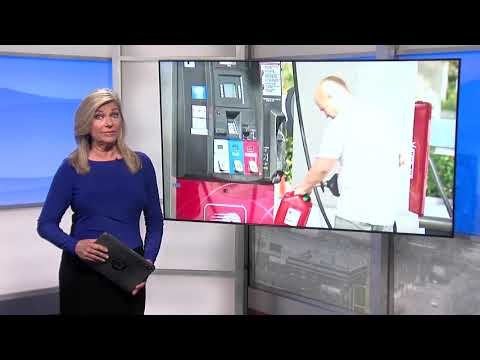
Finally, I advise against using a debit card to pay for gas.
The reason is that thieves are increasingly using gas pumps to steal your identity.
They install a credit card reader, and when you insert your card, they capture your information and can begin spending.
With a credit card, any unauthorized charges will get removed, costing you nothing.
But with a debit card, that money is gone from your checking account until the bank completes its investigation.
This could take months.
Because of this, I recommend either paying cash or using a credit card when buying gas.
#23. Pay Attention to Gas Prices Around You
One of the easiest ways to save money on gas is simply to be aware of what stations are charging.
Most drivers develop a routine and fill up at the same few locations without thinking twice about the price.
While convenience is important, it can also lead to overpaying if you never compare your options.
As you’re driving around town, take note of gas prices at different stations.
Over time, you’ll begin to notice patterns.
Some stations consistently have lower prices, while others charge a premium because of their location or convenience.
This is especially important when traveling.
Gas stations located directly off major highways and interstate exits often charge significantly more than stations just a few minutes farther away.
For example, taking an extra five minutes to drive into town during a road trip could save you $0.10 to $0.30 per gallon.
On a large fill-up, that difference can easily amount to several dollars.
You don’t need to obsess over every penny, but developing an awareness of local fuel prices can help you recognize a good deal when you see one.
The next time your tank is getting low, don’t automatically pull into the first station you pass.
A little awareness can help you avoid overpaying and keep more money in your pocket.
#24. Look for Gas Assistance Programs
If you’re struggling to afford gas, help may be available through local organizations and community assistance programs.
Many charities, churches, and nonprofit organizations offer transportation assistance to help individuals and families get to work, medical appointments, job interviews, and other essential destinations.
Depending on your situation, assistance may come in the form of:
- Gas vouchers
- Fuel gift cards
- Emergency financial assistance
- Public transportation passes
- Transportation programs for seniors or individuals with disabilities
A good place to start is by contacting local organizations such as:
- United Way (dial 211 in many areas)
- The Salvation Army
- Community action agencies
- Local churches
- County social services offices
These organizations can often connect you with available resources, even if they don’t provide direct assistance themselves.
If you’re experiencing a temporary financial hardship, don’t be afraid to ask for help. Transportation is often essential for maintaining employment, attending medical appointments, and meeting other basic needs.
While assistance programs aren’t a long-term solution for reducing fuel costs, they can provide valuable support during difficult times and help you stay on track financially.
Frequently Asked Questions

What is the fastest way to save money on gas?
The fastest way to reduce your fuel costs is to combine multiple savings strategies.
Using a cash back app like Upside, joining gas station rewards programs, and paying with a rewards credit card can lower your effective cost per gallon immediately.
Over time, improving your driving habits and reducing unnecessary trips can lead to even greater savings.
Does driving slower really save gas?
Yes. Fuel economy typically decreases at higher speeds because wind resistance increases dramatically.
According to the U.S. Department of Energy, every 5 mph you drive over 50 mph is like paying an additional $0.20 to $0.30 per gallon for gas.
Driving a little slower on the highway can significantly reduce fuel consumption.
Does premium gas improve fuel economy?
Not for most vehicles.
If your owner’s manual recommends regular gasoline, using premium fuel usually won’t improve fuel economy enough to justify the higher cost.
However, vehicles designed to use premium fuel should generally continue using the recommended fuel grade.
Is it cheaper to use air conditioning or roll down the windows?
It depends on your speed.
At lower speeds, rolling down the windows generally has little effect on fuel economy.
At highway speeds, however, open windows increase aerodynamic drag, which can reduce fuel efficiency.
In many cases, using air conditioning is the more efficient option on the highway.
Does cruise control save gas?
Cruise control can improve fuel economy because it helps maintain a consistent speed and reduces unnecessary acceleration.
It works best on relatively flat highways. On steep or hilly roads, manually controlling your speed may sometimes be more efficient.
How often should I check my tire pressure?
Most experts recommend checking your tire pressure at least once a month and before long road trips.
Properly inflated tires improve fuel economy, extend tire life, and help your vehicle handle more safely.
Is Costco gas worth it?
For many drivers, yes.
Warehouse clubs often sell gas for less than nearby stations.
If you drive frequently and already shop at Costco, Sam’s Club, or BJ’s, the fuel savings alone may offset a significant portion of the membership cost.
How much can I realistically save on gas each year?
The amount varies based on how much you drive and which strategies you use.
However, many households can save hundreds of dollars annually by combining rewards programs, cash back apps, better driving habits, proper vehicle maintenance, and strategic fuel purchases.
Final Thoughts
There are many things you can do to save money on gas.
The key is to start with the easy things first and add more ideas over time.
Don’t rush out and buy a new car if you don’t need one, as you will be paying a lot to save a smaller amount.
Instead, use the Upside app, take better care of your vehicle, and drive with better mileage in mind and you will see your monthly gas bill shrink.
- Read now: Use these tips to save $7,000 on your monthly expenses
- Read now: Here is the ultimate guide to getting a great price on a new car
- Read now: See the benefits of becoming a one car family
The post How to Save Money on Gas: 24 Simple Ways to Save Hundreds Each Year appeared first on Money Smart Guides.
.jpg)