
Remember the woman that walks into a room and makes you think she knows exactly who she is. You’ve seen her so have I. She’s not necessarily wearing the most expensive outfit in the room, maybe she’s in a simple linen shirt and great pair of pants or a dress she thrifted, or something she...
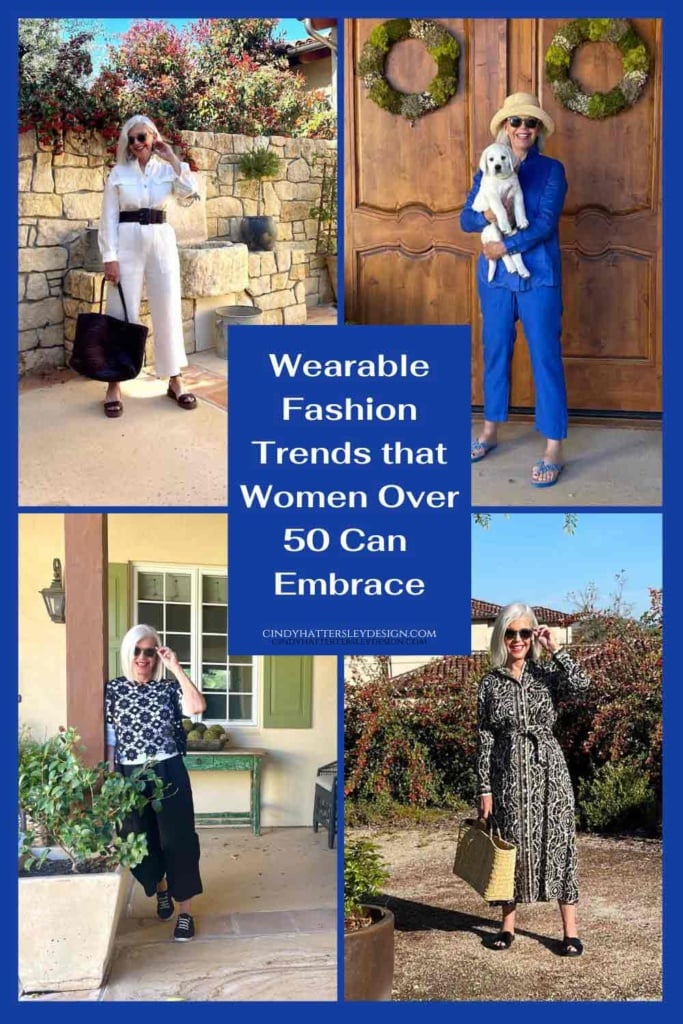
Remember the woman that walks into a room and makes you think she knows exactly who she is. You’ve seen her so have I. She’s not necessarily wearing the most expensive outfit in the room, maybe she’s in a simple linen shirt and great pair of pants or a dress she thrifted, or something she found at the back of a Zara rack on sale. But there’s something about her. She has the complete picture. She gets it. Is it the earrings, or the way the colors work together.? Is it her scarf that is tied just right, or the unexpected vintage brooch on an otherwise simple jacket? It all adds up she owns her own style.
That’s a collected style. It’s the opposite of what the fashion peeps try to sell us. They want us to believe that style is something we purchase. If we just buy the right logo bag or the same blazer that everyone else is wearing, we will arrive at some version of ourself we have been trying to reach. Real personal style doesn’t come from someone else’s label. It comes from us , our travels, our history, our eye, our instincts. The things we have gathered and loved over time. That’s the wardrobe worth building. Let’s chat about how to actually accomplish The Collected Wardrobe: How to Build a Personal Style That Tells Your Story.

What “Collected Style” Really Means
I think of my wardrobe the same way I think about my home. Nothing in it arrived all at once from a single source. Things were found antiquing, inherited, gifted, or stumbled upon. A box that I couldn’t do without from Roundtop, a pillow in a fabric I couldn’t resist, or a piece of art that speaks to something I can’t quite explain. The room works because everything in it was chosen with intention, not because it all came from the same catalog.
A collected wardrobe works the same way. It’s not a uniform., it’s not a system someone handed you. It’s a personal, evolving reflection of who you are, built piece by piece, over time that tells the world who you are.
Consider these things:
- Your wardrobe doesn’t have to match in any conventional sense. It has to feel coherent. Coherence comes from your taste, not from buying pieces from the same collection.
- An H&M find you wear for fifteen years is more of an investment piece than a designer bag you carry twice. The value is in the wearing, not the label.
- The things that make your wardrobe yours are usually the things no one else would have put together the same way.
That last one is worth considering. The goal isn’t to look like the best-dressed version of everyone else. It’s to look like the best-dressed version of you.
Wear Your Own Monogram
Here’s something I feel strongly about: I don’t want to be a walking advertisement for someone else’s brand. If I’m going to put something on my body, I’d rather it say something about me than about a brand.
There’s a particular kind of confidence required to wear a simple, beautiful piece with no visible branding and let it just be beautiful. No logo to signal anything to anyone, just good taste, good fit, and the quiet authority of a woman who knows who she is and what she likes.
Designer fashion has its place, and I’m not anti-luxury, I’m anti-logo. A beautifully made Italian leather bag with no hardware screaming its origins is a different thing entirely from a monogram-covered tote that exists primarily to tell people how much you spent. One is an investment in craft. The other is an investment in someone else’s identity. How has that become popular?
This philosophy, honestly, is liberating. It means you can shop anywhere. A great white shirt from Zara can reside happily next to a vintage find from a resale shop or a scarf you found in a market in Provence. Nobody needs to know the price of anything, and that’s exactly the point. It all works because you chose it.
Shop Monogrammed Pieces
The Real Investment Piece Conversation
We need to reframe what an investment piece actually is, because the fashion peeps have gotten into our heads about this. An investment piece is not defined by its price tag or its brand. It’s defined by how long you wear it and how often you reach for it period.
I’ve worn a quilted jacket from H&M for over five years. I’ve loved two vintage bone bangles that I found on eBay (literally for pennies). Nearly every time I wear them someone compliments me on them. Those are investment pieces. Meanwhile, I’ve seen women spend four figures on something they wear twice because it was “an investment”. That’s not an investment it is an expensive mistake.
The Questions Worth Asking Before You Buy Anything
- Will I still want this in five years? (Trends fail this test. Your taste rarely does.)
- Does this work with at least three things I already own (this is important)?
- Would I love this if it had no label on it at all?
- Is this solving a real gap in my wardrobe, or am I just in a shopping mood?
- Does this feel like me, or does it feel like someone I’m trying to be?
If the answer to most of those is yes, buy it! If you’re mostly rationalizing, put it back. The right piece will still feel right when you come back tomorrow.
Quality Is Worth Paying For—Just Not Where You Think
Quality matters enormously, but not in a price-equals-quality way. A fast-fashion piece made from a beautiful fabric in a classic cut will outlast an expensive piece made poorly in a trendy pattern or silhouette every single time. Are those bags emblazoned with logos real leather?
What to look for regardless of where you’re shopping:
- Natural fibers when possible—linen, cotton, wool, silk. They age better, feel better, and last longer.
- Good construction at the seams, buttonholes, and hems (hard to find these days even with the expensive brands). These tell you far more than a label does.
- Fit that requires minimal alteration. A good tailor is worth every penny, but you shouldn’t need to rebuild something from scratch.
- Colors that are saturated and true rather than slightly off.
Accessories Are the Whole Point
I’ve said this before and I’ll keep saying it. In my opinion accessories make the outfit and the person. They’re where your personality takes center stage. They’re the difference between a nice outfit and a fabulous one.
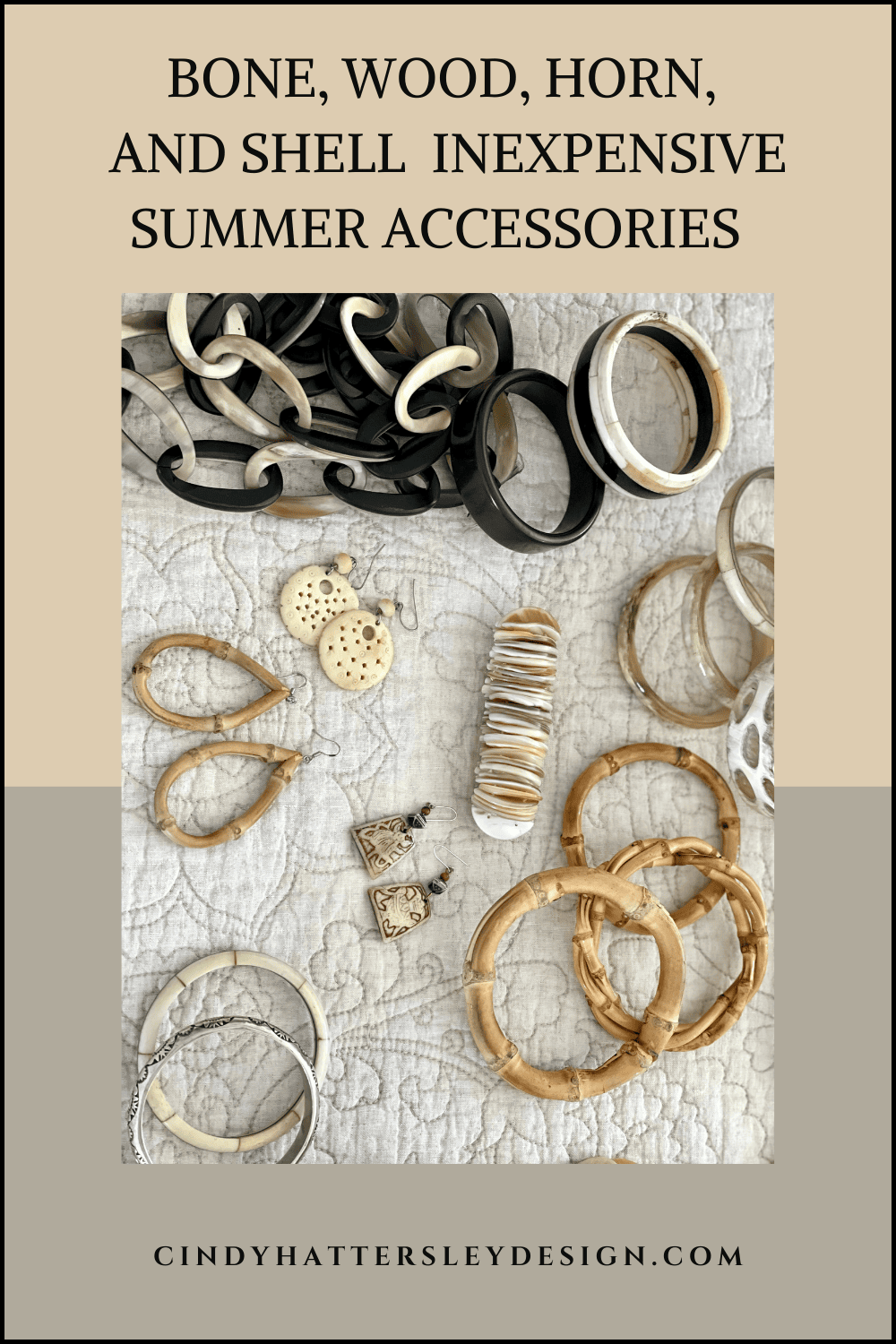
Think about it. A white shirt and dark pants is a white shirt and dark pants. Add a stack of interesting bangles, a great scarf, and earrings you found at a local antique market. Suddenly it’s an outfit with character. The clothes became the canvas. The accessories are the art.
Shop Curated Scarves
Building a Collection, Not a Costume
The collected approach to accessories is the same as everything else: gathered over time, chosen with intention, personal to the point of being irreplaceable. These are the things that tell the story of where you’ve been and who you are.
A few categories worth investing real thought in:
- Earrings: They frame your face and get noticed first. A signature earring style. Whether that’s artisan made, vintage, or native american, does more for your look than almost anything else.
- Scarves (a love of mine) are one of the most versatile and underused accessories. Worn at the neck, tied on a bag, worn at the waist, or knotted at the wrist. Find a few you truly love and learn five ways to wear each one. I have never regretted spending the extra dollars on a fabulous scarf.
- Bags: Your everyday bag especially should be something you love looking at every day, in a quality that holds up. The brand is irrelevant, craft, proportion, and how you will use them are.
- Shoes: Worth spending more on than almost anything else, because bad or uncomfortable shoes ruin a great outfit and great shoes elevate a simple one.
- Jewelry with a story: The inherited piece, the travel find, the piece a friend or an artisan made. These are the accessories that make people ask “where did you get that?” and allow you to own your own style.
The Statement Jacket: Your Style Punctuation Mark
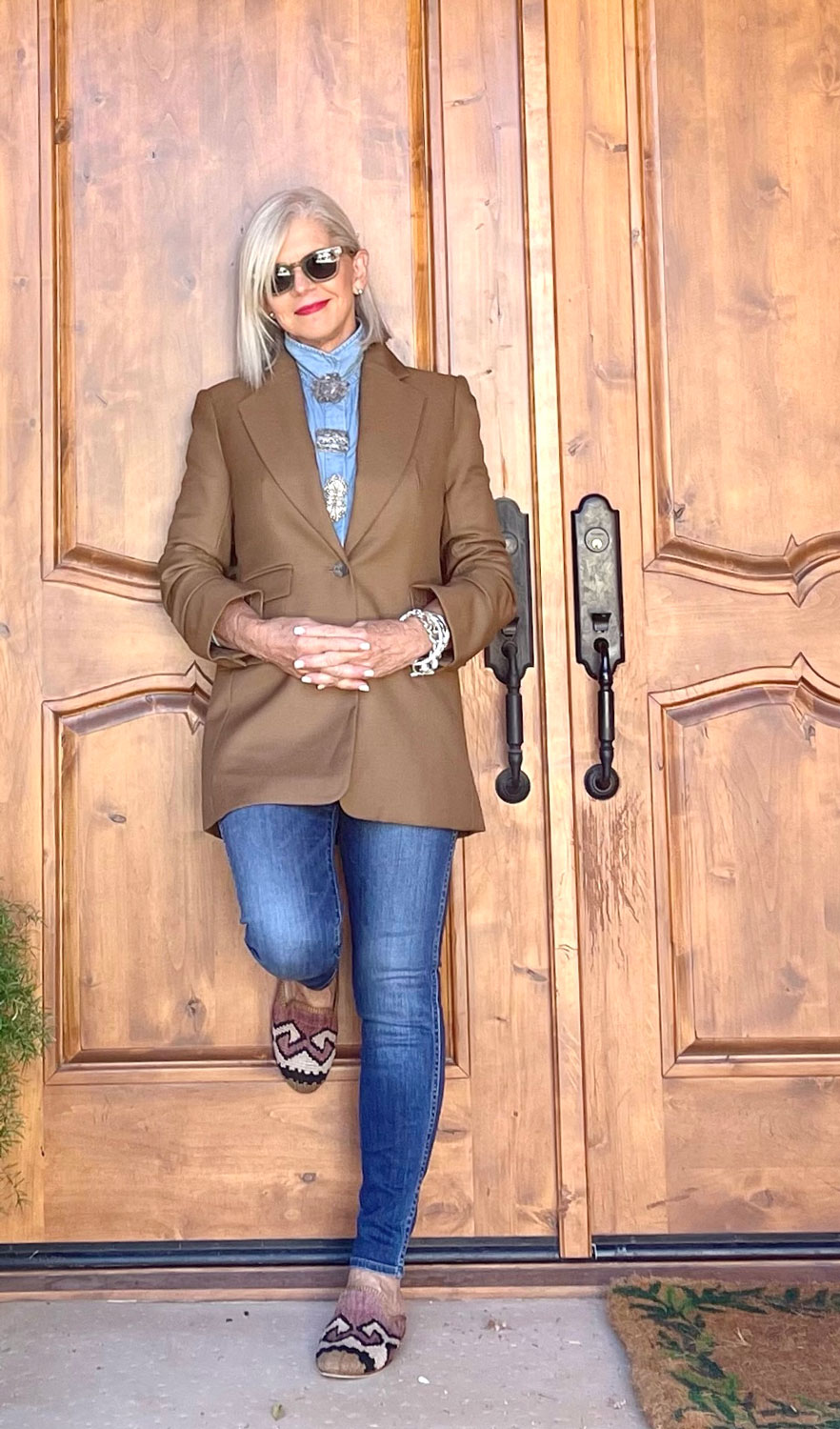
If accessories are where your personality lives, a great statement jacket is where it announces itself. I think every collected wardrobe needs one. I am not talking about a safe blazer, or something you bought because it goes with everything. I am speaking of the jacket that makes people stop and say”where did you get that’ ? Maybe it is a vintage find from RL, or in a print no one else thought to wear, or an embellished topper that has a story behind it. That jacket is in every sense yours.
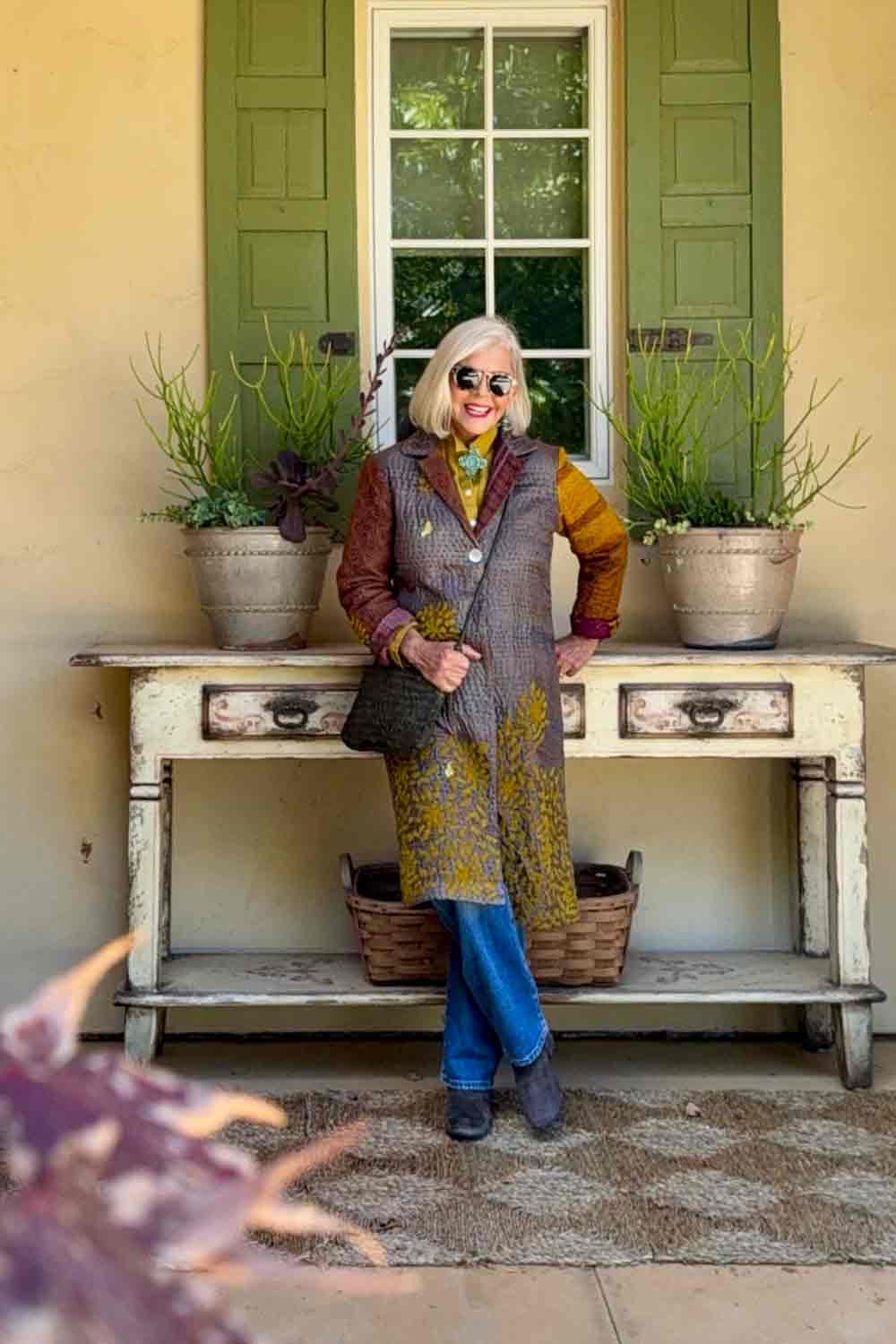
This jacket belonged to my sister who has passed. Everytime I wear it I think of her, and I wear it often.
This is the piece that does the heavy lifting of personal style with very little effort on your part. Throw it over a simple white shirt and jeans and the outfit is done. It is interesting, intentional, and completely pulled together. It works because it doesn’t match. It contrasts. It has a point of view. That’s what a collected wardrobe does: it lets individual pieces with real character do the talking, so you don’t have to try too hard.
Vintage shops, estate sales, a market in a city you’re visiting, a consignment store you almost walked past; this is where statement jackets live. They’re rarely found on the first try, and that’s part of what makes them fun. When you find the right one, you’ll know. It’ll feel like it was already yours.
Favorite Summer Statement Jackets
Stop Shopping for Accessories as Afterthoughts
Most of us buy our clothes and then reach for whatever accessories happen to be sitting out. The collected approach flips this. Think of accessories as the anchor,the things you build around. Some of my most satisfying outfits started with a pair of earrings or a scarf I wanted to wear and worked backward from there.It’s a small mental shift that makes a big difference in how intentional getting dressed feels
You might enjoy reading my post The Best Timeless Textural Summer Accessories here
Shop Bespoke Summer Jewelry
Start With Your Life, Not the Trend Report
Before any of this can work, you need to be honest about the life you’re actually dressing for, not the aspirational version but the real one ( I have to remind myself of this continually)
Write down what a normal week looks like. What do you do, where you go, how formal or casual these events are. Your wardrobe should reflect those proportions. If you spend three days a week in your garden or at your desk and two evenings a month at something that requires real dressing up, your closet ratio should reflect that reality, not the reverse.
A collected wardrobe works for the life you have because it’s built around you. Not an idea of you, nor the you from ten years ago, and not the you that lives in your daydreams, the actual you, right now, in this chapter.

Dress Your Body As It Is
This is worth saying plainly: dress the body you’re in today. Not the one you had, not the one you hope to have. You deserve to look good now, not after some threshold you’ve decided to set for yourself. The collected approach to dressing your body means learning what silhouettes genuinely work for your frame, what lengths flatter your proportions, what necklines and sleeve lengths you find yourself reaching for again and again, and leaning into all of that rather than fighting it.
Fit is the single most important variable in whether something looks intentional or accidental. A perfectly fitted piece from anywhere will always outperform an expensive piece that doesn’t fit properly. Find a good tailor. It will change your relationship with your wardrobe.
Color: Your Quiet Signature
Color is one of the most personal elements of a collected style, and it’s also where a lot of women play it too safe (me included).I understand the pull toward an all-neutral palette. It’s so easy, it all goes together, nothing clashes and it works for travel. A wardrobe with only neutrals can start to feel a little like a beautiful room with no art on the walls., right, something’s missing.
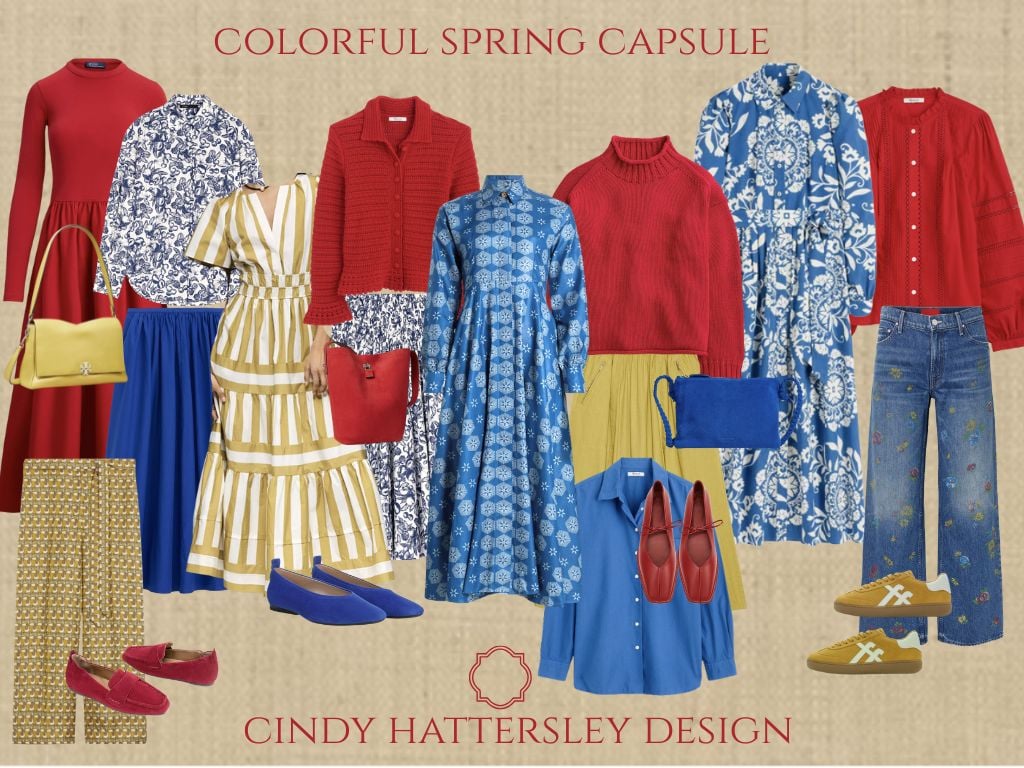
Shop Colorful Spring Capsule
Your collected wardrobe should have a color story that’s distinctly yours. Maybe you’re drawn to the warm tones of terracotta and saffron. Maybe you love the richness of jewel tones. Maybe you’re a person that loves pairing the unexpected when it comes to colors (that’s me). Whatever it is, that preference is already in you. You just have to pay attention to it and trust it.
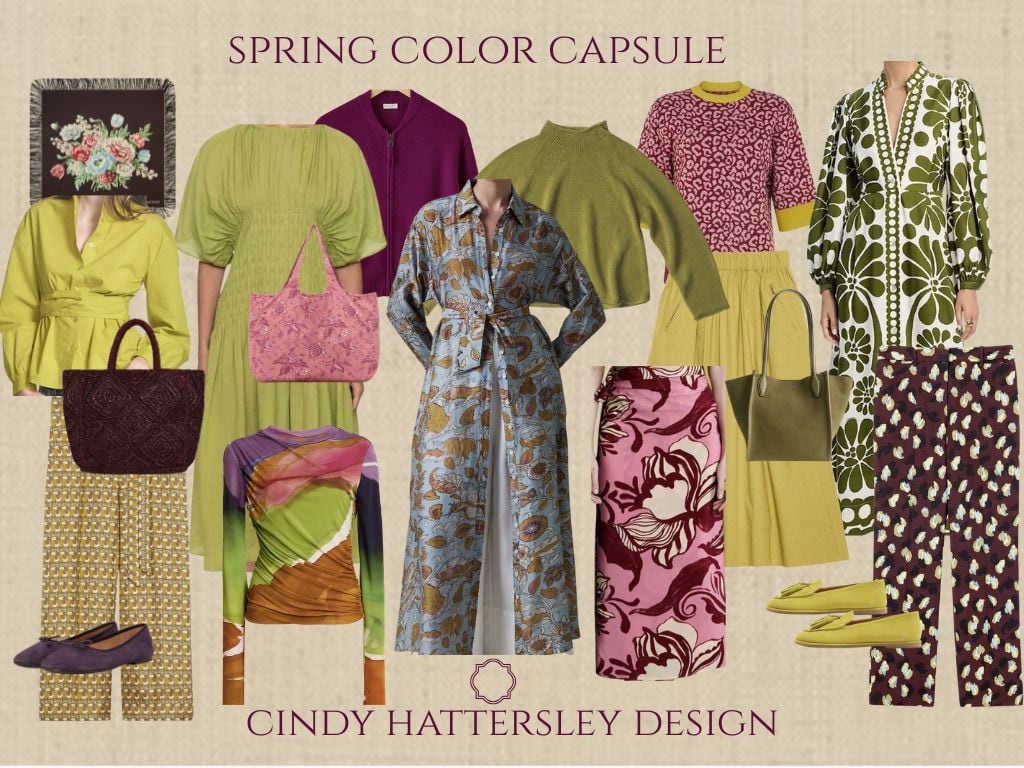
Shop Olive & Aubergine Spring Capsule
Build From Your Personal Neutrals
Start by identifying your actual neutrals,the foundational colors that everything else works with. For some people this is the classic black and white. For others it’s navy and camel. For others it’s a warm taupe and cream palette. These are the bones of your wardrobe, then build your color story on top of that foundation. Choose the pieces that bring in personality, that reflect your taste, that make you reach for them first. Don’t be afraid of color near your face. A beautifully saturated blouse or scarf in the right shade can do way more for how you look than expensive skincare.
The Wardrobe Mistakes Worth Avoiding
Yikes I’ve made most of these. You probably have too. We’re in good company.
Shopping for someone else’s idea of you. If you’re buying it because a magazine said it’s “on trend”(you know my feelings about that term) or because your friend looks great in it, pause. Personal style only works when it’s actually personal.
Paying for the logo instead of the piece. A brand name is not a substitute for quality, fit, or relevance to your actual life. Spend where the craft justifies it, not where the marketing does.
Treating accessories as an afterthought. They’re not finishing touches. They’re the whole point. Give them the same thought you give your clothes, or more1
Buying “aspirationally” rather than honestly. Be honest: if you haven’t worn it in two years waiting for the right occasion, the right occasion is not happening. Buy for where you actually go, not where you hope to go someday (note to self). A collected wardrobe is an evolving thing. It should look like who you are now, not who you were in a different decade. If your closet feels like a time capsule, it probably is. And we all know that woman who still has the same haircut she had in her high school yearbook. Don’t let your wardrobe be that haircut.
A Simple Framework for Building Your Collected Wardrobe
1. Edit What You Have
Pull everything out. (Yes, everything.) Try things on. Ask whether each piece still feels like you (not the you of five years ago), but the you right now. What you keep is your starting point, and it will tell you a lot about your actual taste.
2. Find Your Three Words-from Alison Bornstein
Alison Bornstein brillantly coined the idea of describing your style in three words. Not words from a magazine or an influencer, yours. Classic. Earthy. Unexpected. Warm. Relaxed. Collected. (Collected is, in fact, a perfectly good style word.) These three words can become your filter for every shopping decision from here on. You might want to check out her services here, or her book Wear it Well here.
3. Identify Your Foundation
What are the five to eight pieces you reach for first? In your best silhouettes, your most flattering colors, quality that holds up. These are the bones. Everything else hangs on them (sigh).
4. Invest in Your Accessories
Before you buy another top or another pair of pants, look hard at your accessories. This is where your collected style comes to life, and where the most distinctive, personal, irreplaceable pieces tend to live. Shop for accessories the way you’d shop for art or antiques, slowly, intentionally and from the gut.
5. Add Slowly
The enemy of a collected wardrobe is impulse shopping. The best pieces in anyone’s closet are the ones that were considered, waited for, chosen deliberately. Add one thing at a time, and live with your wardrobe between additions. You’ll learn what you actually need rather than what you thought you needed. We have all been there, right?
6. Let It Evolve
Your collected style is not a finished project. It’s a living thing that grows as you grow. The best wardrobes I’ve ever seen belong to women who’ve been paying attention to themselves for a long time. They get it!
The Point of All of This
A collected wardrobe isn’t about owning a certain number of things, or spending a certain amount of money, or following a system someone developed for someone else’s life. It’s about knowing yourself well enough that what you put on in the morning feels like a genuine extension of who you are. Choosing things because they speak to your eye, your history, your taste.
Wear your own monogram. Own Your Own Style.
I apologize for the length of this post. I have been blogging since 2012 and I am trying to consolidate my posts on this subject. This post will serve as a cornerstone post for others of this genre that you might enjoy here:
The Collected Look-How to Get It-and why it Makes a Home Feel Like You
Here’s How you can Own your Own Style After 50 with Confidence