Microneedling for Hair Growth: Benefits, Risks, and What to Know Before You Try It
4 hrs ago 9
AlviArmani Hair Science Evidence, Mechanisms, and Safer Use Microneedling is one of the more discussed non-surgical tools in hair restoration. Here is what the evidence says about how it may work, where it may help, and why safe technique matters. Microneedling creates controlled microchannels in the scalp, which may support wound-healing pathways and topical absorption…
The post Microneedling for Hair Growth: Benefits, Risks, and What to Know Before You Try It appeared first on Alvi Armani International.
AlviArmani Hair Science
Evidence, Mechanisms, and Safer Use
Microneedling is one of the more discussed non-surgical tools in hair restoration. Here is what the evidence says about how it may work, where it may help, and why safe technique matters.
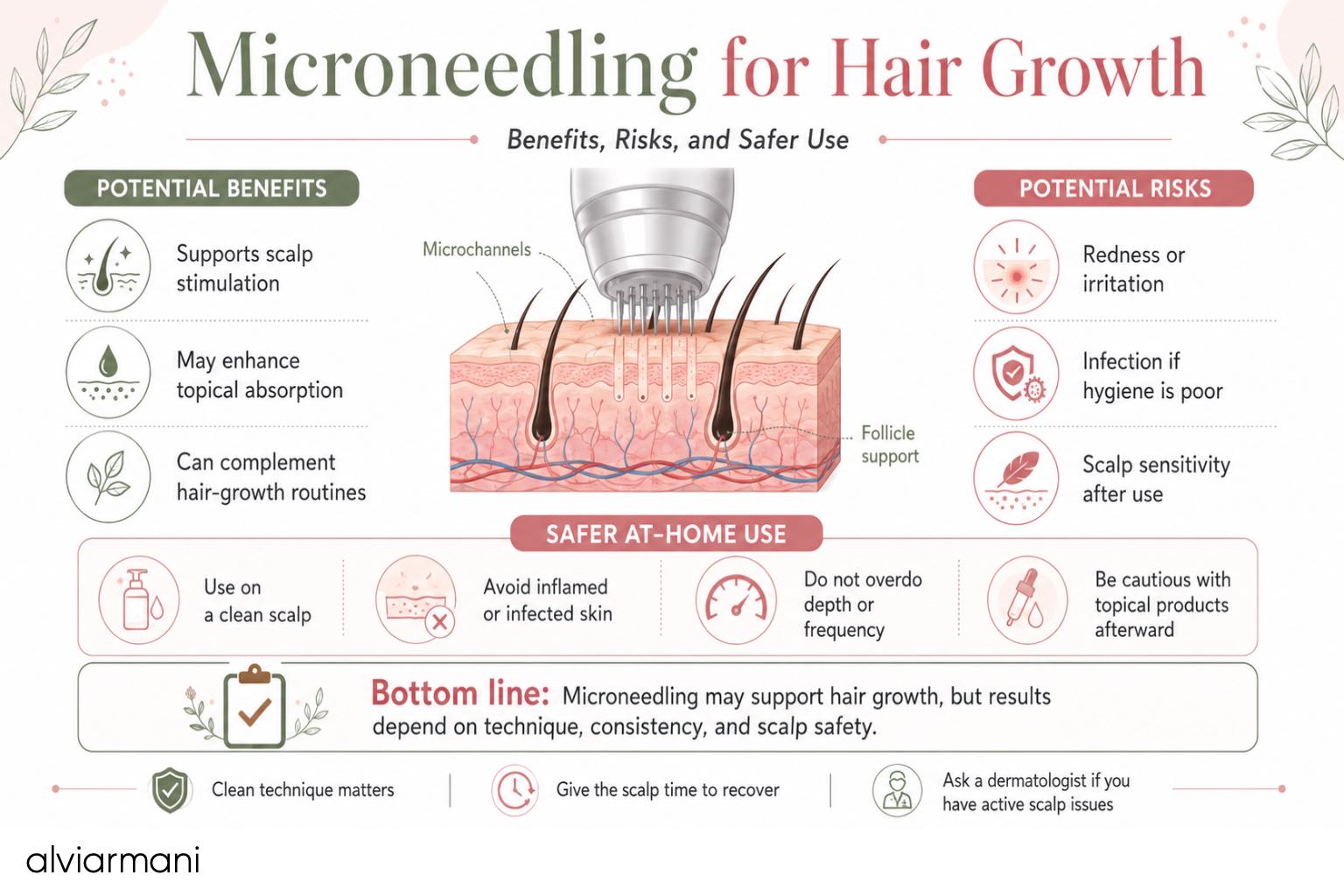
Microneedling creates controlled microchannels in the scalp, which may support wound-healing pathways and topical absorption when used appropriately.
This article is educational and does not replace medical advice. Anyone with sudden shedding, patchy hair loss, scalp pain, inflammation, infection, or scarring hair loss should speak with a qualified clinician before trying microneedling.
Microneedling has become one of the more discussed non-surgical tools in hair restoration. Once used mainly in skin rejuvenation, microneedling is now being studied for androgenetic alopecia, also known as pattern hair loss, because of its potential to support scalp stimulation, improve topical absorption, and activate wound-healing pathways involved in hair cycling. [1–6]
But microneedling is not a magic shortcut. It creates controlled micro-injuries in the scalp, which means the benefits depend heavily on technique, hygiene, timing, device quality, needle depth, scalp condition, and whether it is being used alone or alongside other hair-growth treatments. [2,4–6]
Below, we break down what the research says, where microneedling may help, what risks to understand, and how it may fit into a broader scalp and follicle-support strategy.
What Is Microneedling for Hair Growth?
Microneedling is a procedure that uses very small needles to create controlled microchannels in the skin. On the scalp, these micro-injuries may stimulate a repair response involving platelets, growth factors, inflammatory signaling, blood vessel support, extracellular matrix remodeling, and cellular pathways associated with the hair cycle. [2,3,6]
In hair loss research, microneedling is most often studied for androgenetic alopecia, the common patterned form of hair loss in men and women. It has also been reviewed in other hair loss conditions, but the strongest clinical interest remains in pattern hair loss and combination therapy with topical agents such as minoxidil. [1,2,4–6]
How Microneedling May Support Hair Growth
Microneedling appears to work through several overlapping mechanisms.
First, it may stimulate wound-healing pathways in the scalp. In a murine model, repeated microneedle stimulation increased hair growth and was associated with activation of Wnt/β-catenin signaling and vascular endothelial growth factor, also known as VEGF, both of which are relevant to follicle activity and vascular support. [3]
Second, microneedling may improve the delivery of topical treatments by temporarily disrupting the stratum corneum, the outer barrier of the skin. This is one reason it is often studied alongside topical minoxidil rather than only as a stand-alone intervention. [2,4–6]
Third, controlled scalp stimulation may help create a more biologically active environment around miniaturizing follicles. This does not mean microneedling can revive every follicle or reverse advanced hair loss, but it may support follicles that are still present and responsive. [1–6]
The Microneedling Cascade: What Happens After Controlled Micro-Injury?
A helpful way to understand microneedling is as a controlled biological cascade.
When microneedles enter the scalp, they create microchannels and tiny zones of injury. This may trigger platelet activation, local inflammatory signaling, and release of growth factors and cytokines. These signals can then influence cellular activity in the surrounding scalp tissue, including fibroblast activation, angiogenesis, extracellular matrix remodeling, dermal papilla stimulation, and stem-cell-associated signaling. [2,3,6]
Microneedling may support hair-growth strategies, but results depend on technique, consistency, scalp health, and safe aftercare.
Several growth factors and signaling pathways are especially relevant to hair biology, including platelet-derived growth factor, transforming growth factor-beta, VEGF, fibroblast growth factor, insulin-like growth factor-1, keratinocyte growth factor, Wnt/β-catenin, MAPK/ERK, PI3K/Akt, JAK/STAT, and NF-κB-related inflammatory signaling. [2,3,6]
This cascade matters because the hair follicle is not controlled by one simple switch. Follicle cycling depends on a network of signals that influence whether a follicle remains in rest, enters anagen, sustains growth, or miniaturizes over time. Dr. Charit Seneviratne’s white paper on botanical modulation of follicular physiology makes a similar systems-level point: follicular health involves overlapping androgenic, inflammatory, oxidative, vascular, metabolic, and growth-factor pathways. [7]
For AlviArmani, this is an important concept. Microneedling is best understood as one possible adjunct within a broader hair restoration framework: follicle biology, scalp condition, medical diagnosis, treatment timing, and long-term planning all matter. The scalp barrier is temporarily more permeable after microneedling, and that can increase both potential benefit and potential irritation. [2,4–6]
What the Research Shows
One of the landmark clinical studies was a randomized, evaluator-blinded pilot study by Dhurat and colleagues in 2013. The study evaluated microneedling in androgenetic alopecia and found that microneedling, when combined with minoxidil, produced greater improvement than minoxidil alone in the study population. The authors also reported that microneedling appeared promising even in some patients who had responded poorly to previous conventional treatment. [1]
A 2022 systematic review by English, Ruiz, and DoAmaral found that microneedling improved hair parameters across a range of hair loss types, needling devices, needle depths, treatment frequencies, and severities, especially as an adjunct therapy. The authors also noted that treatment protocols varied widely, which makes it difficult to define one universally “best” approach. [2]
A 2023 systematic review and meta-analysis by Abdi and colleagues supported the use of microneedling plus topical minoxidil for androgenetic alopecia, finding that combination therapy improved hair growth outcomes compared with minoxidil alone. The authors also noted that differences in study methods, treatment areas, and measurement approaches may affect interpretation. [4]
A 2025 systematic review and meta-analysis by Ahmed and colleagues also evaluated combined microneedling therapy versus topical minoxidil alone in androgenetic alopecia. The review concluded that combination microneedling therapy significantly enhanced outcomes such as hair count and hair diameter, with reported adverse effects generally described as mild. [5]
The 2024 study by Leonik, Smoczok, and Bergler-Czop evaluated microneedling alone and in combination with 5% minoxidil and autologous platelet-rich plasma in men with androgenetic alopecia. This is useful because it reflects the growing clinical interest in microneedling not only as a standalone scalp-stimulation tool, but also as part of multi-modal regenerative and topical protocols. [6]
The overall takeaway: Microneedling has meaningful evidence as an adjunctive hair-growth therapy, especially when paired with proven topical treatments. The evidence is encouraging, but protocols are not yet fully standardized. [2,4–6]
Potential Benefits of Microneedling for Hair Growth
May improve hair count
Clinical studies and reviews suggest microneedling, especially with topical minoxidil, can improve hair count in androgenetic alopecia. [1,2,4–6]
May enhance absorption
Microneedling creates temporary microchannels that may increase topical penetration, which is why timing matters. [2,4–6]
May stimulate pathways
Controlled injury may trigger repair pathways involving Wnt/β-catenin and VEGF signaling. [3]
May support multi-modal treatment plans
The Leonik study is relevant because it evaluated microneedling in different combinations, including minoxidil and platelet-rich plasma. This reflects how microneedling is often considered in real-world hair restoration: not always as a standalone therapy, but as one part of a broader treatment strategy. [6]
May help people who are not responding optimally to topical treatment alone
The Dhurat pilot study suggested that microneedling may be useful in some cases of hair loss that had responded poorly to previous conventional therapies. [1]
Can be part of a broader follicle-support strategy
Microneedling is not a replacement for diagnosis, medical therapy, regenerative planning, or surgical evaluation when needed. But when performed correctly, it may complement a larger hair restoration strategy focused on the follicle environment. [2,7]
Risks and Side Effects of Microneedling for Hair Growth
Microneedling is often described as minimally invasive, but it is still a procedure that intentionally disrupts the skin barrier. That means risk management matters. [2,4–6]
Common short-term side effects
Temporary redness, tenderness, mild swelling, pinpoint bleeding, dryness, flaking, or irritation can occur after treatment. These effects are usually short-lived, but they can be more intense with deeper needles, aggressive technique, or sensitive skin. [2,4–6]
Infection risk
Because microneedling opens microchannels in the scalp, poor hygiene can increase the risk of bacterial or fungal infection. Devices should be sterile or properly disinfected, and microneedling should not be performed over active scalp infections, open wounds, inflamed dermatitis, or pustules. [2]
Irritation from topical products
Applying strong actives immediately after microneedling may cause burning, stinging, dermatitis, or excessive absorption. This is especially important with minoxidil, essential oils, acids, retinoids, alcohol-heavy formulas, or fragranced products. [2,4–6]
Scarring risk
Scarring appears uncommon in published microneedling hair studies, and the 2023 meta-analysis by Abdi and colleagues reported no scarring or serious adverse events among included studies. Still, scarring is biologically possible if microneedling is performed too aggressively, too frequently, with excessive pressure, or on skin prone to abnormal scarring. [4]
Shedding or breakage confusion
Some users may notice temporary shedding, scalp irritation, or hair shaft breakage after aggressive at-home rolling. This may not mean the follicles are permanently damaged, but it can signal that the technique, frequency, or aftercare needs to be adjusted. [2]
Hyperpigmentation or prolonged inflammation
Individuals prone to post-inflammatory hyperpigmentation may develop discoloration after overly aggressive treatments. This is more likely when inflammation is prolonged or aftercare is poor. [2]
Who Should Be Careful or Avoid Microneedling?
Microneedling may not be appropriate for everyone. Extra caution is warranted for people with active scalp psoriasis, eczema flares, seborrheic dermatitis, folliculitis, open wounds, keloid tendency, bleeding disorders, uncontrolled diabetes, immune suppression, or those taking medications that affect bleeding or wound healing. [2]
Anyone with sudden hair loss, patchy hair loss, scarring alopecia, pain, burning, scaling, or rapid shedding should be evaluated by a clinician before starting microneedling. In those cases, the diagnosis matters more than the device. [2]
At-Home vs. Professional Microneedling
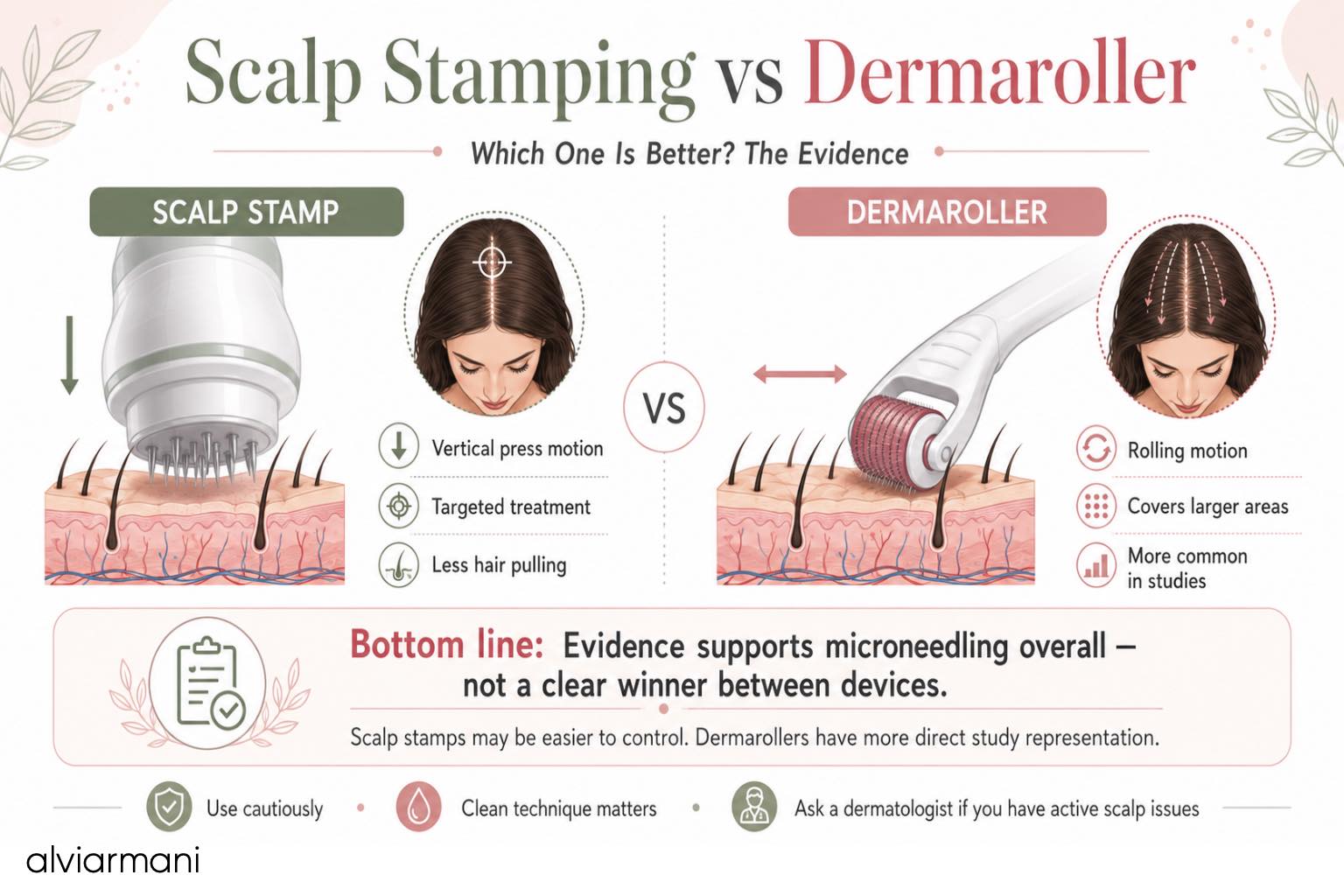
At-home dermarollers, scalp stamps, and consumer microneedling pens are widely available, but they are not the same as professional microneedling. Professional treatments generally allow better control over depth, sterility, pressure, treatment pattern, and post-procedure guidance. [2]
Scalp stamps may be easier to control, while dermarollers have more direct representation in published microneedling studies. Evidence supports microneedling overall, not a clear winner between devices.
At-home tools may be lower cost and more convenient, but they carry risks when reused, shared, poorly cleaned, pressed too hard, rolled aggressively, or used too frequently. The scalp is not a place to “push through” pain or bleeding. More trauma does not necessarily mean more growth. [2]
For many people, the safest approach is to speak with a dermatologist or hair-restoration clinician before beginning, especially if using microneedling alongside minoxidil, platelet-rich plasma, prescription therapies, or other active treatments. [2,4–6]
Are At-Home Microneedling Devices Safe and Effective?
At-home microneedling tools, including dermarollers, dermastamps, and consumer microneedling pens, have become popular because they are affordable and convenient. However, “at home” does not automatically mean low risk. Microneedling works by creating controlled micro-injuries in the scalp, and that control is exactly what becomes harder to guarantee outside a clinical setting. [2]
The biggest safety concerns with at-home devices are improper cleaning, repeated reuse of dull needles, excessive pressure, inconsistent needle depth, and applying active products too soon after treatment. These mistakes can increase the risk of irritation, infection, inflammation, scalp tenderness, and potentially scarring. Even when serious complications are uncommon, poor technique can turn a potentially helpful tool into a source of chronic scalp irritation. [2,4]
Effectiveness is also less predictable at home. Many published studies on microneedling for androgenetic alopecia involve structured protocols, defined needle depths, controlled treatment intervals, and professional oversight. The 2022 systematic review by English, Ruiz, and DoAmaral found encouraging results for microneedling in hair loss disorders, but it also emphasized that protocols varied widely across studies, including differences in device type, depth, frequency, and combination therapy. That variability makes it difficult to say that any one consumer device or at-home schedule will reliably reproduce clinical outcomes. [2]
At-home devices may be reasonable for some people when used conservatively, hygienically, and on a healthy scalp. Shorter-needle cosmetic devices may carry less risk than deeper medical-style needling, but they may also produce less meaningful stimulation. Deeper needling, especially when combined with minoxidil or other actives, should be approached more cautiously because the scalp barrier is temporarily opened. [2,4–6]
A practical way to think about at-home microneedling is this: it may be a supportive tool, but it should not be treated like an ordinary hair brush or scalp massager. It is still a procedure. Anyone using an at-home device should avoid treating inflamed skin, active dandruff flares, folliculitis, open wounds, recent sunburn, or areas with unexplained pain or scaling. The device should not be shared, should be cleaned according to manufacturer instructions, and should be replaced when needles become dull or bent. [2]
For people with sensitive skin, medical conditions, active scalp disease, or more advanced hair loss, professional guidance is the safer route. A clinician can help determine whether microneedling is appropriate, what depth and frequency make sense, and how to time topical products around each session. [2,4–6]
Bottom line: At-home microneedling may be safe for carefully selected users, but its effectiveness is less certain than professionally guided protocols, and the risk depends heavily on technique. Conservative use, strict hygiene, and avoiding aggressive treatment are essential. More pressure, more bleeding, or more frequent sessions do not necessarily mean better hair growth and may increase the chance of irritation or harm. [2]
How Microneedling Fits Into a Hair Restoration Plan
Microneedling should be viewed as a support tool, not the foundation of hair restoration. The foundation is still diagnosis: identifying the type of hair loss, understanding whether follicles are still responsive, evaluating scalp health, and selecting treatments that fit the patient’s goals and biology. [2]
At AlviArmani, microneedling is best understood as part of a larger conversation about follicle support. For some patients, it may be considered alongside topical therapy, platelet-rich plasma, exosomes, regenerative strategies, or surgical planning. For others, it may not be the right fit at all.
The key principle is simple: microneedling temporarily makes the scalp more permeable. That can be useful, but it also means the scalp is more vulnerable. [2,4–6]
Where Follicular Biology Fits
Microneedling should not be understood as a single-mechanism intervention. Hair follicle cycling is influenced by multiple overlapping domains: inflammation, oxidative stress, androgen signaling, growth-factor activity, vascular support, and cellular communication.
Dr. Charit Seneviratne’s white paper describes botanical compounds as potential multi-target modulators within this follicular network, including pathways such as Wnt/β-catenin, FGF, VEGF, IGF-1, NF-κB, oxidative stress, and microvascular support. [7]
This systems-level view is consistent with the broader AlviArmani philosophy: hair restoration is not just about one tool, one product, or one procedure. It is about understanding the follicle environment and choosing interventions that make biological and aesthetic sense.
Practical Safety Tips
Use microneedling only on a clean, healthy scalp. Do not needle over inflamed, infected, sunburned, or broken skin. Avoid sharing devices. Replace or sterilize tools appropriately. Do not apply harsh actives immediately afterward. Avoid aggressive pressure. Give the scalp time to recover. Stop if you develop significant pain, prolonged redness, pus, crusting, swelling, or worsening irritation. [2]
Use microneedling only on a clean, healthy scalp.
Avoid inflamed, infected, sunburned, broken, painful, or actively flaking skin.
Do not share devices, and replace tools when needles become dull or bent.
Avoid aggressive pressure, excessive bleeding, or overly frequent treatment.
Be cautious with minoxidil, prescriptions, essential oils, acids, or strong actives after treatment.
If combining microneedling with minoxidil, platelet-rich plasma, prescription therapies, or other active treatments, ask a clinician how long to wait before applying products after a session. [2,4–6]
The Bottom Line
Microneedling for hair growth is one of the more promising procedural adjuncts for androgenetic alopecia. Research suggests it may improve hair outcomes, particularly when combined with topical minoxidil, and its biological rationale includes wound-healing activation, growth-factor signaling, improved topical delivery, angiogenesis, dermal papilla stimulation, and broader tissue remodeling. [1–6]
But it is not risk-free. The same microchannels that may support absorption can also increase irritation, infection risk, and sensitivity if microneedling is done incorrectly. The best results come from using it thoughtfully, conservatively, and as part of a broader hair restoration plan. [2,4–6]
For anyone considering microneedling, the goal should not be maximum trauma. The goal should be controlled stimulation, proper recovery, and long-term consistency.
References
Dhurat R, Sukesh MS, Avhad G, Dandale A, Pal A, Pund P. A randomized evaluator blinded study of effect of microneedling in androgenetic alopecia: a pilot study.International Journal of Trichology. 2013;5(1):6–11. doi:10.4103/0974-7753.114700. PMID: 23960389; PMCID: PMC3746236.
English RS Jr, Ruiz S, DoAmaral P. Microneedling and Its Use in Hair Loss Disorders: A Systematic Review.Dermatology and Therapy. 2022;12(1):41–60. doi:10.1007/s13555-021-00653-2. Epub 2021 Dec 1. PMID: 34854067; PMCID: PMC8776974.
Kim YS, Jeong KH, Kim JE, Woo YJ, Kim BJ, Kang H. Repeated Microneedle Stimulation Induces Enhanced Hair Growth in a Murine Model.Annals of Dermatology. 2016;28(5):586–592. doi:10.5021/ad.2016.28.5.586. PMID: 27746638; PMCID: PMC5064188.
Abdi P, Awad C, Anthony MR, Farkouh C, Kenny B, Maibach HI, Ogunyemi B. Efficacy and safety of combinational therapy using topical minoxidil and microneedling for the treatment of androgenetic alopecia: a systematic review and meta-analysis.Archives of Dermatological Research. 2023;315(10):2775–2785. doi:10.1007/s00403-023-02688-1. Epub 2023 Sep 4. PMID: 37665358.
Ahmed KMA, Kozaa YA, Abuawwad MT, Al-Najdawi AI, Mahmoud YW, Ahmed AM, Taha MJJ, Fadhli T, Giannopoulou A. Evaluating the efficacy and safety of combined microneedling therapy versus topical Minoxidil in androgenetic alopecia: a systematic review and meta-analysis.Archives of Dermatological Research. 2025;317(1):528. doi:10.1007/s00403-025-04032-1. PMID: 40056230; PMCID: PMC11890238.
Leonik S, Smoczok M, Bergler-Czop B. Evaluation of the efficacy of microneedling without and with minoxidil 5% and autologous platelet-rich plasma for androgenetic alopecia in men.Postępy Dermatologii i Alergologii. 2024;41(5):505–514. doi:10.5114/ada.2024.143496. Epub 2024 Sep 24. PMID: 39606599; PMCID: PMC11589637.
Seneviratne C. Botanical Modulation of the Hair Growth Cycle: Molecular and cellular mechanisms of plant-derived compounds in follicular regeneration, growth signaling, and long-term hair follicle health. AlviArmani Research Institute White Paper. Available from: AlviArmani Research Institute.