
 Museum of Jewish Heritage Blog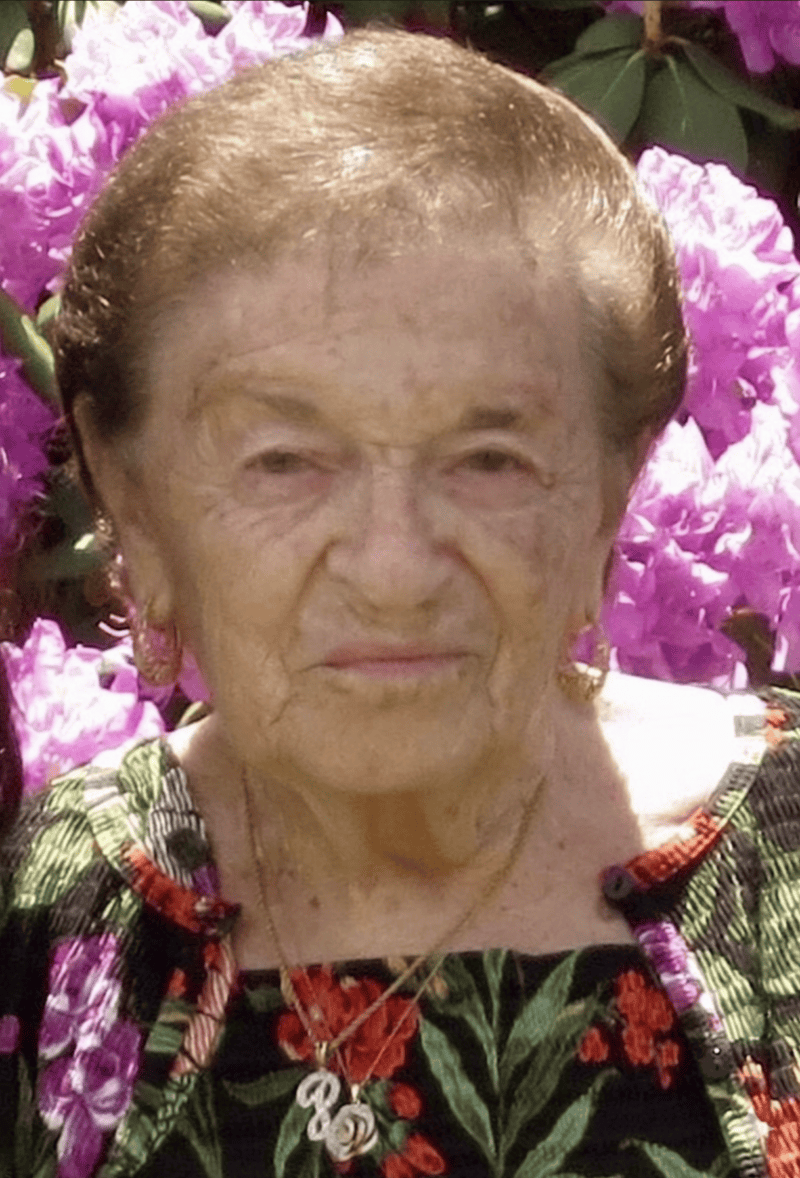
Paula Beach was born Pola Minska on June 16, 1924, in Åódź, Poland, the youngest child to Rivka and Szaja Minski. She lived in the metropolitan city in an apartment above the furniture store her parents owned and operated, along with her parents, cherished grandmother, Rucha Laja, older sisters, Mania and Eva, and older brother, Yitzak.
She always described her childhood in Europe as “ideal.†She had a wonderful, loving family and enjoyed many traditions celebrating the Jewish holidays and taking family vacations each summer to Busko-Zdrój, a spa town in Poland, as each parent took turns returning to the city to run the business, while the other stayed with the children.
Before the War, she already had a taste of heartache when she lost her beloved older brother to leukemia when he was only thirteen years old. Her resilience, though, was already profound, and that would help her live through the unthinkable devastation that would come, starting in September 1939, when Paula and her family were deported to the Åódź Ghetto.
In the ghetto, she worked hard to avoid the wrath of the Nazis, often telling a story about when they were dragged out of their homes to witness three bodies hanging in the streets. The weak and infirm were targeted first, and she and her family risked their lives to hide her ill father under the floorboards of their room in the ghetto so he could survive.
Upon liquidation of the ghetto, Paula, her two older sisters, their mother, and aunt and young cousin were transported via cattle car to Auschwitz. When they arrived, adults and children were immediately separated and her aunt advised her young daughter to stay close to her cousin, Paula. She tried to protect her cousin, but at inspection, she was ripped from her, and chosen for death. She never saw her, along with her mother, oldest sister, and aunt ever again.
In Auschwitz, Paula suffered unimaginable and deplorable conditions without access to water, food, sanitation, or sleep. Eventually she, too, was selected for the gas chamber and survived only due to a technical malfunction, but more aptly, due to a pure miracle, which allowed her to later be transported to two other concentration camps—Mittelsteine and Mährisch-Weisswasser, where she was forced to work building bombs and spreading tar on the roads to the camps.
By May 1945 when she was finally liberated, she and one sister were the sole survivors from their family. She was not even twenty-one and she had already lost everyone. She wound up in a displaced persons camp in Traunstein, Germany where she met and married her beloved husband, Leon Beach, also a Holocaust survivor from Poland, and had a beautiful daughter, Ruth. Her only goal was to come to America, and in 1951 the three embarked on a retired U.S. Navy ship that brought them to New York Harbor, allowing her to glimpse Lady Liberty for the first time and fully taste her freedom.
Through it all, she never let the tragedies of her life define her, instead exuding warmth and radiating love, and preferring to talk about her treasured family and the things she loved over her experiences during the War. She and her husband built a successful grocery-deli business and she saved up her pennies to achieve a long-held dream: becoming a homeowner. They grew their family, too, and soon had another beautiful daughter, Sharon.
Paula was a vibrant force of nature. She was immensely intelligent and endlessly curious and wanted to know about everything. She had an ear for languages and spoke numerous ones with fluency, often sprinkling her English with phrases and expressions from others. She loved to laugh and sing and when her granddaughters would play the piano for her. She was the most elegant person and had the most perfect eye for putting together the best outfit or decorating her home and loved to go shopping. She loved beautiful things. Beautiful clothes. Beautiful home décor. Beautiful flowers. Beautiful tchotchkes.
She was an exquisite cook and her matzo ball soup was legendary. She kvelled when her granddaughters baked her classic marble cheesecake. She watched the news religiously and had opinions on everything from politics to pop culture. She knew about everything. She was hip and cool and had her own iPhone. Her razor-sharp wit was only matched by her heart of gold.
She was devoted to her family, the two daughters that she raised, and the two granddaughters that she raised, and often when asked would say she had two daughters, but she had four daughters, loving both generations that came after her so fiercely and protectively. She had immense naches watching her granddaughters become a lawyer and a doctor.
She will be remembered constantly and thought of endlessly.
Paula passed away on January 10, 2026, just five months shy of her 102nd birthday.
Paula was the reigning matriarch of her family; the queen and the jewel in her family’s crown. She is survived by her cherished daughters, Ruth and Sharon, and her beloved granddaughters, Stephanie and Stacy. She was predeceased by her devoted husband, Leon. She was a beacon of love and light. She is already missed immeasurably every second of every day, but has shaped and colored every aspect of the lives of those who adored her, and despite the pain her passing has caused, she will never truly be gone.
May her memory forever be a blessing.
Photo courtesy of Stephanie Beach
The post Beach, Paula appeared first on Museum of Jewish Heritage — A Living Memorial to the Holocaust.

 Bake at 350 by Bridget Edward
  Daily Mirror - World news
 Rentce
  Ascot Veterinary Hospital Blog
  Sioux Falls Area Pickleball Blog
  HVACNews.com