
 XRP Healthcare
 Discover why healthcare infrastructure is becoming as important as healthcare applications and how XRPH infrastructure supports the future of healthcare engagement and connectivity.
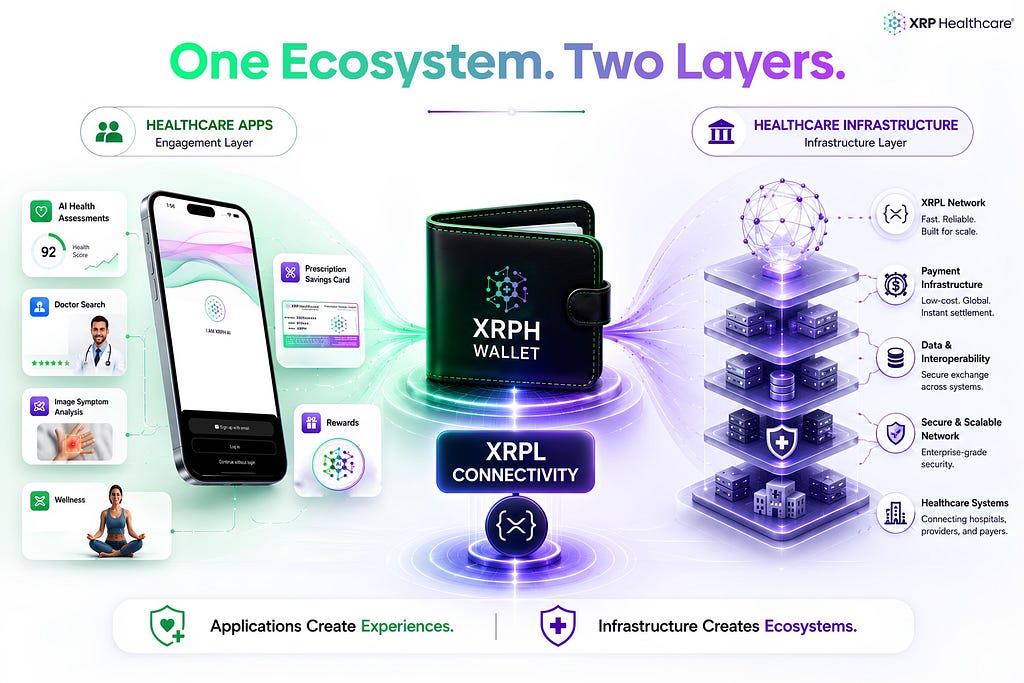
Discover why healthcare infrastructure is becoming as important as healthcare applications and how XRPH infrastructure supports the future of healthcare engagement and connectivity.
When most people think about healthcare technology, they think about applications. They think about telemedicine, health apps, symptom checkers, appointment systems, and artificial intelligence.
These applications are important. But applications alone do not create connected healthcare ecosystems.
Behind every successful technology platform is infrastructure. Infrastructure is what allows applications to communicate, exchange information, support users, and scale over time. As healthcare becomes increasingly digital, healthcare infrastructure may become just as important as the applications people interact with every day.
What Is Healthcare Infrastructure?
Healthcare infrastructure refers to the systems that support healthcare services behind the scenes.
Traditionally, this includes:
• Healthcare networks
• Payment systems
• Data systems
• Communications infrastructure
• Administrative systems
As healthcare technology evolves, infrastructure increasingly includes blockchain networks, digital connectivity layers, and interoperability systems that help applications work together.
Infrastructure is rarely the most visible part of a platform.
However, it is often the most important.
The Problem With Standalone Apps
Many healthcare applications solve a single problem. One app may help users book appointments. Another may provide healthcare information. Another may offer wellness tracking. The challenge is that many applications operate independently. Users move from one system to another without a connected experience. This creates friction. Healthcare engagement becomes fragmented. Infrastructure helps solve this challenge by creating connections between services.
Why Infrastructure Matters
Infrastructure provides several important benefits:
Connectivity
Applications can work together rather than operating in isolation.
Interoperability
Users can move between services more seamlessly.
Scalability
Platforms can support larger numbers of users as adoption grows.
Future Innovation
New services can be added without rebuilding the entire ecosystem. Without infrastructure, healthcare applications remain individual tools. With infrastructure, they become part of a larger ecosystem.
The XRP Healthcare Approach
XRP Healthcare was designed around a concept known as:
One Ecosystem. Two Layers.
The first layer focuses on infrastructure.
The second focuses on engagement.
Infrastructure Layer
The infrastructure layer includes:
• XRPH Wallet
• XRPH
• XRP
• RLUSD
• XRPL connectivity
• Future healthcare payment infrastructure
Engagement Layer
The engagement layer includes:
• XRPH AI App
• AI Health Assessments
• Doctor Search
• Image Symptom Analysis
• CalmXRPH
• Prescription Savings Card
• XRPHAI Rewards
Together, these layers create a connected ecosystem where infrastructure supports engagement.
Learn more: XRPH Infrastructure
Why XRPL Infrastructure Was Chosen
The XRP Ledger offers several characteristics that support infrastructure development:
• Fast settlement
• Low transaction costs
• Reliability
• Scalability
• Global accessibility
These characteristics make XRPL well-suited to support connected ecosystems and future healthcare innovation. XRP Healthcare remains the first AI healthcare platform built on the XRPÂ Ledger.
Infrastructure Creates Utility
Utility is often discussed in blockchain communities. However, utility does not come from technology alone.
Utility comes from solving real-world problems. The XRP Healthcare ecosystem demonstrates this principle through:
• 74,000+ ecosystem users
• Users across 65+ countries
• More than 28,000 AI assessments completed
• More than 85,000 reward-generating actions
• More than 12,500 Prescription Savings Card transactions
• More than $1.2 million in prescription savings
These activities are made possible through the interaction between engagement and infrastructure.
Looking Beyond Applications
Healthcare technology is evolving. The next generation of platforms will not simply consist of standalone applications. They will consist of connected ecosystems. Infrastructure will become increasingly important because it enables connectivity, scalability and interoperability. This is one of the reasons XRP Healthcare continues to invest in both healthcare engagement and infrastructure development.
Conclusion
Applications are what users see. Infrastructure is what allows ecosystems to grow. The future of healthcare technology will require both. Through the XRPH Wallet, XRPL connectivity, and the broader infrastructure layer, XRP Healthcare is helping build the foundation that supports healthcare engagement, rewards, and future innovation.
One Ecosystem.
Two Layers.
One Vision.
Frequently Asked Questions
What is healthcare infrastructure?
Healthcare infrastructure refers to the systems and technologies that support healthcare services and connectivity behind the scenes.
Why is infrastructure important?
Infrastructure enables connectivity, interoperability, scalability, and future innovation.
What is the infrastructure layer of XRP Healthcare?
The infrastructure layer includes the XRPH Wallet, XRPH, XRP, RLUSD, and XRPL connectivity.
What is the engagement layer?
The engagement layer includes the XRPH AI App, AI healthcare tools, Prescription Savings Card, and XRPHAIÂ rewards.
Why was the XRP Ledger chosen?
XRPL was selected because of its speed, scalability, reliability, and efficiency.
Is XRP Healthcare built on XRPL?
Yes. XRP Healthcare is the first AI healthcare platform built on the XRPÂ Ledger.
 The Educators Room
  Freight Broker Agent School
 Duct Tape Marketing Blog
 purplePTSD.com
 BGR Tech
  The Brexit Blog