
Anti-ICE activists received lengthy prison terms — including a 100-year sentence — in the first major trial of the NSPM-7 era. The post Prairieland Defendant Sentenced to 30 Years in Prison for Moving a Box of Antifascist Zines appeared first on The Intercept.
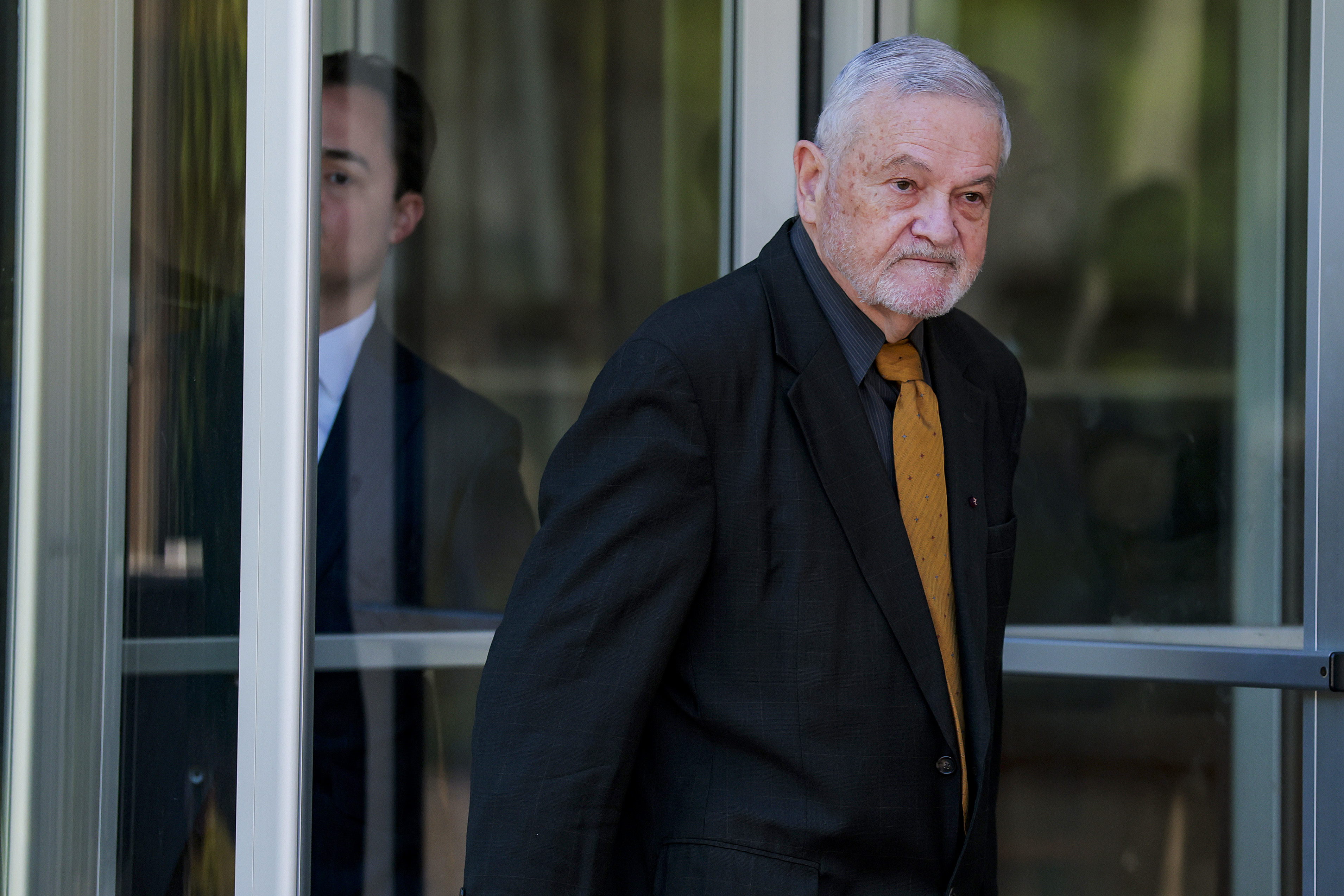
FORT WORTH, TEXAS — Daniel Sanchez Estrada wasn’t accused of attempted murder or material support of terrorism after a protest turned catastrophically wrong outside an ICE detention center in Alvarado, Texas. He was merely convicted of obstructing the investigation by moving a box full of antifascist zines after the protest. Giving him a long prison term would make a mockery of justice, his defense attorney, Christopher Weinbel, told U.S. District Judge Reed O’Connor on Tuesday.
“The punishment must fit the crimes — not the headlines, not the politics, not the fears that have been mongered about the case,” he said.
Instead, O’Connor gave Sanchez Estrada a 30-year term.
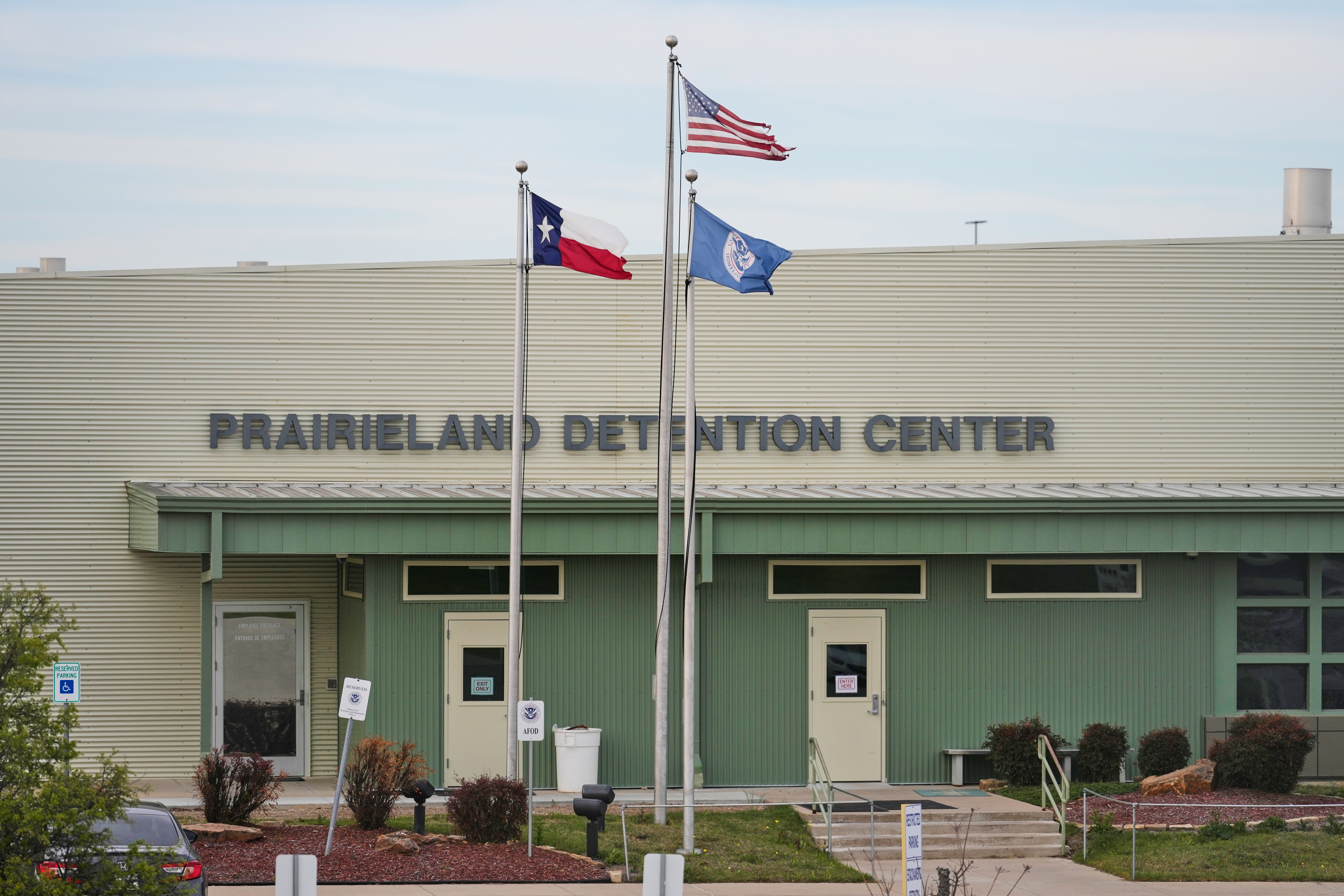
The lengthy sentence was among the eight harsh terms handed down by judges in two courtrooms in Fort Worth on Tuesday to activists who played roles at or after the July 4, 2025, protest at Prairieland Detention Center. Their sentences — longer than any of those received by members of the January 6, 2021 assault on the U.S. Capitol — capped a case that is widely regarded as the Trump administration’s first major victory in its crackdown on left-wing activism.

The defendants were convicted at trial in March. Prosecutors convinced a jury that the fact that the eight defendants present at the protest wore all black and used the Signal encrypted messaging app supported their material support of terrorism charges. Sanchez Estrada, who was not at the protest, was convicted of corruptly concealing a document or record and conspiracy to conceal documents.
Only one of the defendants, Benjamin Hanil Song, was accused of firing a gun at a police officer, who left the scene with an injury to his neck; Song was convicted of attempted murder. Still, federal guidelines calling for harsher sentences for all because of links to terrorism — which were applied by O’Connor, a George W. Bush appointee, and U.S. District Judge Mark Pittman, a Donald Trump appointee — meant that all the defendants faced long prison terms.
Their only hope ahead of the simultaneous twin hearings was that the two judges might break sharply with federal guidelines. Instead, O’Connor and Pittman chose to make an example of the defendants.
Several defendants said Tuesday that they never intended to hurt anyone. Their only hope was to show solidarity with the detainees by staging a noise demonstration with fireworks, they said.
“When I went to protest on the night of July 4, it seemed more like a party to me than anything else,” Autumn Hill told the court Tuesday. “We didn’t expect or want any violence or destruction of property to occur.”
Prosecutors, however, seized on the fact that the protesters arrived at the scene with guns and fireworks. O’Connor, the judge, said several times that the defendants had committed an “assault on democracy.”
“What happened here was not by any stretch of the imagination a protest,” he said during the sentencing of one defendant.
So it went repeatedly in the two courtrooms as the judges brushed aside the defendants’ assertions that they were attempting simply to show solidarity with the detainees inside the ICE facility. Song, the sole defendant convicted of attempted murder, received a 100-year prison sentence.
The other defendants’ arguments that they should be distinguished from Song because they never fired a gun won them little relief.

Sanchez Estrada’s wife, Maricela Rueda, received a 70-year sentence, longer than most of the other defendants because of her alleged role in a conspiracy to commit obstruction by asking Sanchez Estrada to move the zines after her arrest.
Hill, Savanna Batten, Zachary Evetts, Meagan Morris, and Elizabeth Soto all received 50-year sentences for their roles in protest at the Prairieland detention facility. A ninth defendant, Ines Soto, awaits a July sentencing.
The defendants’ relatives and supporters said at a press conference after the sentencing that they had harbored few illusions about their likely sentences. They have now placed their hopes on appeals.
The Prairieland case should be placed in the context of a larger crackdown on anti-government protesters, supporters said.
The protest that triggered the case came months before the September killing of conservative activist Charlie Kirk, which prompted President Donald Trump to issue an executive order purporting to designate antifa as a domestic terrorism group and a presidential memo dubbed NSPM-7 calling for a broader crackdown on the left. Following those directives, federal prosecutors upped the charges facing the Prairieland defendants. FBI Director Kash Patel also made clear the importance of the case to the Trump administration by posting about it on social media in October.
In a press release Tuesday, the Justice Department hailed the case as “the first sentencing of defendants affiliated with Antifa following President Donald J. Trump’s executive order designating the group as a Domestic Terrorist Organization in September 2025.”
“Today’s sentencings show the FBI remains committed to identifying, locating, and dismantling Antifa and its funding networks across the country,” Patel said in a statement.
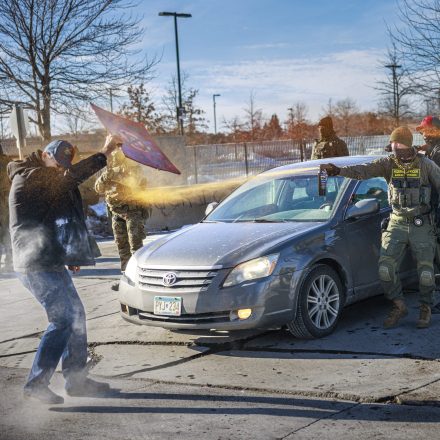
More indictments against activists have followed since the issuing of NSPM-7, most recently the charges in Minnesota earlier this month against 15 people accused of trying to impede federal agents during the immigration crackdown there.
“It’s not just here in the north Texas area,” said Tamera Hutcherson, a local activist who served as a member of Batten’s defense team. “This is also now in other parts of our country, and it concerns me what this means for our free speech, as well as our right to protest. If we are to bring a medical kit to a protest, does that mean we are a criminal now? If we are to even just attend a noise demonstration, does that mean we are a criminal now, and we may not return home to our loved ones?”
“ If we are to bring a medical kit to a protest, does that mean we are a criminal now? ”
Justice Department prosecutors pushed back against the idea that the defendants had been convicted merely for expressing their First Amendment rights. What distinguished them from other protesters was their belief that they were justified in using violence to accomplish their goals, said Frank Gatto, an assistant U.S. attorney for the northern district of Texas.
“The very crux here is their firm belief that the use of violence is justified,” Gatto said during the sentencing of Evetts.
Although the case centered on the government’s claim that the defendants were affiliated with antifa, prosecutors offered little evidence of that at trial. Even Pittman, the judge who oversaw the trial, questioned whether he needed to mention antifa in his jury instructions.
Still, the movement of various anti-government and antifascist zines led directly to the conviction of Sanchez Estrada, whose case stood out from the others because he was not accused of attending the July 4 protest at the ICE detention center.

Weinbel, the public defender, said the zines that Sanchez Estrada moved were his own and protected by the First Amendment. None of it helped convict the other defendants at trial, Weinbel said.
“At the heart of this case is a simple truth: Mr. Sanchez moved a box,” Weinbel said. “He is not a murderer, he is not ISIS, he is not a foreign terrorist.”
“He is not a murderer, he is not ISIS, he is not a foreign terrorist.”
Sanchez Estrada said he still could not understand why he was convicted.
“I am a father, I am a husband, I am a teacher, a poet — I am many things, Your Honor, but I am not a terrorist,” he told the court.
O’Connor said he disagreed with the idea that moving the box of the zines was harmless. At the time of Sanchez Estrada’s actions, Song was still on the run from police.
“What was at stake at that time was a known terrorist was on the run for shooting a police officer during a terrorist attack,” he said.
The post Prairieland Defendant Sentenced to 30 Years in Prison for Moving a Box of Antifascist Zines appeared first on The Intercept.