
2025-12-10. A few years ago, the Financial Times took a step back to rethink its mobile-first approach, aiming to drive long-term retention through the app. This involved understanding how news consumption is changing, and why designing experiences for small pockets of time is critical. Today, the FT's app is its highest engagement channel. The post Keeping readers close: How the FT’s app became a subscriber retention tool appeared first on WAN-IFRA.
The Financial Times app is fast becoming one of the publisher’s most valuable retention tools. Nearly 70 percent of daily traffic from subscribers comes through the app.
This can be attributed to mobile being the dominant way people consume content these days.
“If we want to retain subscribers, we have to meet them where they are – mobile apps,” Muj Ali, Group Product Manager at the Financial Times, said during our recent WIZONE webinar.
“We’ve seen a fundamental shift in behaviour over the past few years, and the app is now really at the centre of how people consume news and build long-term habits,” Ali added.
“Subscribers who use the app are 37 percent less likely to cancel compared to those who don’t. That’s one of the strongest correlations that we’ve seen when it comes to app usage.”
Muj Ali, Group Product Manager, FT
This is not only the case with the FT. Many other news publishers are also investing in mobile-first content (podcasts, newsletters, videos, and social media) to tackle news avoidance and engage young audiences.
The FT has also been investing heavily in a “slick app experience,” similar to popular social media apps, and moving away from being a generic news app.
“The experience of news should feel as easy and accessible as apps such as Instagram or Netflix,” said Ali.
“The future belongs to publishers who deeply understand that mobile behaviour and then pair it with the strong content that they have. At the FT, we can pair it with the strong brand recognition that we have,” he added.
Understanding user behaviour to shape content
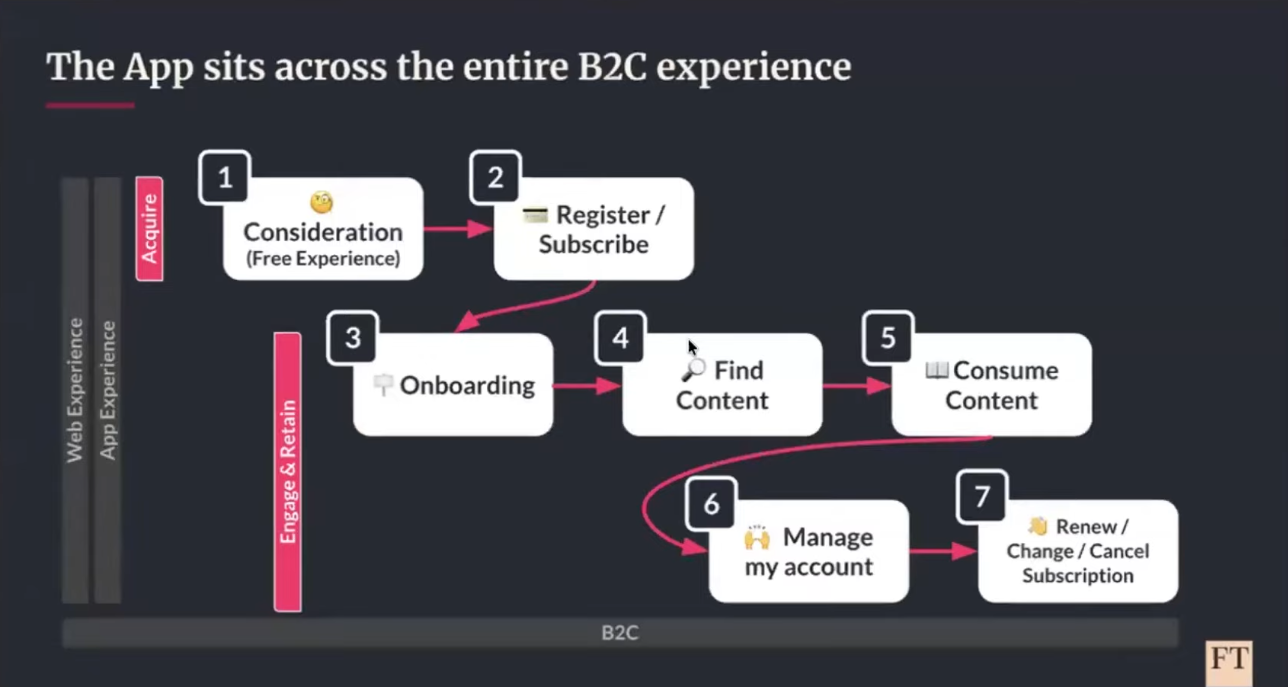
Today, registered users are four times more engaged on the FT app. Subscribers visit the app homepage 35 percent more often than the web.
However, the average desktop session for the FT is 27 minutes. But for the app, it is only around five minutes.
“People come to dip in and dip out, get what they need, and then leave. And they do this multiple times throughout the day. So, the product must be optimised for these small, rapid sessions rather than long ones,” Ali said.

The FT’s extensive research on user behaviour found that mobile usage dominates early mornings – such as during commuting hours between 6-7 am and 8-9 am – as well as in the evening (7-8 pm). Desktop, meanwhile, dominates work hours.
“This understanding helps us design the content, the notifications, the times we send certain communications, and certain app journeys that align with real-world behaviour,” he said.
“Web is a vehicle for getting users subscribed. App is a vehicle to engage and retain.”
Three strategies that drive retention in the app
For the FT, the app is its most powerful channel for building long-term subscriber habits. A significant share of subscribers use the app daily, which contributes to lower churn.
According to Ali, app users are 37 percent less likely to cancel their subscription compared to non-app users. The app experience is also faster and more immersive than web.
He shared three strategies for turning a news app into a retention machine:
- Encourage and enable early adoption
This helps give users value faster, keep the value proposition clear, and make the app easy to skim. Showing users what matters in the app and surfacing it as soon as they open it is essential.
Clarity also matters. If people don’t understand what the app offers, they leave.
“That’s why we added a welcome screen that appears the moment the app is downloaded,” Ali said.
Since launching it, the FT has seen higher conversion because users see, right away, what the app gives them.
- Building habit with push notifications and personalisation
Identifying what subscribers read, what they consume, and why they come to the app makes it possible to send follow-up push notifications that match both the topics they follow and the interests they show.
“We recently added an onboarding flow that asks for a user’s interests and the topics they want to follow, and this has raised engagement levels by bringing more people back to the service,” Ali said.
The FT also pushes its readers to follow it on social media. “We found that people who follow us on social media are 3.7 times more engaged,” he added.
- Deepen engagement with content formats suited to mobile use
Audio, podcasts, and offline reading give users a reason to return to the app daily.
The FT introduced audio articles a few years ago, and subscribers who use them listen to approximately 4.5 articles per day, compared to 2-3 articles per day through reading.
Experiments with live briefings, article cues, saved reading, and curated lists are also being used to boost session frequency, leverage different multimedia, and deepen engagement.
Using native tools to reduce churn
In-app purchases and native app subscription features play a key role in creating a frictionless engagement experience, Ali said.
Leveraging Apple and Google mechanisms to manage subscriptions reduces churn from payment failures and prevent involuntary cancellations.
“Subscribers are less likely to cancel when billing is handled by a trusted platform, and many already use Apple and Google in-app purchases for subscriptions. Making it easy to subscribe with one click builds on that trust,” he said.
Using built-in promotional tools from Apple and Google, such as introductory pricing and win-back offers, also helps attract readers to subscribe.

Ways to attract Gen Z and non-app users
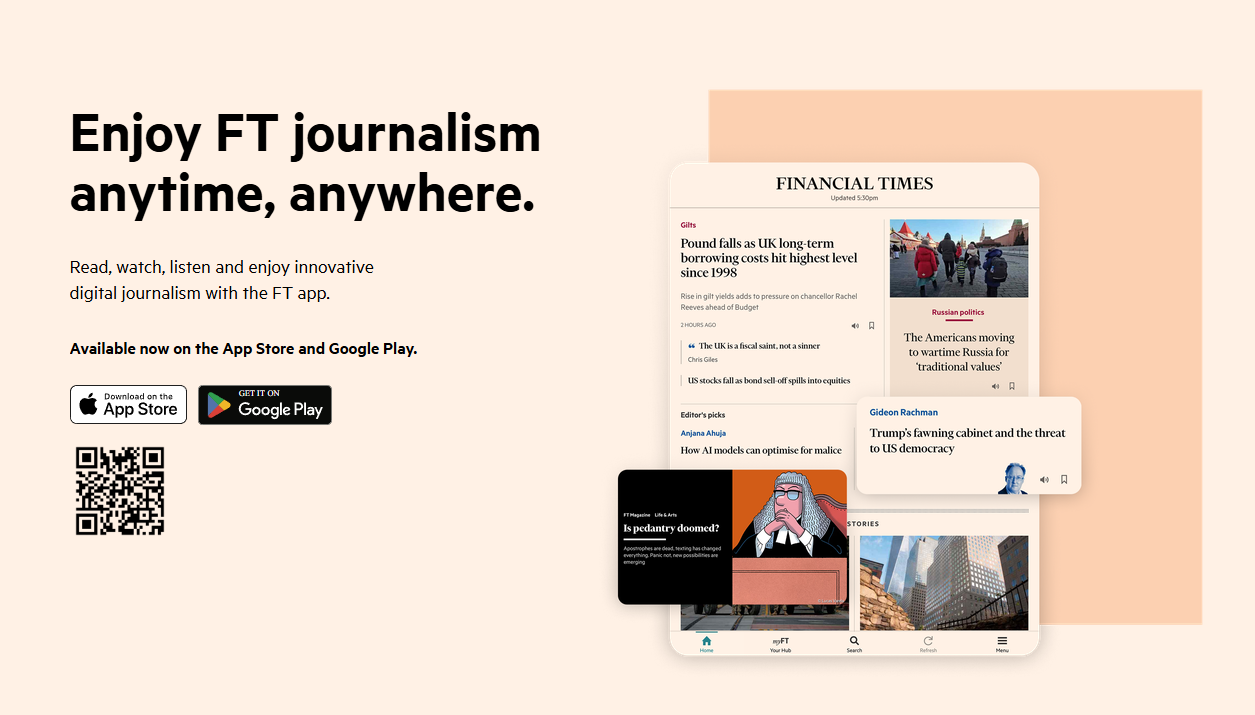
For users without the app, banners to download it are shown at multiple points on the website, with persistent banners on iOS and Android browsers.
“These nudges, though small, are key drivers of engagement and retention,” Ali said.
However, reaching Gen Z requires a slower, more tailored approach. The first step is to reach them where they spend most of their time – social media, games, and influencer channels – and gradually guide them to the main app.
Equally important is meeting their expectations within the app.
“Tools and features must work well, because half-baked experiences like choppy short-form content are judged quickly and can drive them away,” Ali said.
“Mobile is evolving rapidly, and products must evolve with it. Publishers that align app experiences with consumer behaviour and make it easy for subscribers to stay engaged will be the ones who succeed,” he added.
The post Keeping readers close: How the FT’s app became a subscriber retention tool appeared first on WAN-IFRA.