
Immigrant groups in Minnesota, including the Somali community, have been concerned for their safety since ICE agents arrived last month. The agents have detained people and sparked outrage for their heavy-handed tactics, violation of constitutional laws and the shooting deaths of two US citizens. The post Somali community remains on edge in the Twin Cities amid ICE raids appeared first on The World from PRX.
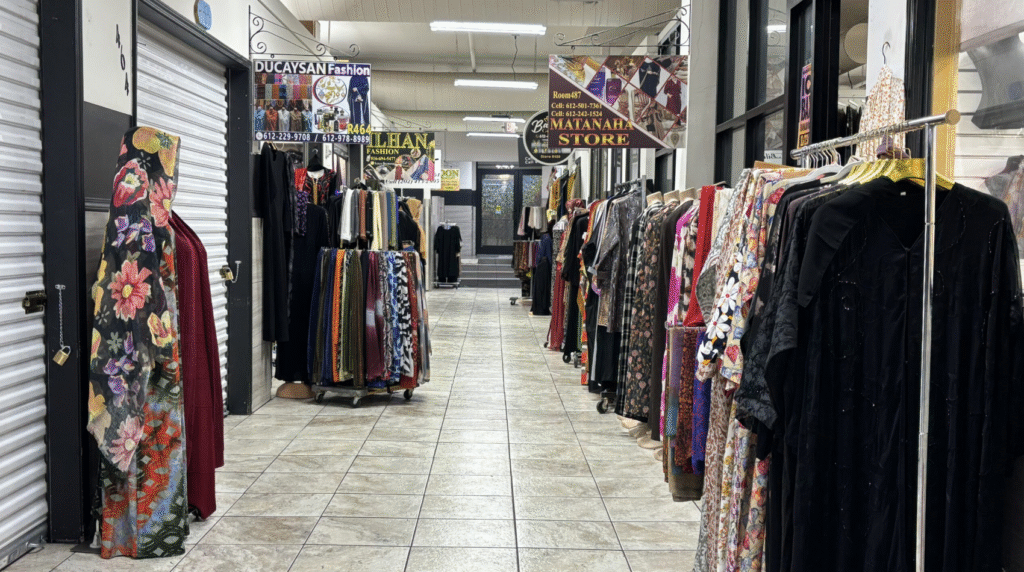
Karmel Mall is a one-stop-shop for the Somali community in Minneapolis. It has everything from clothes and food to travel agents, barbers and salons, as well as a place to find signature Somali tea. It even has an adjoining mosque for Muslim shoppers to offer their daily prayers.
Last weekend, though, many of the stalls there were closed — some with big padlocks keeping customers out — because shop owners have been too afraid to leave their homes.

Still, there was plenty of activity everywhere, but at a place that is normally packed, there were fewer people and a sense of tension lingered in the air.
“People are afraid to come here,” said one young boutique owner, who, like many others, preferred not to share her name for security reasons. “Almost all of us are US citizens, but nobody wants to be harassed. We see what’s going on, how people, US citizens, are getting literally kidnapped, dragged. Nobody wants to experience that.”
This sentiment spans across generations.
“Our aunties and grandmas who have been here for like 20, 30 years, who had stores when Karmel was the old Karmel, their doors are closed because they’re so scared,” she added.
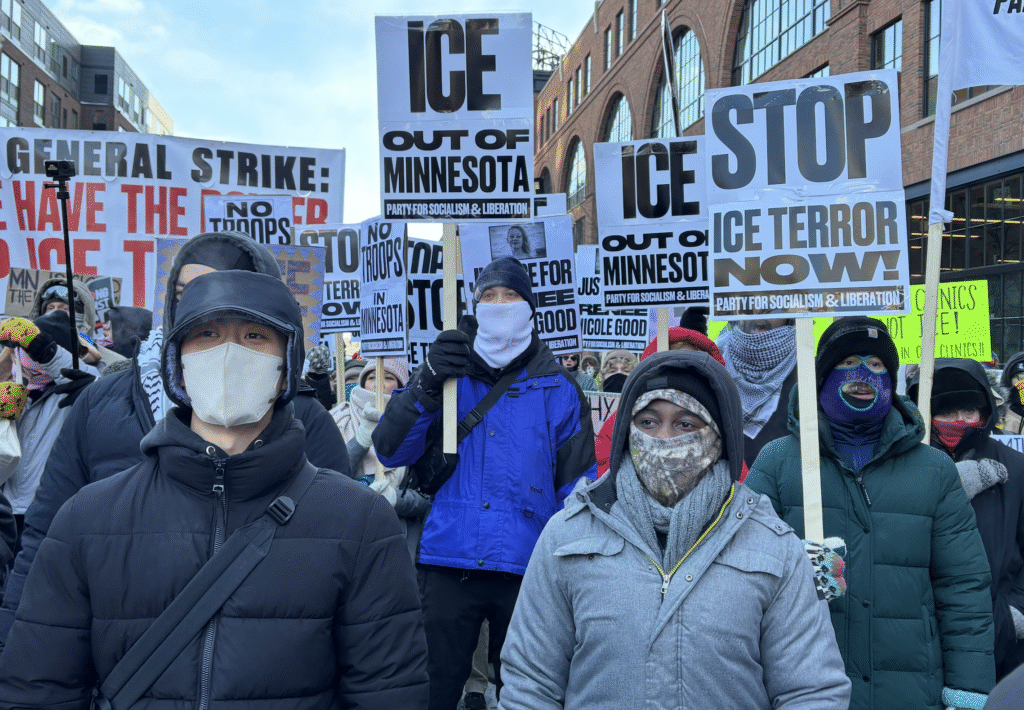
Minnesota’s Twin Cities have been on edge since December, when agents from US Immigration and Customs Enforcement (ICE) were deployed to the city’s streets. The agents have detained people from immigrant communities, sparking outrage for their heavy-handed tactics, violation of constitutional laws and the shooting deaths of two US citizens. The Somali community, which includes Somali Americans, is now trying to grapple with a sense of shock and fear that’s reverberated through their neighborhoods.
On Saturday, Alex Pretti became the second US citizen in the same month, after Renée Good, to be shot and killed by ICE in the city. In addition to the cold weather, this incident prompted many places to remain empty.
“Today, it’s just been fear,” said one college freshman from the Cedar-Riverside neighborhood. “Leaving the house this morning, even my parents were telling me to call off work. Everybody’s on high alert, scared, and just really scared for what’s going to happen next in this community.”
She added that she appreciates the support Minneapolis Mayor Jacob Frey and Minnesota Governor Tim Walz have shown for the Somali community, but that she doesn’t think they’ve gone far enough. “It’s just giving a lot of talk and not enough action.”
Another problem the community faces is knowing which type of help can be trusted. The young woman displayed a message on her phone that appeared to come from a local public school warning that some campaigns offering food and other support were actually coming from ICE — to trick them into providing their locations.
The World reached out to Minneapolis Public Schools, and they could not confirm any of the information in the message, but said their typical approach is to encourage families to reach out to them directly.
Some people have still been trying to live normal lives. “My area doesn’t have any Somali stores,” said Hodan Dirie, a US citizen who traveled from the suburbs to do some shopping. “That’s why I came all the way over here to Minneapolis.” She said her children told her it was too dangerous to go, and that she herself was also afraid, but had no choice.
Meanwhile, the Somali community, along with other targeted groups like the Hmong and Latino communities in Minneapolis, have seen their fellow Minnesotans show up for them.
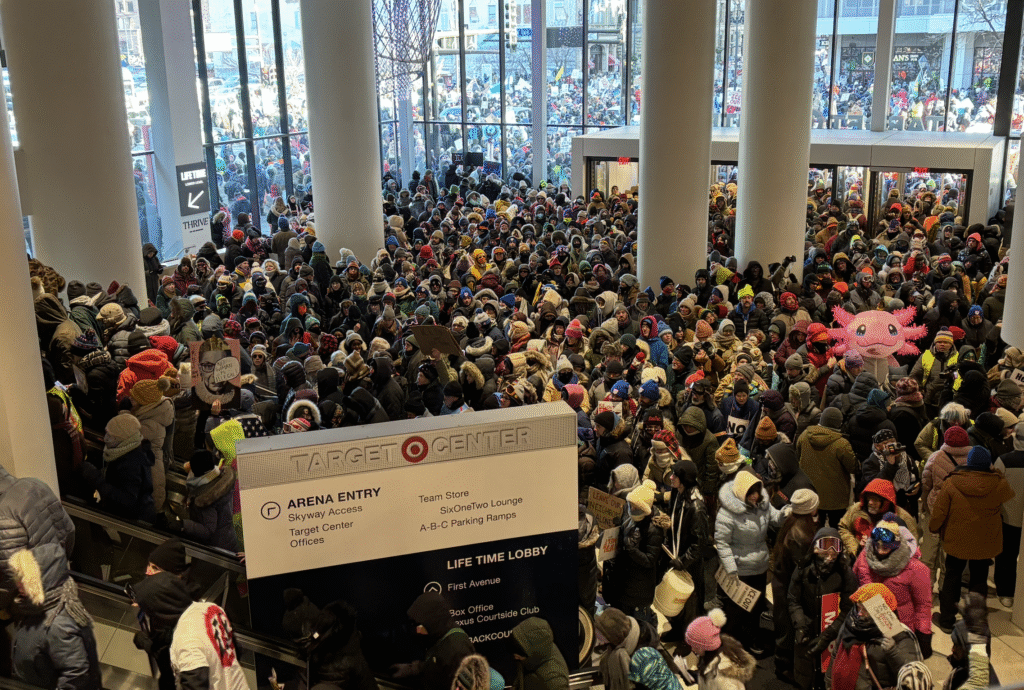
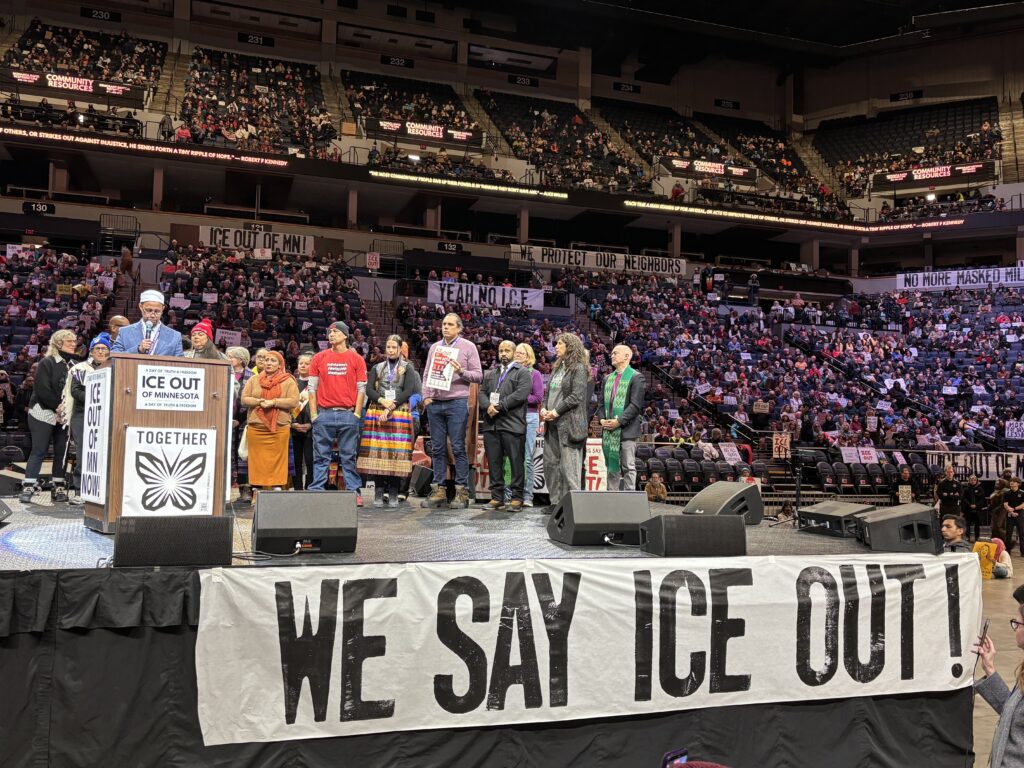
On Jan. 23, there was a statewide strike by local businesses to protest ICE and a march in downtown Minneapolis that ended at the Target Center arena. Around 50,000 people participated despite temperatures hitting negative degrees.
The event kicked off with community leaders from the Indigenous, Jewish, Christian and Muslim communities. Imam Yusuf Abdulle, executive director of the Islamic Association of North America (IANA), called it a historic day.
“A day when a government of terror tried to divide us, and Minnesota said no,” he said to cheering crowds. “Today we are not gathered out of fear, we are gathered out of love for our neighbors, for our children and for our future.”
When asked by The World about the Trump administration’s justifications for targeting Somali Americans in Minneapolis, including allegations that members of the community had been involved in fraud schemes, Abdulle said, “Fraud is colorless. It does not depend on a community, on the color of a person, on their language, on [their] background. It is a crime that is committed by an individual or individuals. How many Somalis live in the state of Minnesota? All of them are fraudsters? That does not make sense. It is a collective punishment.”
He added that the raids are indiscriminate, and based on profiling.
“It doesn’t matter if they have papers, if they are citizens, if they’re born here or not,” he said. Some of our kids who were born here were roughed up. Some of them were detained … just for being of Somali descent.”
Minnesota also has a robust group of Somali Americans in politics. Ilhan Omar is a US representative for Minnesota’s 5th congressional district since 2019. Nadia Mohamed is the mayor of St. Louis Park and the first Somali American elected as mayor of a US city. And Minnesota Senator Omar Fateh represents District 62, the same district where Renée Good was killed. He is of Somali descent and was born in Washington, DC.
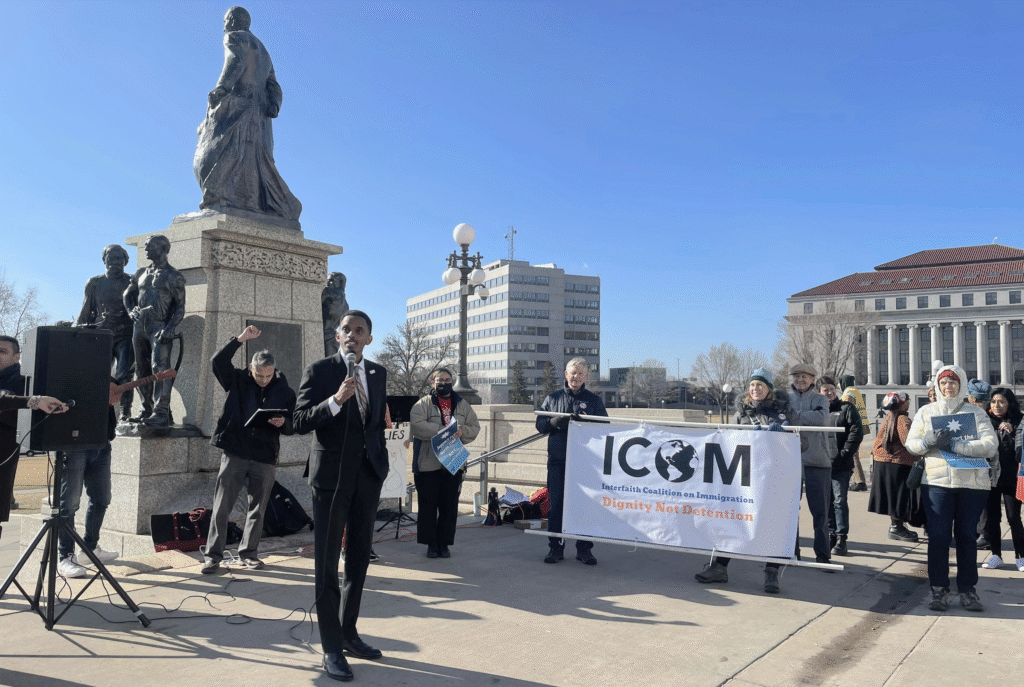
“A lot of times when there are immigration issues that folks are experiencing. As a state senator, I can’t do much around that,” Fateh said. But added that he is working on bringing back legislation he’d proposed in 2024 along with representative Sandra Feist that would have prevented the use of Minnesota state resources for federal immigration enforcement.
“I had legislation two years ago called the North Star Act, which was essentially a sanctuary state policy bill for the state of Minnesota so that law enforcement cannot collaborate with ICE, so that ICE cannot go into our homeless shelters to find data on homeless populations,” he explained. “Also, for example, ICE cannot go into our public schools and get private data from our students. That legislation would have protected against that and I want to bring that back this year.”
But for now, that’s not the law. And back at Karmel Mall, a slow trickle of Somali customers may be showing up for hair cuts, but a whole lot more are playing it safe, at home.
The post Somali community remains on edge in the Twin Cities amid ICE raids appeared first on The World from PRX.