NCDC urges states to step up Lassa fever preparedness – FRCN HQ is trending nowProf. Kruger helps shape the first hypertension guidelines for Africa is trending nowLagos Records Six Confirmed Diphtheria Cases In 2026 is trending nowNatural clay reveals a new way to control ion transport at the angstrom scale is trending nowBeryllium signal identifies stars that have swallowed rocky planets is trending nowArtemis II moonshot commander and pilot are hanging up their astronaut suits at NASA is trending nowWhere Estevao fits into Chelsea's all-star attack is trending nowPSG Possible Lineup Against Slovan Bratislava in the Champions League is trending nowChaos at the Stamford Bridge! Cole Palmer inspires incredible Chelsea comeback as Leeds c… is trending nowBarcelona player ratings vs Feyenoord: Lamine Yamal makes history as Hansi Flick's men ru… is trending nowCarter Efe Loses TikTok Account With Over 5.6 Million Followers, Fans React is trending nowMohbad's Dad Returns Online, Shares Clip from Studio Days Before Singer's 3rd Remembrance is trending nowNCDC urges states to step up Lassa fever preparedness – FRCN HQ is trending nowProf. Kruger helps shape the first hypertension guidelines for Africa is trending nowLagos Records Six Confirmed Diphtheria Cases In 2026 is trending nowNatural clay reveals a new way to control ion transport at the angstrom scale is trending nowBeryllium signal identifies stars that have swallowed rocky planets is trending nowArtemis II moonshot commander and pilot are hanging up their astronaut suits at NASA is trending nowWhere Estevao fits into Chelsea's all-star attack is trending nowPSG Possible Lineup Against Slovan Bratislava in the Champions League is trending nowChaos at the Stamford Bridge! Cole Palmer inspires incredible Chelsea comeback as Leeds c… is trending nowBarcelona player ratings vs Feyenoord: Lamine Yamal makes history as Hansi Flick's men ru… is trending nowCarter Efe Loses TikTok Account With Over 5.6 Million Followers, Fans React is trending nowMohbad's Dad Returns Online, Shares Clip from Studio Days Before Singer's 3rd Remembrance is trending now
World
As temperatures rise, glacier collapse may become more common
Public Radio International ··14 views
Experts and officials have pointed to a collapsing glacier high in the Himalayas as the trigger for deadly flash flooding in Tibet and Nepal last week. Climate scientists warn that global warming may make glacial collapse, and the subsequent landslides and flooding it can cause, more frequent. National Geographic Explorer Paul Salopek recently joined an expedition of scientists studying the link between climate change and a landslide-induced tsunami in Alaska, and he tells Host Carolyn Beeler what he learned.
The post As temperatures rise, glacier collapse may become more common appeared first on The World from PRX.
Reporting for this story was supported by the Pulitzer Center.
The World has been covering ongoing recovery efforts in Tibet and Nepal following last week’s flash flooding.
Scientists and officials alike have attributed the collapse of a glacier high in the Himalayas to the disaster. Climate scientists warn that similar events may become more common as rising temperatures make more glaciers unstable and prone to collapse.
National Geographic Explorer Paul Salopek recently got a close-up look at the connection between climate change and glaciers, and the landslides they cause. He joined an expedition of scientists last year to measure the impact of a landslide-induced tsunami in an Alaskan fjord.
“It’s gorgeous. It’s this kind of wild fjord landscape: a very steep-walled canyon on the coast of southeastern Alaska that was a very big destination for the cruise ship circuit,” Salopek said. “If you wanted to go glacier viewing, this was one of the fjords you steamed up, which makes it all the more remarkable that nobody got hurt.”
Carolyn Beeler: And could you see evidence of this tsunami? Were there any kind of scars on the surrounding rocks?
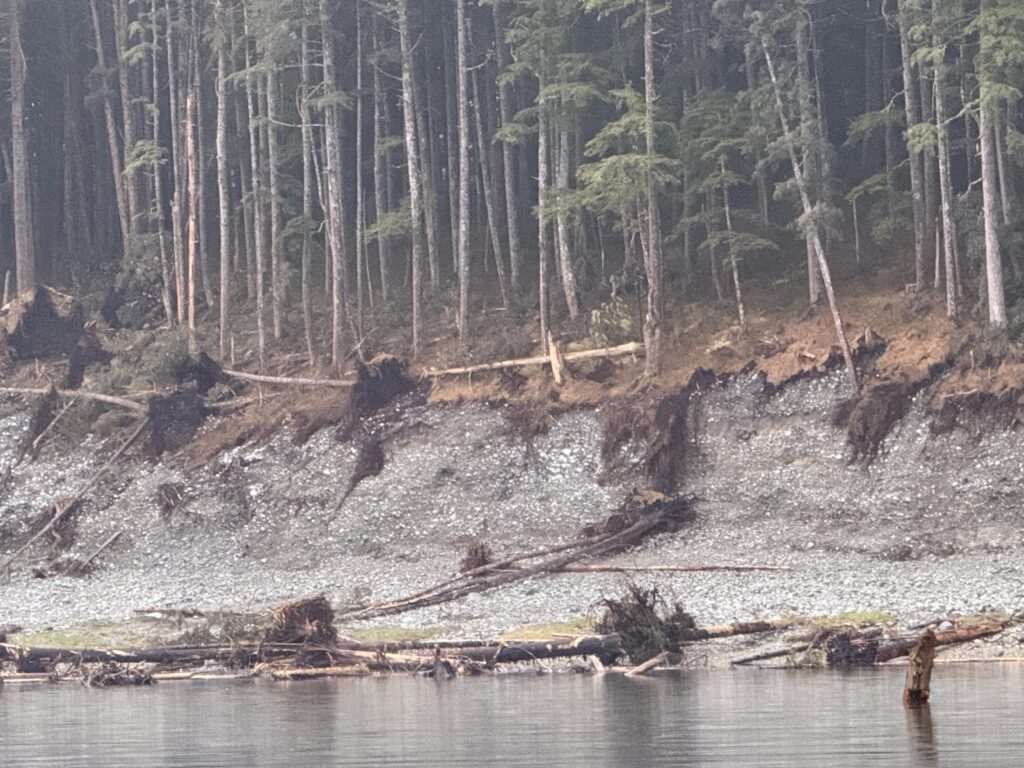
Paul Salopek:Yeah, what was amazing about this opportunity was that I was able to take a side trip to join the first group of scientists examining the aftermath of this. It’s the second-highest wave in recorded history. So, I joined this expedition of geologists and environmental engineers to take a look, take readings and measure it. And it was cataclysmic. It reminded me — I’m a former war correspondent — of the aftermath of a battlefield. There was this big scar about 100 yards high, scraping along the bottom of these cliffs, wiping away everything down to bedrock. And we’re talking going for miles and miles. This fjord was about 30 miles long. All the forest, temperate rainforest, a mixture of cedars and alders, was wiped away. The animals that lived in it. Yeah, it was apocalyptic.
Wow. And you were saying, of course, this happened in a fjord, which means that the rocks tumbled into a relatively narrow body of water flanked on both sides by these mountains, by these cliffs. So, that meant that this tsunami wave was what, extra high because it was flowing through such a narrow area?
Yeah, imagine, when most people hear the word tsunami, they think of an open ocean, right? They think of a big wave crashing into a long coastline. This was like a fire hose effect. This, as you mentioned, this concentrated the power of a wave down this narrow channel, which is extraordinary. And sadly, what the scientists are telling me is that this is going to be happening.
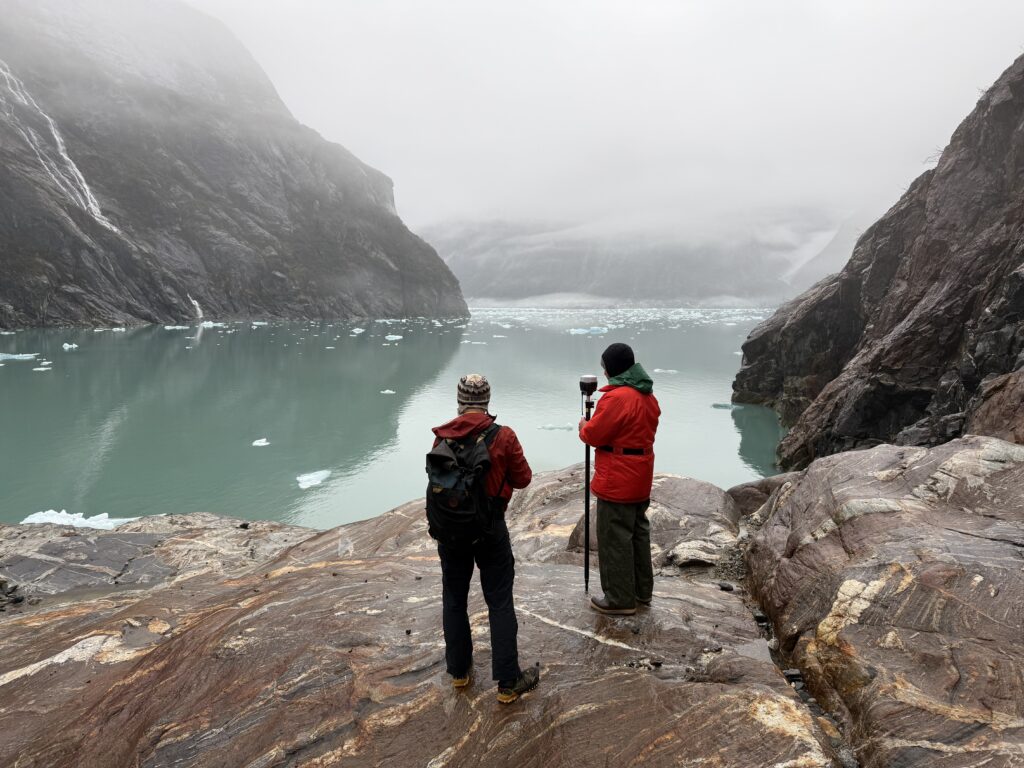
Geologist Bretwood “Hig” Higman (left) and environmental engineer Patrick Lynett prepare laser survey instruments on Sawyer Island, almost denuded of its trees by the landslide and tsunami.Paul Salopek/National Geographic, Out of Eden Walk
Why is that? What’s the link to climate change here?
Tsunamis and landslides, or the combination of both, are part of the Earth’s natural erosion process. But what’s happening now, Carolyn, is that because the world is warming from human-caused climate change, an older, colder, more frozen world is crumbling. So, the disappearance and shrinkage of glaciers, the loss of ice at the base of mountains that used to buttress them for thousands of years, and the melting of permafrost are causing massive instability, which is leading to more and more of these catastrophic events.
And in this case, miraculously, as we have said, nobody was harmed. But I believe there was a similar case in Switzerland last year, where a whole village was wiped out by a landslide in the mountains. And other villages are on watch for this kind of thing happening.
That’s right. The kind of higher latitudes, or even the colder corners of the world that are at high elevation, are going to have to be looking up a bit more. That village in Switzerland, thankfully, was evacuated, but it was the same thing: masses of rock crashing and smashing a glacier that was in rapid retreat. You know, the way I compare it is, imagine a cathedral, but you’re knocking away the buttresses that hold up the spires. And that’s sort of what’s happening here. In Alaska, there are many of these fjords. And what really concerns disaster relief folks working with these researchers is that Alaska’s population is often concentrated on these narrow strips of coastline, so they’re vulnerable.
What exactly were the scientists trying to figure out about what happened there?
We were using laser surveying technology to measure the height of what they call the trim line. So we [took] hundreds and hundreds of these measurements to model — using computer technology, seismology and satellite imagery from a variety of sources — what actually happened. And by recreating what happened, since nobody was there to see it, miraculously, right? Because they’re often big boats with thousands of tourists on them. We were then able to rebuild the physics and use it as a model for what might happen again elsewhere.
Is there any application for that knowledge in terms of warning people or protecting people as these kinds of things get increasingly frequent?
That’s right. I mean, that is exactly the purpose; it’s how you [start setting] up a warning regime. What hints can you take? It’s like predicting an earthquake a little bit. To give a little advance notice if there are any human beings around. And so, that’s still an ongoing process. There are lots of dynamics and complicated factors, and it’s difficult to predict these things.
“Hig” Higman (left) and boat handler Tony Perelli conduct fieldwork 80 meters above the fjord’s normal water line. All soil and vegetation at the spot has been clawed away by the power of the passing tsunami. Paul Salopek/National Geographic, Out of Eden Walk
As we mentioned, that village in Switzerland that was evacuated before a landslide covered it, they did have some sense that this might be coming. Why was that predictable? And it seems like there is less known about what happened in Alaska?
Yeah, two different situations, two different kinds of geographies, if you will. You know, something that the scientists are homing in on is these micro-quakes. Researchers are developing a dataset to understand what that seismic sound sounds like. How does the Earth kind of sing to itself a little bit of a dirge, if you will, before going silent? And this is what often happens. It goes silent for a bit, for hours or days, before the catastrophic event happens. If you can identify these patterns, that might be one way to predict landslides and tsunamis.
Paul, you mentioned that visiting this site reminded you of your days as a war correspondent — just the level of destruction. Can you tell me a little bit more about why this very different environment evoked the same feeling for you?
Yeah, it was an emotional response. To kind of be in the middle of this really beautiful place where there had been, you know, colonies of harbor seals basking on the ice floes at the foot of the glacier. There were birds probably whirling overhead. Again, all of this is just assumed on previous knowledge that got wiped out. And so, what struck me is kind of the cruelty that we inflict on each other as human beings in wars, which I’ve seen firsthand as a war correspondent. The aftermath of the Tracy Arm tsunami reminded me of that kind of hazardous silence that sometimes lingers over battlefields, because it was, of course, quiet by the time we got there. It was a haunting experience. And to be able to go around and see it up front, put my hand on the rocks that had been stripped away, and try to sense what had happened there was very moving and reminded me of the violence that we inflict, knowingly or unknowingly, on nature because of our technological civilization, right? And so, that’s a little bit what I wrote about in my story: kind of this notion of collective responsibility.
Are we part of nature or are we apart from nature? What’s our responsibility to help protect it?
Parts of this interview have been lightly edited for length and clarity.
Writer and National Geographic Explorer Paul Salopek has embarked on a 24,000-mile storytelling trek across the world called the “Out of Eden Walk.” The National Geographic Society, committed to illuminating and protecting the wonders of our world, has funded Salopek’s project since 2013. Explore the project here. Follow the journey on X at @PaulSalopek, @outofedenwalk.

 Public Radio International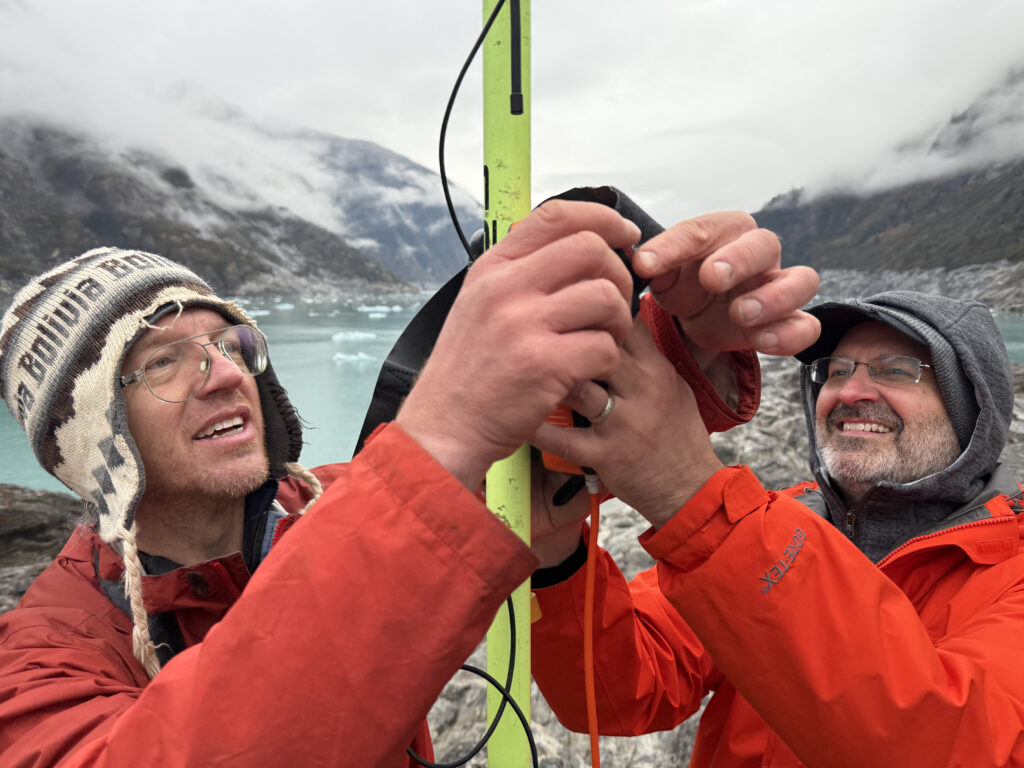

 Price Residential Group Blog
 The Hechinger Report
 Clever Dude
 The Next Hint
 Jennette Fulda
  Healtholine