 Public Radio International
 When the flood hit Syabrubesi in Nepal’s Rasuwa district, Pratima Lama survived only because of her daughter. Misan, 9, saw the flood rush through the town and hit the market. She grabbed her mother’s hand and pulled her toward the door.
“I just tried to run uphill as far as I could,” said Lama, 40, speaking through an interpreter. “I asked other people for help, but they couldn’t. Everyone was running for their own lives.”
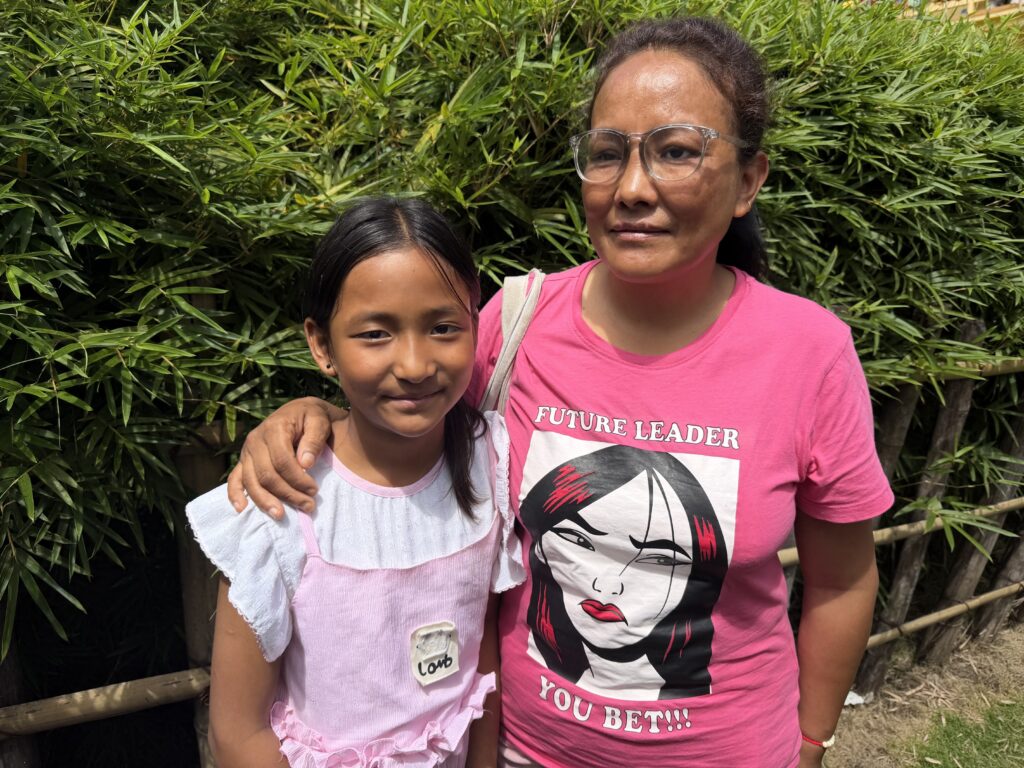
Lama is blind. As they ran, she was entirely dependent on her daughter to get them to safety.
People with disabilities are disproportionately affected by climate change. According to research, people with disabilities are up to four times more likely to die or be injured in a climate-driven disaster like the flood in Nepal. A new analysis from World Weather Attribution determined that climate change destabilized the region, degrading the glacier and likely weakening the bedrock, before the bedrock ultimately collapsed in a rock-ice avalanche.
Those disproportionate impacts extend to the relief and recovery systems that spring up after a disaster; these systems often overlook the specialized needs people may have for healthcare, accommodation or communication.
‘Not very disability friendly‘
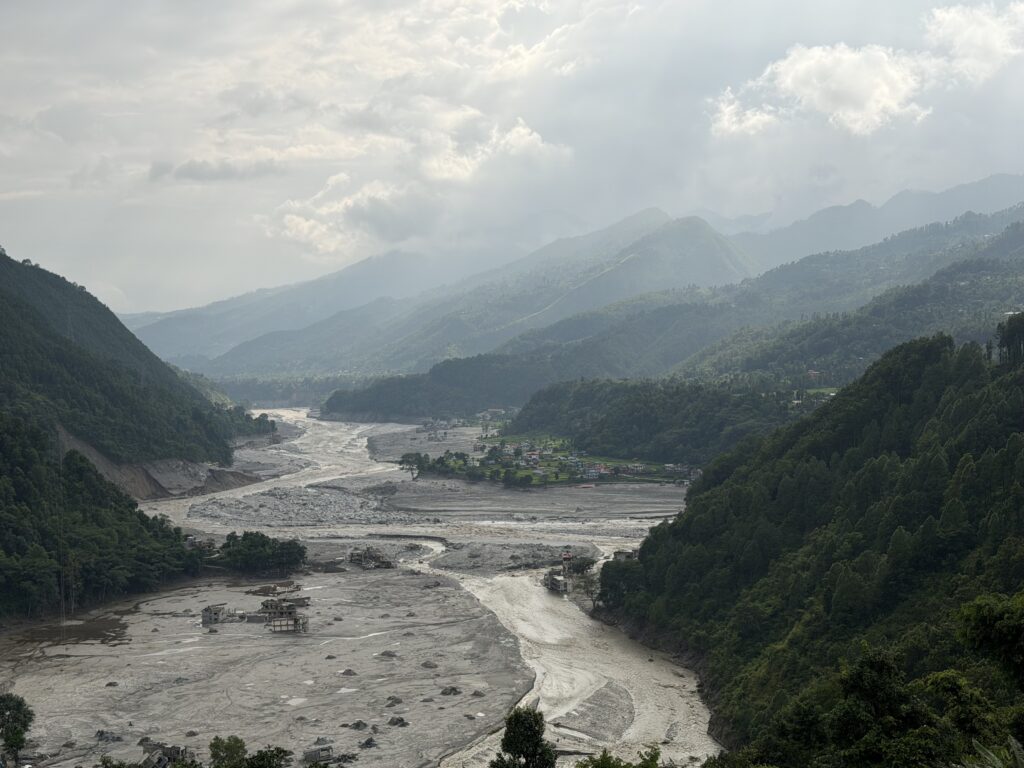
“It’s not very disability-friendly,” said Lama about the shelter where she and her daughter now live. About 300 survivors from their town were relocated to a Buddhist monastery in Kathmandu.
“The toilets are far away,” she said, “and after the first two nights I developed a fever.”
Lama was able to reach a cousin living elsewhere in Kathmandu. She and Misan now stay there during the night, and they return to the monastery every day for meals and information about their town. Lama said the people running the shelter are doing a good job, but she couldn’t manage the stairs, the distances or the crowds, especially after she lost her white cane for navigating through the floodwaters.
Accessibility problems are also widespread for survivors who are deaf, according to Bishwamitra Bhitrakoti, a deaf advocate and communications officer with the National Federation of the Deaf Nepal. He traveled to Devighat and Bidur, two other towns with significant flood damage, and found a glaring issue: no sign language interpreters.
He said this is a common problem across several shelters.
“Some deaf people, they don’t even know the Nepali sign language,” said Bhitrakoti. They still use “natural sign language” in the remote villages, he said, “so it’s not [formal] sign language, [but] gestures or something to communicate with people.
Dawa Furi Tamang, 63, has struggled at the same monastery shelter as Lama for exactly that reason. He’s mostly deaf and cannot communicate verbally. He was also never taught Nepali sign language.
Because no interpreters were on site, an independent sign language interpreter joined The World at the monastery to speak with Tamang. The conversation required additional interpretation from Tamang’s relative, who was also displaced by the flood. Each knew only some natural sign language, and they worked together to help Tamang describe his experience.
He’s frustrated, said Tamang, that it is so hard to communicate more widely and to get around independently. He’s also afraid he’ll be unable to get a job in Kathmandu or have financial security in the future.
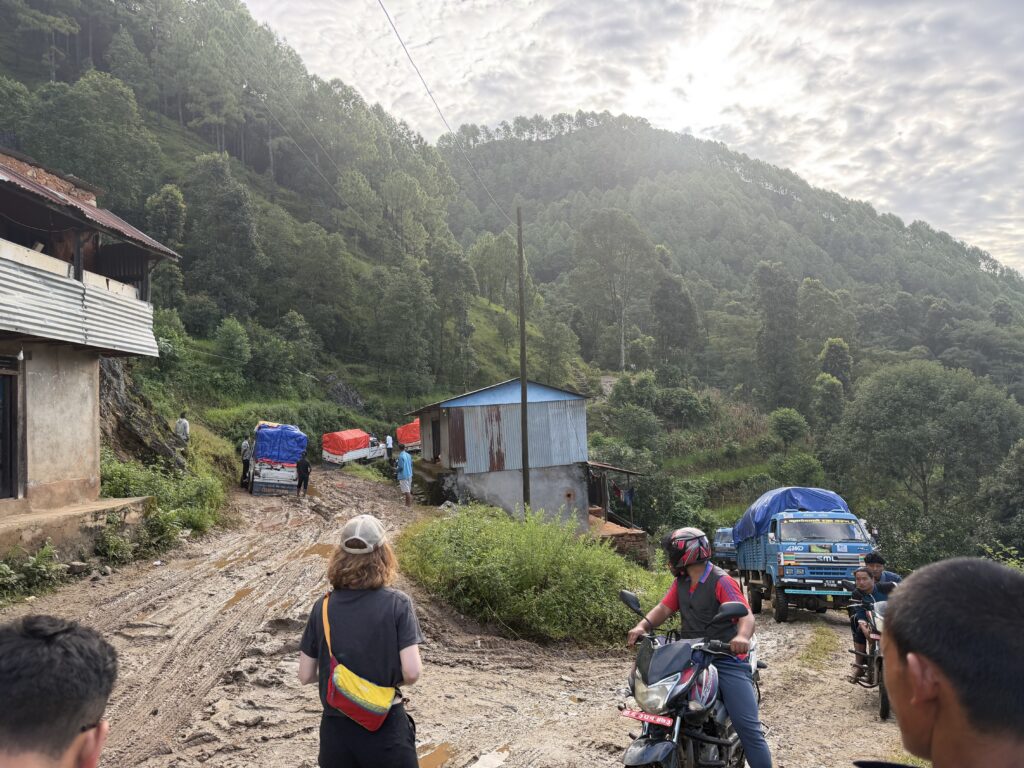
The “government did not support us until now,” he said through both interpreters. He told The World that the organization of relief supplies has been unreliable and that those supplies are not always going where they are needed most.
Nepal’s government has specific plans for disability inclusion within its Nationally Determined Contributions (NDCs) under the Paris Agreement, as well as within its National Adaptation Plan. However, some advocates The World spoke to have argued that these high-level plans are not successfully implemented at the community level.
The World has not yet received a comment from the Nepali government.
Search and rescue continues
More than 1,400 people are confirmed dead, and more than 6,000 are missing, according to revisions to government data as of Sept. 17th.
It’s been more than 20 days since the disaster; by now, Nepal should have entered what experts call an “early recovery period,” according to Saagar Shrestha, director of the disaster management department at Nepal’s Red Cross Society. That typically involves shifting the focus from immediate, life-saving supplies to longer-term support.
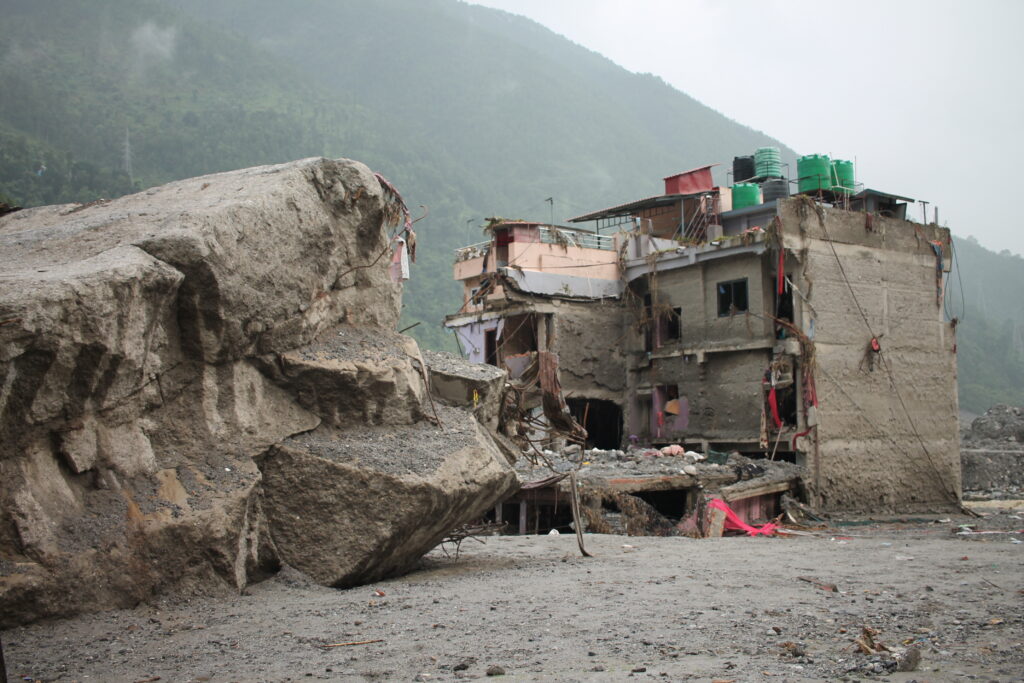
“This is something different,” said Shrestha, adding that his team has still been unable to get that first wave of supplies to parts of the Rasuwa district. The flood destroyed access to the more remote villages, except by helicopter, and those helicopters are in use in the ongoing search and rescue operations.
Once they can begin the more formal recovery process, Shrestha said, the Red Cross will prioritize sending aid to people with disabilities, along with children, pregnant women, and the elderly. His team is still putting together data on how many people with disabilities were affected by the flood — just under 3% of the population in the Rasuwa and Nuwakot districts had a documented disability, according to the national census, though Shrestha said that is likely an undercount.
“[The] disaster perspective, before this incident and after, absolutely [needs] to change,” he said. We need to “train ourselves differently, even our mindset.”
There is growing momentum to increase disability awareness in Nepal and to take disabilities into greater consideration during emergency planning. For the past several years, the Red Cross has trained its staff and volunteers on how to evacuate people with a range of disabilities during a disaster; it has also trained people with disabilities on how to evacuate themselves until help arrives.
However, ultimately, Shrestha said he’s unsure if Nepal will ever truly be a “disability-friendly country.”
“You see the mountain, the terrain,” he said. “Every kilometer, the climate is different; the landscape is different.” The financial investment across all the differences, he said, would be astronomical.
“Even if you have the perfect early warning system, those people who are living with disabilities, especially living in [that] particular terrain,” may be very difficult to get to, he said.
This was not Nepal’s first deadly flood, said Shrestha, and while the severity of this flood was unprecedented, it will not be the last. Nepal has more than 3,000 glaciers and is warming nearly twice as fast as the global average. Glacial melt and thawing permafrost across the Himalaya are destabilizing the region, causing more landslides and increasing the risk of glacial floods.
The post In Nepal’s flood, people with disabilities faced barriers, first in rescue and now in recovery appeared first on The World from PRX.
 Ciente Blog
 LabourList
  Entertainment Tonight
  Lew Lew sports
  My Modern Law
 Kitces