
by Sarah Engstrom, Associate Director of Curriculum and School Support at TLAC Reading research identifies a lack of fluency as a significant and pervasive barrier to comprehension—at all grade levels. Reading aloud regularly is the single most effective way to improve fluency. Reading aloud with students is also social—it brings the text to life and allows... The post FASE Reading Isn’t Popcorn Reading: How Teacher Intentionality Transforms Oral Reading appeared first on Teach Like a Champion.
by Sarah Engstrom, Associate Director of Curriculum and School Support at TLAC
Reading research identifies a lack of fluency as a significant and pervasive barrier to comprehension—at all grade levels. Reading aloud regularly is the single most effective way to improve fluency. Reading aloud with students is also social—it brings the text to life and allows students to share a profound experience with peers. This can make the book itself book more meaningful—an important factor in a world where making sure students read lots of good books is increasingly important.
But the practice of asking students to read aloud also gets its share of criticism. Concerns often center on student anxiety or the possibility of putting struggling readers on the spot. Skeptics often set up a poorly designed system of student oral reading as a straw man: popcorn reading. Teachers are told to avoid it.
We believe the answer is not to eliminate oral reading, but to improve how it is structured and practiced in the classroom.
To become strong readers, students need several key experiences. They need a clear mental model of what fluent reading sounds like, opportunities to practice reading aloud, and time to read independently. These experiences are closely connected. In fact, the way students read aloud is often the same way they read silently. As Mark Seidenberg explains, “Children who struggle when reading texts aloud do not become good readers if left to read silently; their dysfluency merely becomes inaudible.”
We also think it’s important to give students the shared, social experience of enjoying stories together with their classmates. While these practices are sometimes framed as competitive, they are actually complementary. Each plays an important role in helping students grow into strong readers.
One point is especially important: it is impossible to become a more fluent reader without reading aloud. The question then is not whether students should read aloud, but how that reading should be structured.
We believe that FASE reading represents a fundamentally different and more successful approach to shared reading.
What is FASE Reading?
FASE (Fluent, Attentive, Social, Expressive) reading is a systematic approach to shared reading that is designed to build fluency and support comprehension. It builds a culture where students love reading and read a lot.
How FASE Differs from Popcorn Reading
Popcorn reading may accomplish the goal of asking students to practice reading aloud, but there are many things it does not accomplish. Popcorn reading assumes all students can handle the same text length and level of complexity. But as any teacher who has asked students to read aloud knows, readers vary widely. Some students need shorter bursts, modeled prosody, multiple re-reads, or support with decoding, while other students are ready for longer or more demanding stretches of text. In Popcorn reading turns are predictable so students can tune out easily when it’s not their turn to read. And popcorn reading often lacks a clear purpose. It fails to ask: Why are we reading aloud and how does that shape the way we approach it?
Let Purpose Drive the Practice
In FASE reading, the teacher enters with a clear oral reading focus in mind, such as:
- Practicing fluid phrasing
- Strengthening decoding or automaticity
- Improving prosody or expression
Strong FASE instruction begins before the lesson starts when teachers intentionally prepare both the text and how students will read.
Plan Readers in Advance
In FASE reading, the identity of the next reader is unpredictable to students, but not to teachers.
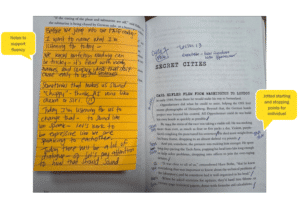
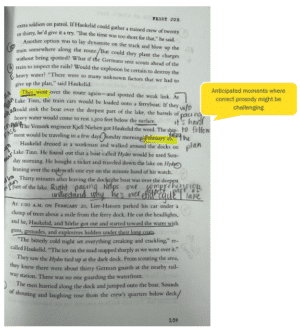
Teachers should consider features that may challenge fluency such as complex sentence structure or punctuation, multisyllabic words or unfamiliar vocabulary, dialogue, and shifts in plot or perspective.
Anticipating challenges allows you to plan support in advance. Before teaching, decide:
- Who will you call on to read and when? Try to pair students with an appropriate section of text.
- When will you model prosody and expression?
- Where and how might you prompt students to reread with improved fluency?
- What will you say when you prompt students?
Intentional planning is one of the key game changers between popcorn and FASE reading because it allows teachers to see shared reading as an important instructional tool that gives students the chance to practice oral reading and allows teachers to give immediate feedback. In the words of one teacher, “FASE helped me see a text through a lens of ‘What barriers to comprehension exist?’ and then allowed me to plan accordingly in order to help my students access a variety of texts.”
Create a Culture of Error and Emotional Safety
Some educators worry that asking students to read aloud may create stress. But research suggests that low levels of challenge or stress can actually support learning, especially when students have a thoughtful teacher lovingly guiding them.
When students are asked to stretch in a supportive environment, they build both skill and confidence. FASE reading gives teachers more tools to thoughtfully structure the experience so that classrooms remain safe environments where it’s okay to struggle and grow. This results in – as one teacher we worked with recently put it – “Increased student engagement, increased student confidence, and confidence in myself as a reading teacher.”
What about the struggling readers?
Our struggling readers are the students who need the most oral reading practice in order to make gains in fluency. To support struggling readers in reading aloud during FASE, choose sections of text with care and intentionality. Their assigned segments of reading should be in short manageable bursts to preserve their working memory and comprehension for the class. As we support them in progressively building toward success we can offer them multiple opportunities for shorter bursts of reading throughout the lesson (rather than one longer section like some of their peers will read). Because re-reading is a powerful tool to build fluency (and confidence), you may pre-assign your struggling readers the excerpts they’ll read aloud with their peers and give them opportunities to practice in advance with a caregiver, with a teacher in a remediation setting or with you before the reading begins.
Build a Culture of Reading
This approach has a powerful impact on classroom culture. According to one teacher we recently worked with, “Perhaps the strongest impact is the culture of reading that is nurtured by FASE reading. At the beginning of the year, students were shy and did not want to read expressively out loud. FASE provides both a safety and a structure for students to learn through positive interactions with the text.”
Asking students to read aloud in class is not inherently effective. The difference lies in how and why it’s done. When teachers use FASE reading, students don’t just read aloud – they develop the fluency, accuracy, and confidence necessary for future reading success.
Want to learn more about FASE reading and bring these practices to your school? Check out our FASE Reading Plug and Play!
The post FASE Reading Isn’t Popcorn Reading: How Teacher Intentionality Transforms Oral Reading appeared first on Teach Like a Champion.