
 ViewSonic Library
 Managing content across multiple displays, store environments, and locations can quickly become complex, especially for large retail deployments that require centralized control and consistent communication.
Retail digital signage solutions combine commercial displays, content management platforms, media playback systems, and backend integrations to distribute promotions, operational information, pricing updates, and branded content across the retail network.
In this guide, we explore how retail digital signage solutions work, how they are deployed and integrated, and the key technologies behind scalable retail signage systems.
Read on for practical guidance for deploying retail digital signage systems, or discover our commercial display solutions.
How Retail Digital Signage Solutions Work
Retail digital signage solutions typically combine commercial displays, content management software, media playback systems, and backend integrations working together across the retail environment.
Content is usually created and managed through a centralized CMS, then distributed to network-connected displays throughout the store. Depending on the deployment, retailers may manage a single location locally or control multiple stores remotely through cloud-based platforms.
Retail signage systems can also integrate with platforms such as POS systems, inventory databases, analytics tools, or third-party content feeds to support more dynamic and real-time content delivery.
Common retail digital signage applications include:
- Promotions and pricing updates
- Product information and merchandising
- Store announcements and customer guidance
- Queue management and wayfinding
- Brand and campaign messaging
Retailers across industries use digital signage solutions to support more centralized, scalable, and measurable in-store communication while reducing operational complexity across multiple locations.

Benefits of Retail Digital Signage Solutions
Retail digital signage solutions can support more than customer-facing communication. They also provide a more centralized and scalable approach to managing displays, content distribution, and retail communication across locations.
Centralized Screen and Content Management
A CMS allows retailers to manage screens, schedule content, and coordinate content distribution across multiple locations from a single platform. This simplifies deployment, reduces manual updates, and helps maintain more consistent messaging across the signage network.
Real-Time Data and System Integration
Retail signage platforms can connect with POS systems, inventory databases, analytics tools, CRM platforms, or third-party data feeds. These integrations allow displays to show more dynamic and context-aware content such as pricing updates, stock availability, queue information, or live promotional data.
Simplified Multi-Location Deployment and Maintenance
Cloud-based signage platforms make it easier to deploy, monitor, and manage screens across different store locations. IT teams can remotely monitor device status, troubleshoot issues, deploy updates, and standardize configurations without requiring on-site intervention for every change.
Key Components of a Retail Digital Signage Solution
A retail digital signage deployment typically combines displays, content management platforms, media playback systems, and backend integrations working together across the store environment.
| Component | Function |
|---|---|
| Commercial displays | Deliver retail communication, operational information, and digital content across store environments |
| Digital signage software (CMS) | Manage, schedule, and distribute content across screens |
| Media players or built-in SoC | Process and play content on displays |
| Backend integrations | Connect signage with systems such as POS, inventory, CRM, or analytics platforms |
| Content sources | Supply dynamic retail content such as pricing updates, dashboards, operational data, or live information feeds |
Commercial Displays
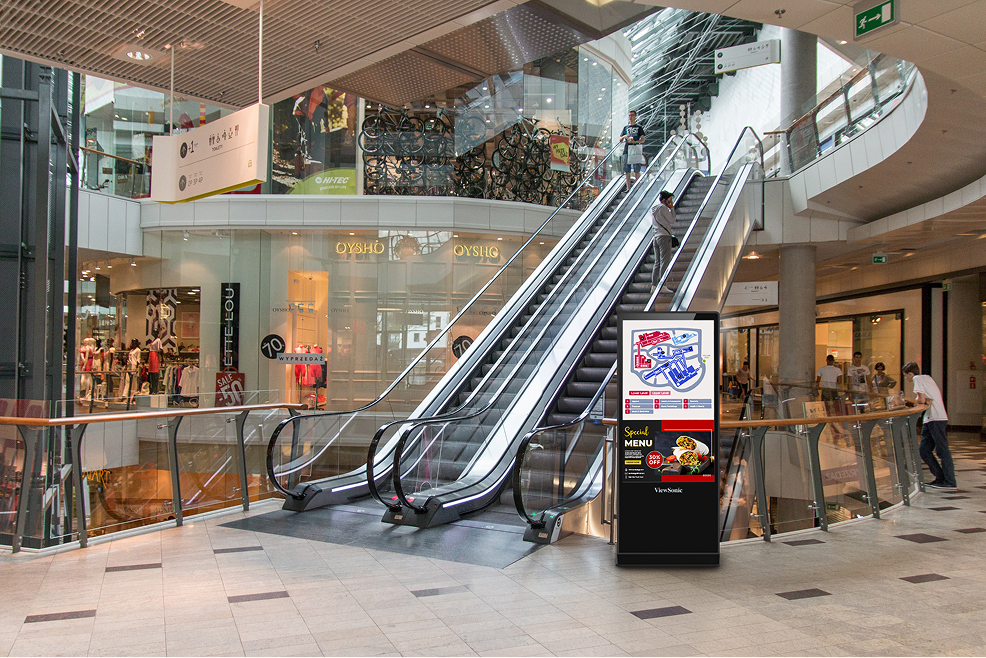
Retail environments may require different display formats depending on the use case, including storefront displays, stretched displays, interactive kiosks, menu boards, or video walls. Brightness, operating hours, orientation support, bezel design, viewing distance, and mounting requirements should all be considered during deployment planning.
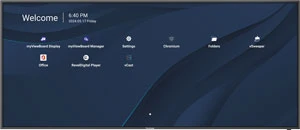
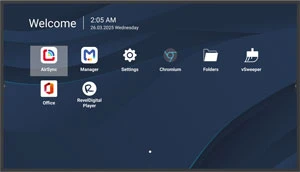
Recommended Commercial Displays for Retail Signage Deployments
Digital Signage Software (CMS)
A CMS acts as the control layer of the signage network, allowing teams to manage screens, distribute content, monitor device status, and control deployments across multiple locations from a centralized platform.
Media Players and Built-in SoC Platforms
Content playback can be handled through external media players or built-in system-on-chip (SoC) platforms integrated directly into the display. The right option depends on content complexity, system requirements, and deployment scale.
Backend Integrations and Data Sources
Retail signage platforms are increasingly connected with backend systems and third-party data feeds to support more dynamic and real-time content delivery, including pricing updates, operational information, stock availability, or queue management.
What Makes Retail Digital Signage Effective
Retail digital signage performance depends on both display hardware and system architecture. Factors such as visibility, deployment planning, content management, and backend integration all affect long-term usability and scalability.
Display Visibility and Placement
Retail displays should remain clearly visible under different lighting conditions, especially near storefront windows or brightly lit environments. Brightness, viewing angles, screen size, and placement all affect content readability and customer visibility throughout the store.
Multi-Display and Scalable Deployments
For larger retail environments, video walls and multi-display configurations can help create more seamless visual experiences. Standardized hardware, centralized management, and remote troubleshooting capabilities also become increasingly important as deployments scale across locations.
Multi-Location Content Distribution
A centralized CMS allows retailers to manage and distribute content across multiple screens and store locations from a single platform. Cloud-based systems can also simplify remote updates, monitoring, and deployment management across larger retail networks.
System Integration and Real-Time Data
Retail signage platforms can integrate with POS systems, inventory databases, analytics tools, or third-party data feeds to display more dynamic and context-aware information such as pricing updates, stock availability, queue status, or promotional triggers.
How to Measure ROI of Retail Digital Signage
Retail digital signage ROI can be measured from both a business and operational perspective. While retail teams may focus on campaign performance and product visibility, IT teams often evaluate system reliability, deployment efficiency, and maintenance requirements.
Business ROI
Retailers can measure business impact by tracking how digital signage supports campaigns, product visibility, and customer interactions.
- Sales performance of promoted products
- Seasonal campaign performance
- QR code scans and promotion interactions
- Traffic to product pages or online campaigns linked from displays
- Performance comparisons across store locations or screen placements
IT and Operational ROI
From an IT perspective, ROI is often measured through deployment efficiency, centralized management, and system reliability.
- Time required to deploy or update campaigns
- Number of screens managed remotely
- Screen uptime and system availability
- Maintenance interventions and troubleshooting requests
- Reduced on-site support across store locations
Centralized management platforms can also help simplify content updates, monitoring, and maintenance across larger retail networks.
Final Thoughts
Retail digital signage systems have evolved beyond simple promotional displays. Modern deployments combine commercial displays, centralized management platforms, and backend integrations to support communication, content distribution, and operational efficiency across retail environments.
With the right hardware, software, and deployment strategy, retailers and integrators can build more scalable and easier-to-manage signage networks across one or multiple locations.
To learn more about retail digital signage deployments, explore our commercial display solutions or contact our team to discuss your project requirements.
Frequently Asked Questions About Retail Digital Signage Solutions
A retail digital signage solution combines commercial displays, content management software (CMS), media playback systems, and backend integrations to distribute digital content across retail environments. Retailers use these systems to manage promotions, pricing updates, wayfinding, operational information, and branded content across one or multiple store locations.
Most retail digital signage systems include commercial displays, a CMS platform, media players or built-in SoC platforms, and integrations with systems such as POS, inventory databases, or analytics tools. Together, these components support centralized content management and scalable multi-location deployments.
Commercial displays are designed for continuous operation in retail environments and often provide higher brightness, better reliability, orientation support, and more flexible installation options compared to consumer TVs. Retail deployments may also require specialized display formats such as video walls, stretched displays, or interactive kiosks.
Cloud-based digital signage platforms allow IT teams and system integrators to remotely manage screens, distribute content, monitor device status, and deploy updates across multiple retail locations from a centralized platform. This helps reduce manual updates and simplifies large-scale signage management.
Retailers can measure digital signage ROI through both business and operational metrics. Common KPIs include campaign performance, QR code interactions, screen uptime, deployment efficiency, remote management capabilities, and reduced maintenance requirements across retail locations.
The post Digital Signage Solutions in Retail Stores: A Complete Guide appeared first on ViewSonic Library.
 Motorcycle Legal Foundation
  NewsBlaze News
  Xavor Corporation Blog
  Sports Management Magazine
  Simply Well Balanced
 Soap Opera Digest - Celebrity News