
Compare Nextiva vs Dialpad across features, pricing, and AI capabilities. See which VoIP provider is best for your business phone system. The post Nextiva vs. Dialpad: Which AI-Powered VoIP System Is Best for Your Business? appeared first on Nextiva Blog.
Choosing between Nextiva and Dialpad comes down to what your business needs most from a VoIP phone system: a reliable, all-in-one communications platform or an AI-first calling experience.
The difference becomes clearer when you look beyond the starting price. Dialpad’s entry-level plan can look competitive, but some business essentials — including toll-free numbers, online fax, and certain support options — may require upgrades or add-ons. Nextiva offers a more bundled experience, which can make it easier for businesses that want fewer surprises and a more complete phone system from the start.
In this guide, we’ll compare Nextiva vs. Dialpad across pricing, VoIP features, AI tools, analytics, reliability, support, and usability to help you choose the better fit for your business.
Nextiva vs. Dialpad: Quick Verdict
Here’s the quick answer: Nextiva is the better overall choice for businesses that want a reliable, full-featured VoIP phone system with strong support, while Dialpad is a good fit for teams that prioritize AI-powered calling, transcription, and real-time coaching.
This table breaks down where each provider has the edge.
| Category | Winner | Why |
|---|---|---|
| Best overall | Nextiva | Better fit for businesses that want a unified VoIP, CX, support, and contact center platform that can scale with growth. |
| Best AI calling tools | Tie | Dialpad is stronger for real-time transcription, call summaries, live coaching, and AI playbooks, while Nextiva stands out for AI-powered CX context, customer journey insights, and workflow automation. |
| Best for SMBs | Nextiva | Stronger choice for teams that want predictable value, bundled features, and 24/7 support as they grow. |
| Best for sales/support teams focused on conversation intelligence | Dialpad | More AI-forward, with real-time transcription, sentiment analysis, live coaching, and post-call summaries. |
| Best customer experience platform | Nextiva | Stronger fit for end-to-end customer journeys |
| Best ease of setup | Tie | Dialpad is more self-serve; Nextiva is more guided but still straightforward for SMBs. |
| Best support | Nextiva | Better fit for SMBs that value 24/7 phone support and a more hands-on service model. |
Nextiva vs. Dialpad VoIP Phone Systems
Both Nextiva’s business phone system and Dialpad Connect both start at $15/user/mo, but the difference becomes clearer once you look beyond the entry-level price.
Nextiva includes 24/7 support for all customers and bundles more business phone essentials, such as toll-free numbers and online fax, into higher-tier plans. Dialpad has strong built-in AI features, but essentials like toll-free numbers, faxing, and 24/7 support may require add-ons or plan upgrades.
| Category | Nextiva | Dialpad |
|---|---|---|
| Core product | Business communications + customer experience platform | AI-powered communications platform |
| Starting price | $15/user/mo (Core) | $15/user/mo (Standard) |
| Video meetings | Unlimited calls & video meetings | Up to 150 particpants (all plans) |
| Team messaging | On all plans | On all plans |
| Toll-free numbers | Included (Engage and higher) | Paid add-on + per-minute usage |
| Online fax | Included (Engage and higher) | Add-on (extra fee + per-page charge) |
| AI transcription/summaries | Available on select plans/products | Built into Dialpad’s AI-forward platform |
| AI receptionist/AI agents | XBert AI Receptionist available as add-on | Dialpad AI Agents available as a separate product/usage-based service |
| 24/7 support | Standard for all customers | Reserved for Pro & Enterprise plans |
| Uptime | 99.999% (Carrier-grade) | 99.9% |
Now let’s dive deeper into the differences between Nextiva and Dialpad.
Nextiva vs. Dialpad Pricing and Plans
Dialpad and Nextiva pricing both start at $15/user/month and both mid-tier plans start at $25/user/month. The main difference is not the base price, but what each provider includes at each tier — and how clearly each platform publishes its higher-level pricing.
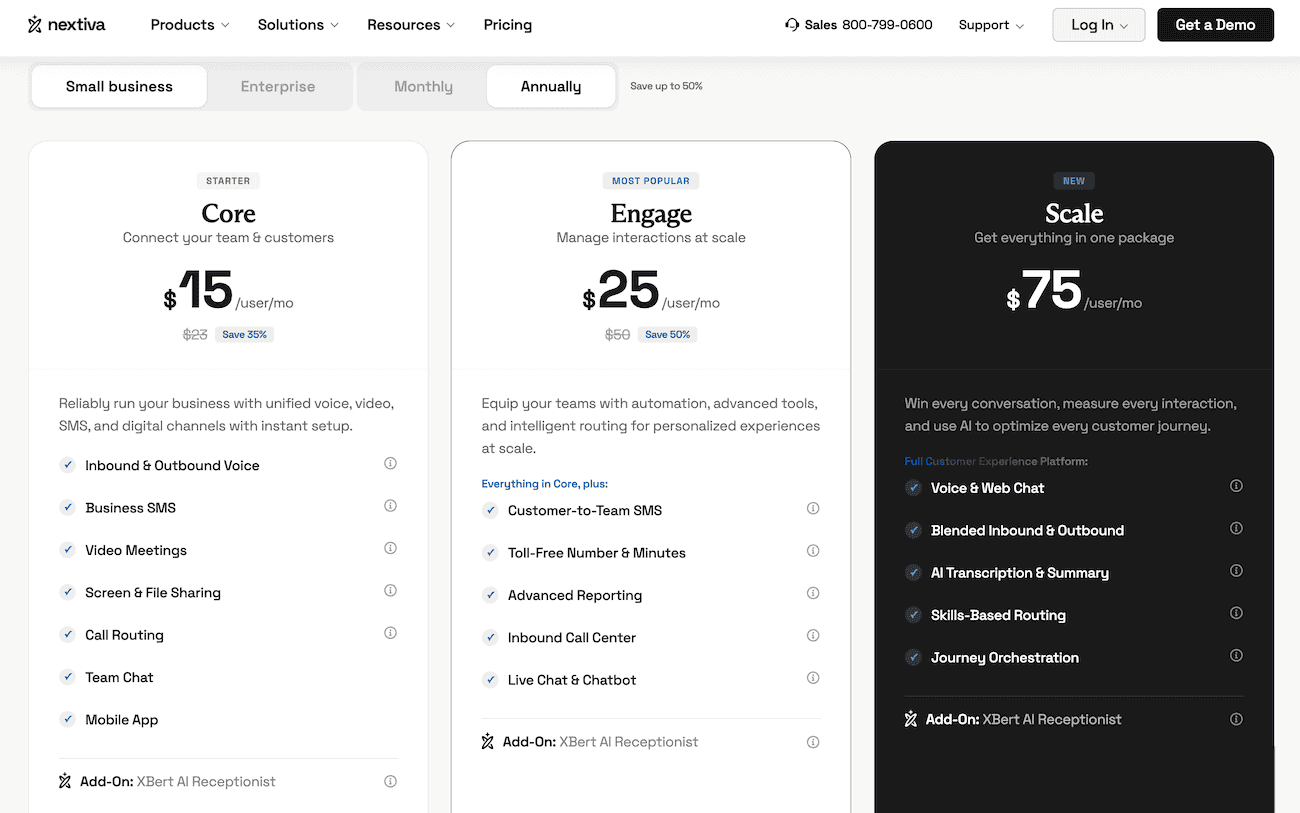
Nextiva offers three business communications plans (as opposed to their contact center software):
- Core ($15/user/mo) covers essential communication tools like inbound and outbound voice, business SMS, video meetings, screen and file sharing, call routing, team chat, and mobile access.
- Engage ($25/user/mo) adds more customer-facing features, including customer-to-team SMS, toll-free numbers and minutes, advanced reporting, inbound call center features, and live chat and chatbot capabilities.
- Scale ($75/user/mo) is designed for more advanced customer experience needs, adding voice and web chat, blended inbound and outbound capabilities, AI transcription and summary, skills-based routing, and journey orchestration.
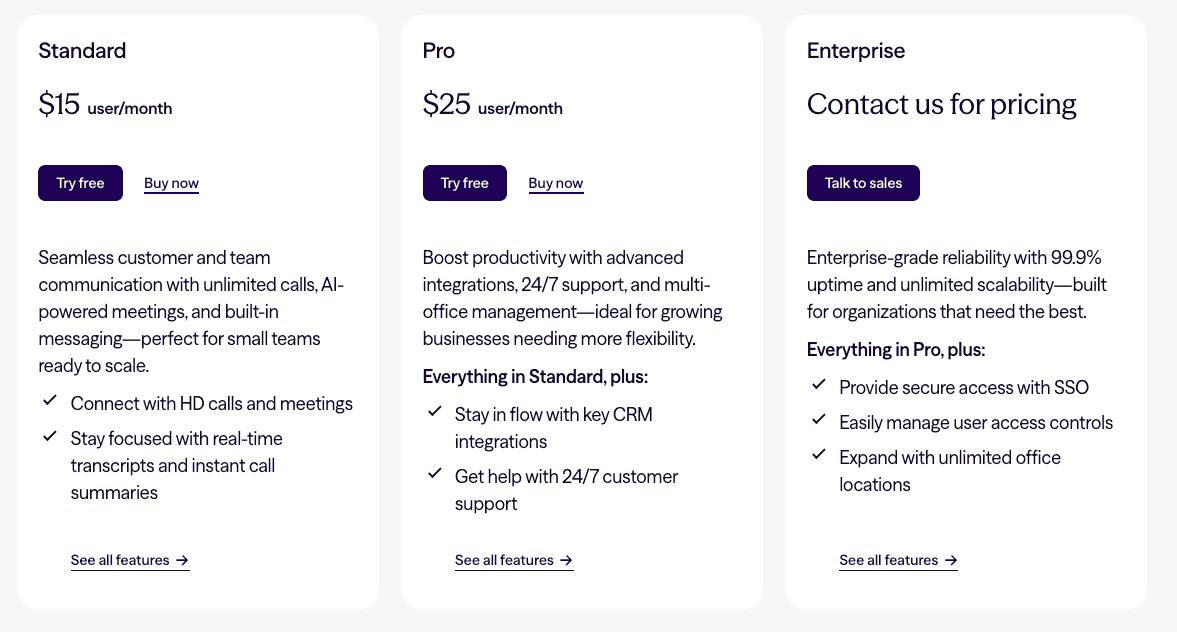
Dialpad also has three main tiers in their Connect plans (as opposed to Dialpad Support, their contact center software):
- Standard ($15/user/mo) includes unlimited calling, AI-powered meetings, built-in messaging, real-time transcripts, and instant call summaries, making Dialpad’s entry-level plan especially AI-forward.
- Pro ($25/user/mo) adds advanced integrations, 24/7 customer support, and multi-office management.
- Enterprise (contact for pricing) adds features for larger organizations, including SSO, user access controls, unlimited office locations, and an uptime SLA, but pricing is not published and requires contacting sales.
Overall, Nextiva offers a more transparent pricing structure for growing businesses, especially since its higher-tier Scale plan is publicly priced at $75/user/month. It also bundles more customer experience and business phone features as you move up the plan ladder.
Dialpad, meanwhile, stands out for including AI transcription and summaries earlier in its plans, but some advanced features, enterprise pricing, and add-ons may require a sales conversation or separate usage-based pricing.
For businesses comparing Nextiva vs. Dialpad on price alone, the two providers look similar at the entry and mid-tier levels. But when comparing total value, Nextiva may be a better fit for companies that want predictable pricing, bundled customer communication tools, and a clear upgrade path. Dialpad may be a better fit for teams that prioritize built-in AI features, real-time voice intelligence, and a more AI-first communication experience from the start.
Dialpad’s potential additional fees include:
- SMS cost: Dialpad imposes an extra $0.008/SMS fee beyond the 250-message limit. In contrast, Nextiva’s plans encompass higher message limits (100 for Core and 500 for Engage).
- Toll-free cost: Dialpad imposes extra fees for a toll-free number ($15–$17/month and $0.02/minute), whereas Nextiva includes toll-free numbers and minutes across all plans, except the base plan (Core), where it’s an add-on.
- Fax cost: Dialpad charges for fax as an add-on, with local fax included up to 1,000 pages per line per month and $0.10/page after that limit. In contrast, Nextiva offers inclusive unlimited online faxes on its Engage and Scale plans.
- Number porting: Both Nextiva and Dialpad offer free number porting for U.S. and Canadian local and toll-free numbers, making initial porting costs comparable for most North American businesses.
- Pricing transparency: Nextiva’s pricing and business phone plans are available to the public, while Dialpad requires you to contact their sales team to learn about Enterprise-level pricing and device pricing.
Nextiva vs. Dialpad AI Features
Here’s a quick look at each AI feature, with more details below the table.
| AI use case | Nextiva | Dialpad |
|---|---|---|
| Call transcription | Yes, especially in advanced CX/contact center plans | Strong native focus |
| Call summaries | Yes | Yes (AI Recaps) |
| AI receptionist/agents | XBert AI Receptionist add-on | Dialpad AI Agents |
| Agent coaching | Context-driven agent assist, AI summaries, routing & workflow automation | Strong real-time coaching & playbooks |
| Customer context | Stronger CX/customer journey angle | Strong conversation intelligence angle |
AI transcription and call summaries
Both Nextiva and Dialpad offer AI transcription and call summaries, but Dialpad makes these features more central to its everyday calling experience.
Dialpad is especially strong for teams that want real-time transcripts, AI Recaps, and searchable conversation notes built directly into calls and meetings.
Nextiva also offers AI transcription and summaries, particularly in its advanced CX and contact center plans. Its strength is not just documenting the call, but connecting conversation data to the broader customer journey.
AI receptionist and AI agents
Nextiva’s XBert AI Receptionist automates call handling, routing, appointment booking, lead capture, and CRM logging, making it a strong fit for businesses that need reliable front-line automation.
Dialpad AI Agents are designed for contact center environments, helping automate customer interactions and reduce repetitive work, but are typically tied to higher-tier or separate plans.
Agent assist and real-time coaching
Dialpad has a clear advantage when it comes to real-time AI coaching. Its AI Live Coach, AI Playbooks, and sales/support coaching tools can surface recommended responses, objection-handling prompts, and relevant knowledge while conversations are still happening.
Nextiva also supports AI-assisted service workflows, including agent assist, call summaries, intelligent routing, and AI-powered handoffs. Its approach is more focused on helping agents work from better context across the customer journey, rather than emphasizing live sales coaching as heavily as Dialpad does.
AI analytics and customer insights
Nextiva and Dialpad both use AI to help businesses understand customer conversations, but they emphasize different types of insight.
Dialpad leans into conversation intelligence, with transcripts, recaps, sentiment, coaching insights, and performance signals that help managers understand what happened on calls and how agents can improve.
Nextiva’s AI analytics are more closely tied to customer experience management. With features like AI transcription, sentiment analysis, journey orchestration, routing, and unified reporting, Nextiva is better suited for broader customer context and CX visibility.

Nextiva vs. Dialpad Key Features
Nextiva and Dialpad offer many of the same core communication features, including cloud calling, messaging, video meetings, call routing, mobile apps, analytics, and AI-powered tools. The key difference is how each platform delivers and prioritizes those capabilities.
Nextiva is built around unified business communications and customer experience, making it a strong fit for companies that want calling, messaging, support tools, and customer context in one platform. Dialpad is more AI-forward, with real-time transcription, call summaries, coaching, and conversation intelligence embedded across its products.
VoIP and business phone features
There are some important differences in how Dialpad and Nextiva approach VoIP functionality.
Dialpad offers a more streamlined base setup, with strong native AI capabilities like real-time transcription and call summaries built into everyday calling. However, some advanced features—such as expanded integrations, international messaging, and certain call handling options—are reserved for higher-tier plans.
Nextiva includes many standard business phone features—such as auto attendants, business SMS, and 24/7 support—across its core plans, making it well suited for small to mid-sized businesses that need a complete, ready-to-use phone system.
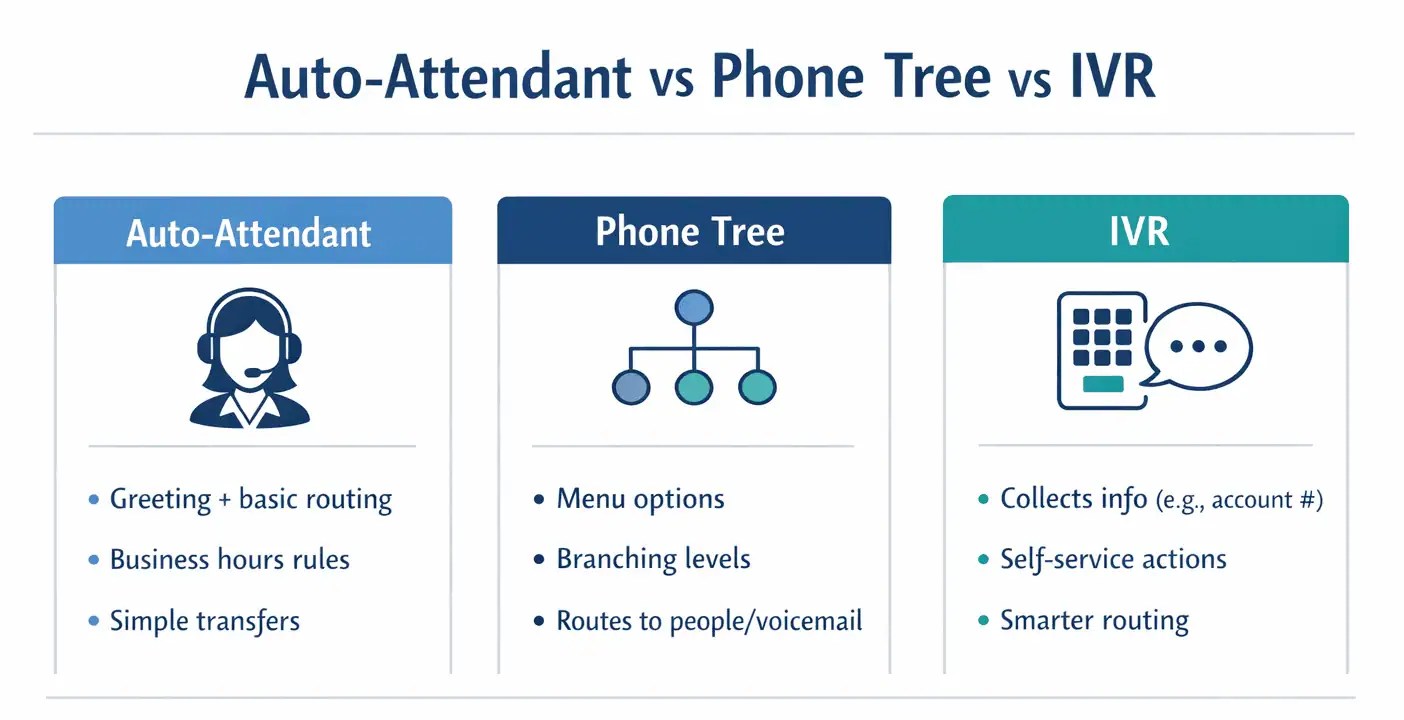
Dialpad is a strong fit for teams that prioritize built-in AI and a modern, lightweight communications experience. Nextiva offers a more fully featured business phone system out of the box, along with stronger support coverage and broader CX capabilities.
At higher tiers, Nextiva stands out for its deeper contact center functionality and customer experience focus. Dialpad differentiates with sales and support tools centered on real-time coaching and conversation intelligence, though its contact center capabilities are more modular depending on the plan.
2) Unified Communications as a Service
UCaaS is all about context. A unified platform offers you not just one dialer, but a single thread for every customer interaction.
Here’s how Nextiva and Dialpad compare when it comes to key UCaaS functionality:
- NextivaONE: Nextiva’s mobile app threads together every call, text, email, and video conferencing into a unified customer view. If a customer reaches out across multiple channels, your team sees one continuous timeline, preventing the fragmented data problem.
- Dialpad Voice & Meetings: Dialpad provides a clean, mobile-first interface, but its products can be fragmented. Dialpad Voice and AI Meetings are treated as separate modules, which can lead to app fatigue for teams looking for a single, cohesive thread.
Nextiva wins on contextual continuity. Its all-in-one app approach is more efficient for businesses that rely on a long-term, high-touch relationship with their customers.

3) Contact center and scalability
For larger teams, the total cost of ownership can differ significantly.
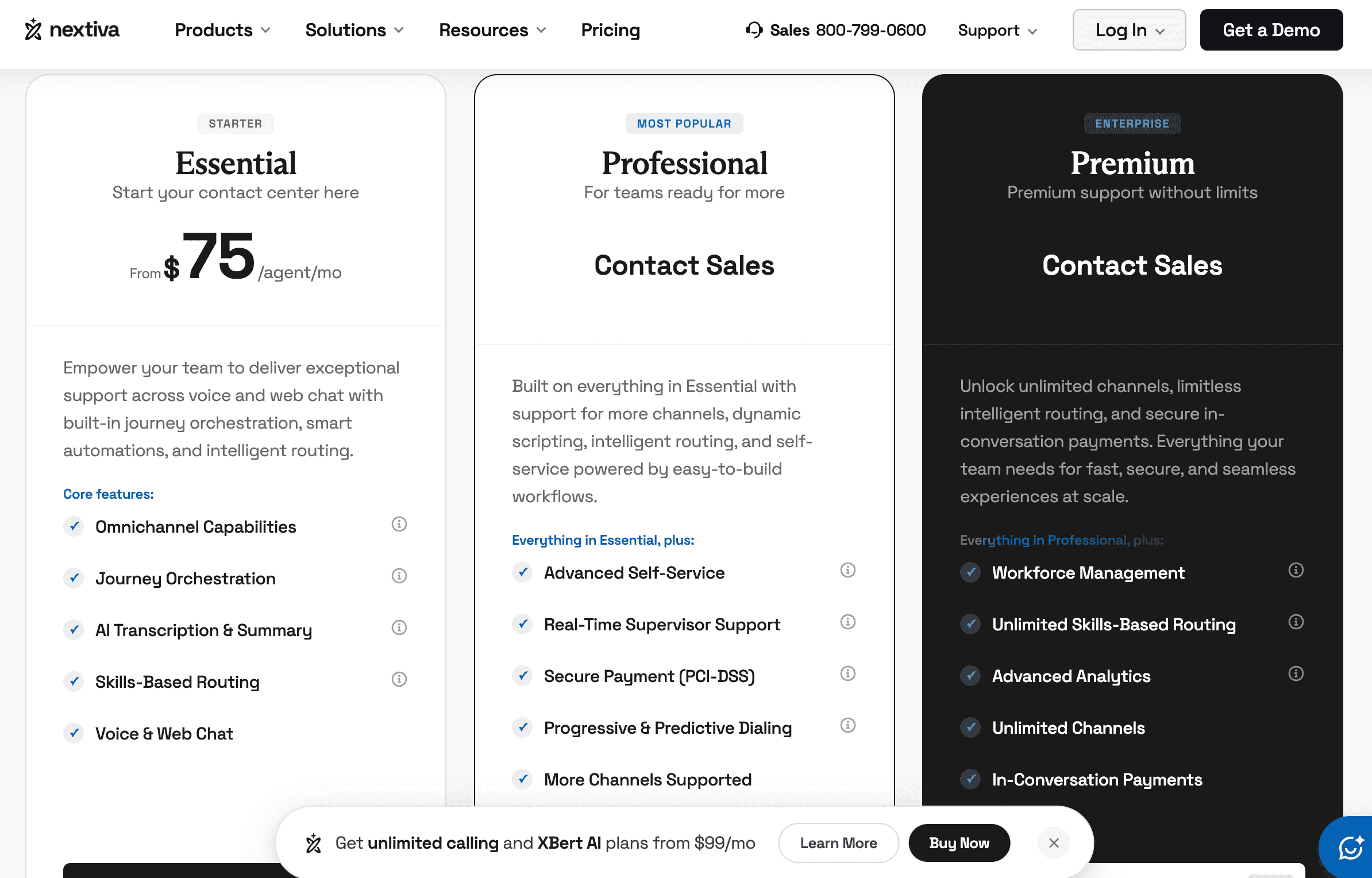
Nextiva’s Contact Center solution is offered in three tiers — Essential, Professional, and Premium — giving teams a structured path as they scale. Smart call routing and omnichannel capabilities are natively integrated across all three, and workforce management tools and advanced analytics are available on the Premium plan.
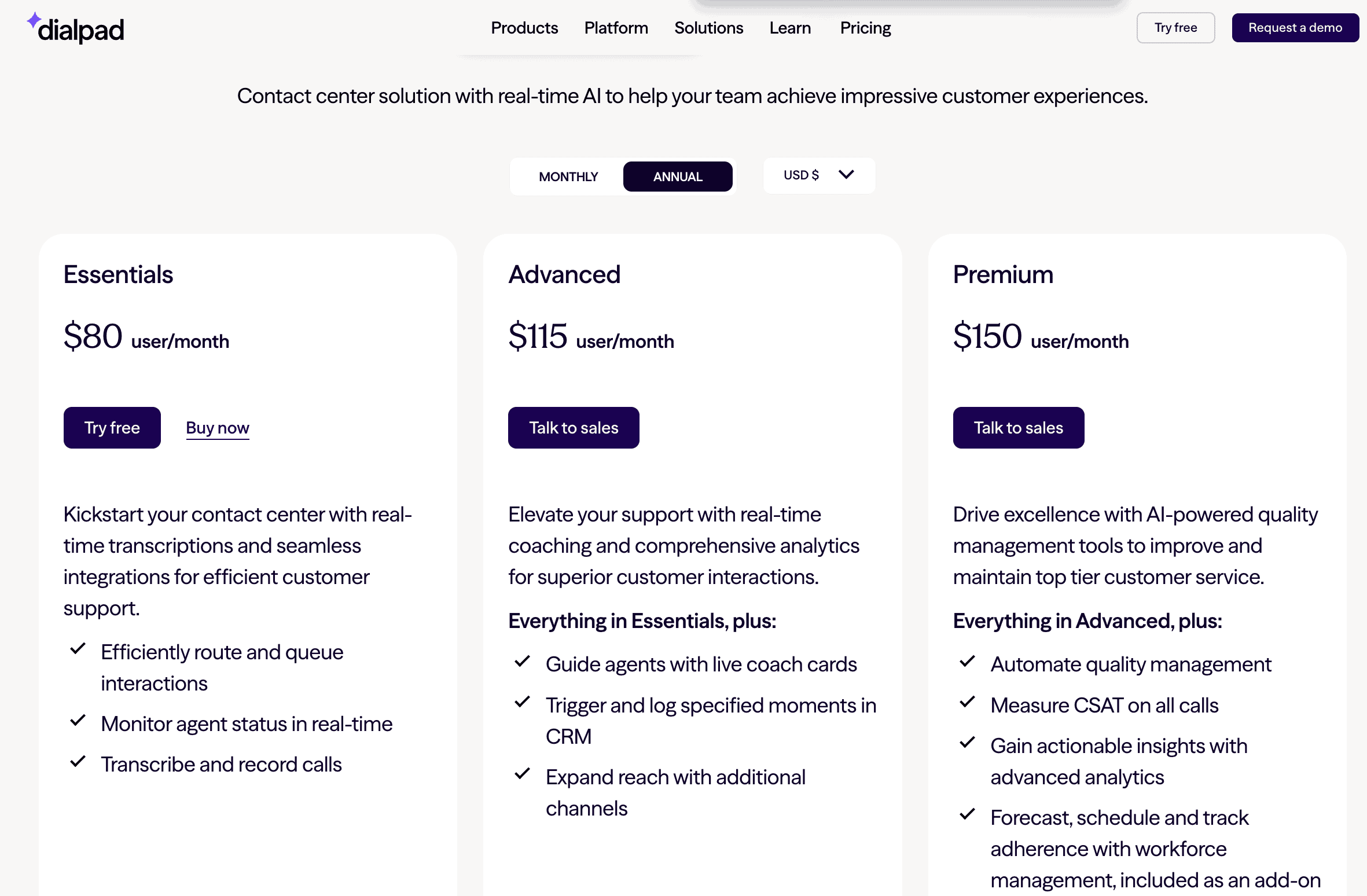
Dialpad’s Support contact center plans follow a similar tiered model with Essentials, Advanced, and Premium, but its usage-based billing (per minute for incoming calls and outbound calls) can make overall costs less predictable as call volume increases.
Nextiva is the stronger choice for organizations that want a more packaged CX platform with clearer plan progression and a focus on long-term scalability. Dialpad remains attractive for teams that want AI-first contact center tools and are comfortable managing usage-based costs.
Nextiva vs. Dialpad Analytics
Dialpad’s phone system comes with native analytics. The analytics menu intuitively arranges data, enabling supervisors to get clear insight into their team’s performance. Users can customize call routing and IVR menu options using their web dashboard with relative ease.
Both platforms let you measure metrics, including:
- Active calls
- Average response time
- Abandoned calls
- Agent availability
- Inbound vs. outbound calls
- Total call time
- Text volume
The most substantial difference between the two platforms’ analytics is that Nextiva Analytics benefits those inside and outside contact centers. You can gain insight into trends impacting your business, call center performance, management, and scheduling.
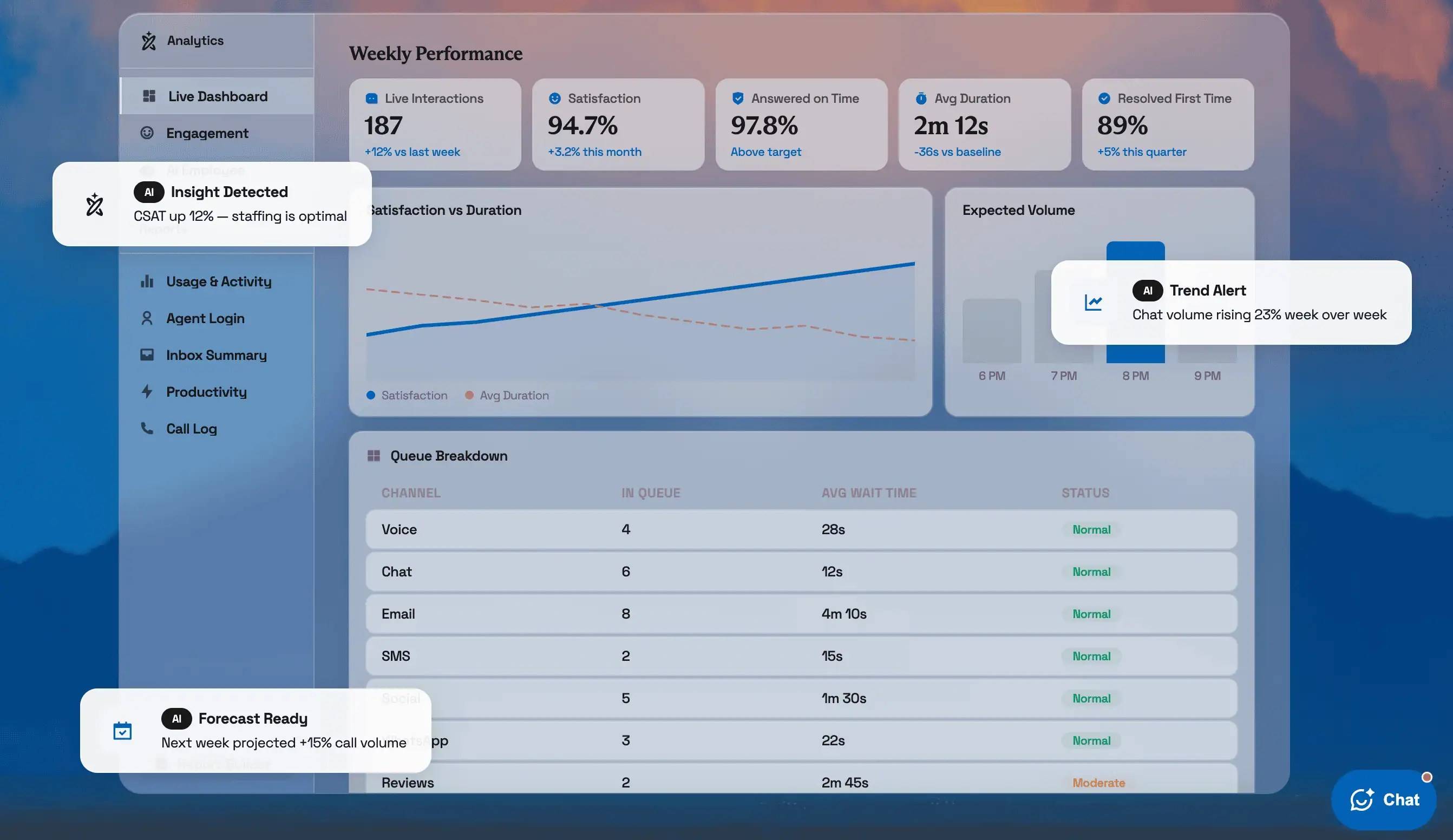
Dialpad’s analytics tends to be geared more toward call center data, specifically focusing on the call center’s logistics and performance.
Nextiva vs. Dialpad Call Pops
Dialpad can integrate with your CRM tool to pull up customer data with call pops. It uses screen pops to load matching customer records as the phone rings, pulling up dedicated customer information windows.
Operators and agents can then manually open an integrated CRM system and search for the matching customer record. When they ask for the customer’s name, they may have the full file on hand.
Nextiva’s Call Pop feature displays essential information about the caller on the screen before answering the phone. It stores customer engagement and interaction data and displays that actionable data in their call pops. The screen will stay up for the duration of the conversation.
When a customer calls, Nextiva’s Call Pop feature displays their contact information and data, including their customer experience score, latest survey score, account value, and last interaction sentiment.

All the information your agents may need is readily available to best serve your customers, even before they answer the call.
Dialpad vs. Nextiva Performance
Performance is a top consideration when choosing between VoIP systems, so it’s critical to compare Dialpad vs. Nextiva performance.
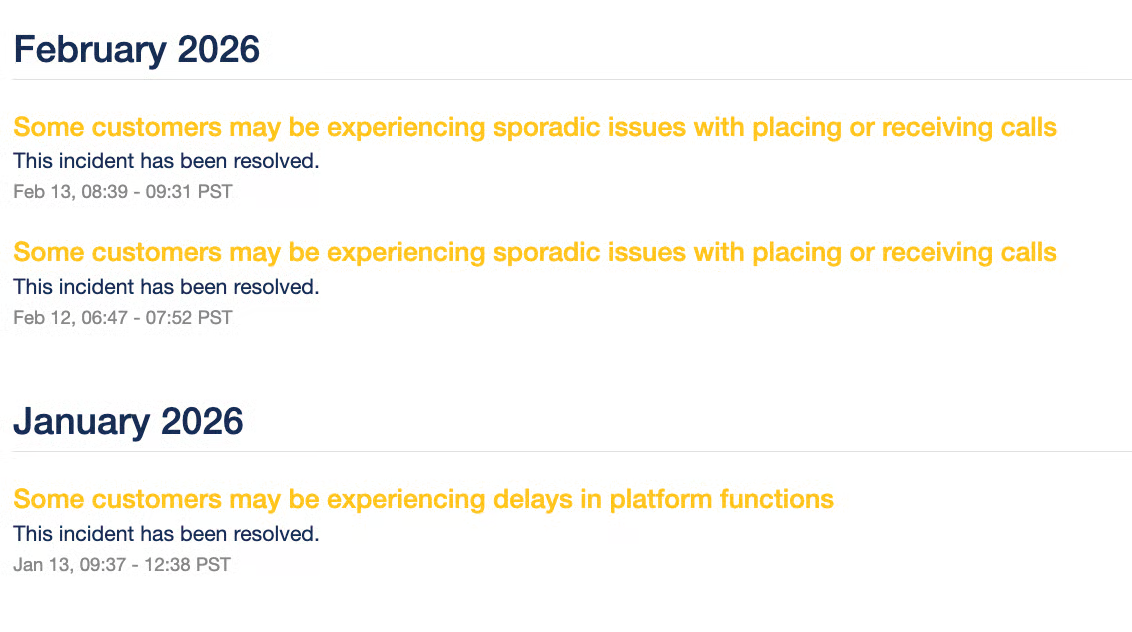
Dialpad has reported recent outages and a number of incidents. Still, when you’re maintaining a network with multiple users, some outages are normal.
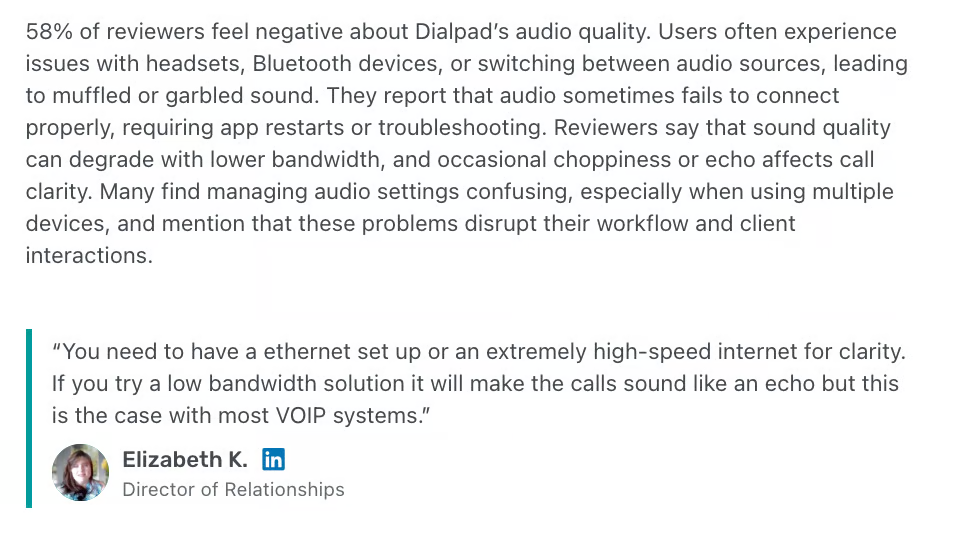
Recent customer reviews for Dialpad also report issues with dropped or “choppy” phone call quality, which can drive customers to consider Dialpad’s competitors.
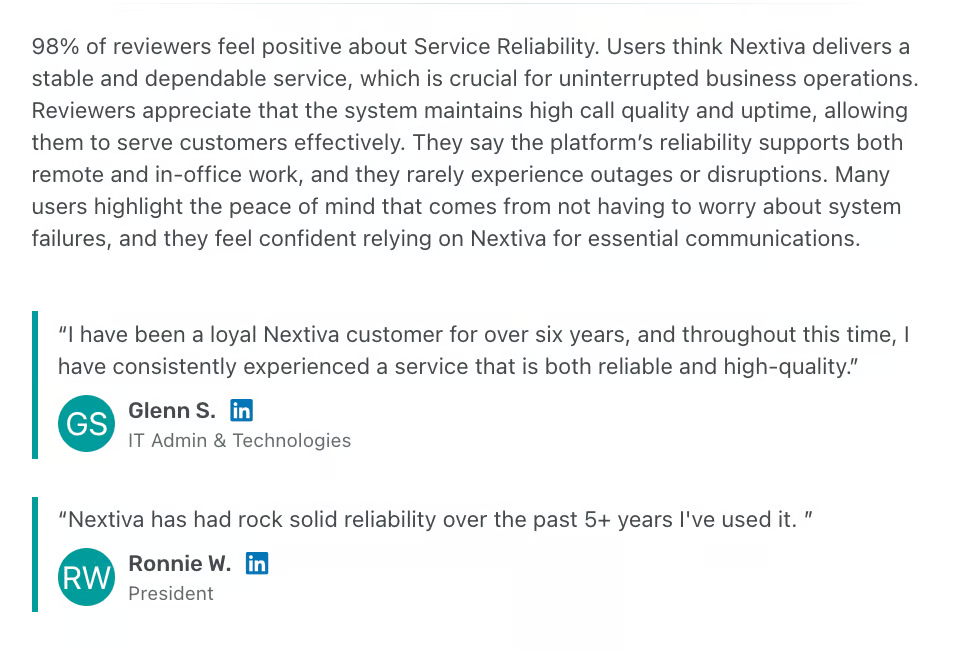
Nextiva’s network is one of the most reliable in the world. It has eight points of presence and carrier-grade data centers dedicated to providing 99.999% uptime, ensuring that you can always stay connected with your customers without sacrificing security.
Up until June of this year, there were virtually no incidents to report from Nextiva’s service.
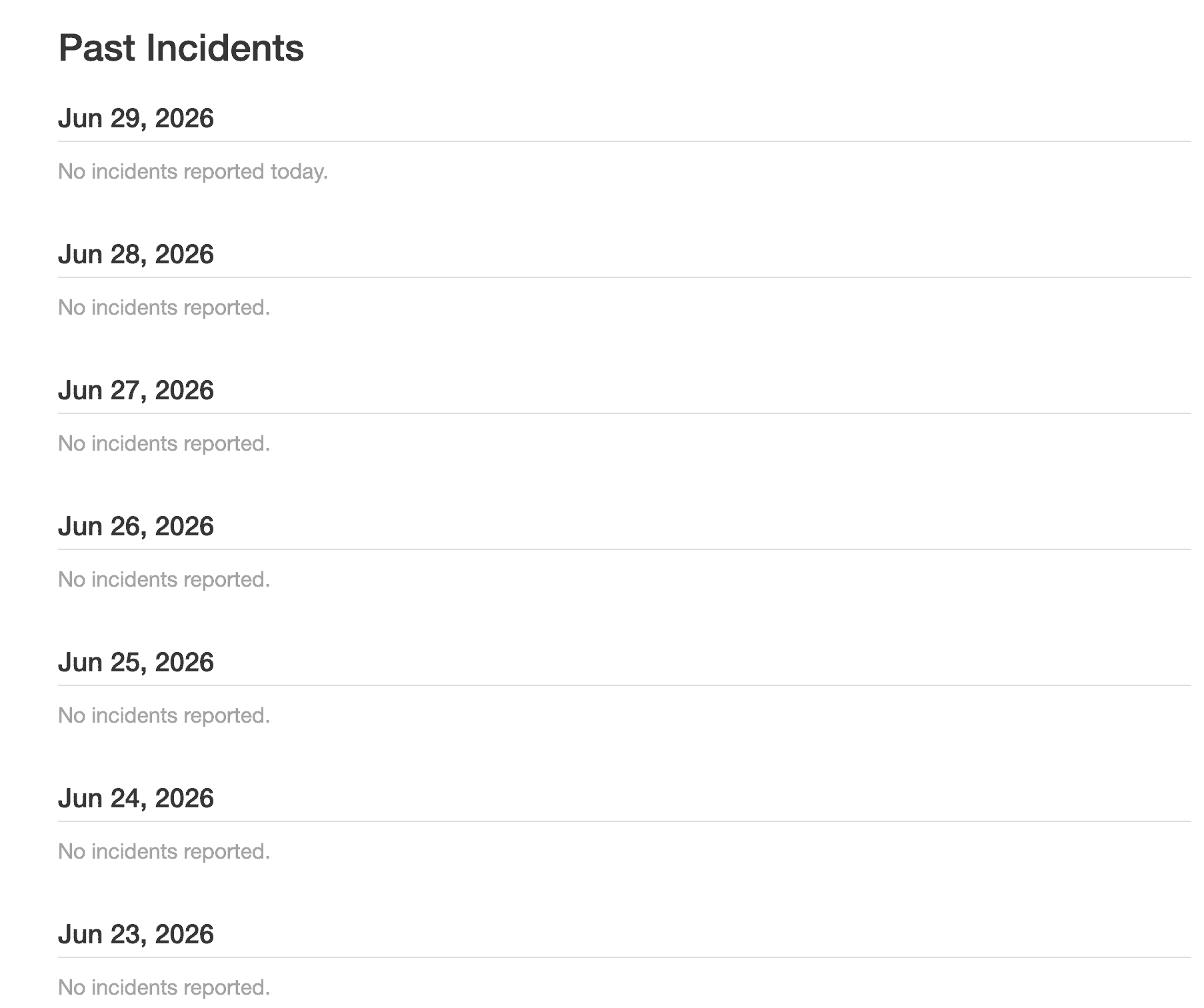
Nextiva customers find the platform highly reliable and dependable, which is key to running any successful business operation.
Nextiva vs. Dialpad Customer Support
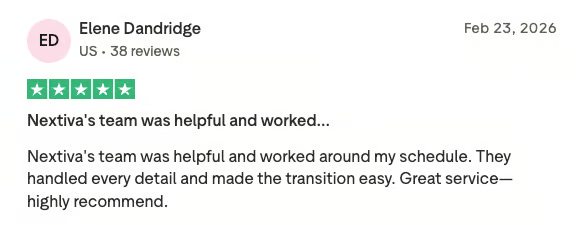
When it comes to customer service, Nextiva takes the lead with its unique Amazing Service promise.
Nextiva’s starter plan provides online ticketing and, if needed, an online chat service. It also offers email and phone support Monday through Friday from 5 a.m. to 6 p.m. MST and on Saturdays from 6 a.m. to 6 p.m. MST.
Only Dialpad’s higher-priced plans provide access to 24/7 live support. Its basic package includes 24/5 support solely through chat and the web. There’s also a comprehensive online Help Center database to get answers.
For a comprehensive breakdown, Gartner Peer Insights compares Nextiva’s and Dialpad’s respective customer support ratings here:
| Parameter | Nextiva | Dialpad |
|---|---|---|
| Overall Support Rating | 4.6 / 5 | 4.5 / 5 |
| Timeliness of Response How quickly customers connect to a support agent or a support agent reaches out | 4.7 | 4.5 |
| Quality of Technical Support Technical expertise of the support team and easy resolution of technical issues | 4.7 | 4.2 |
| Quality of Peer User Community A community forum for people to engage in discussions, ask questions, and find and connect with peers | 4.5 | 4.4 |
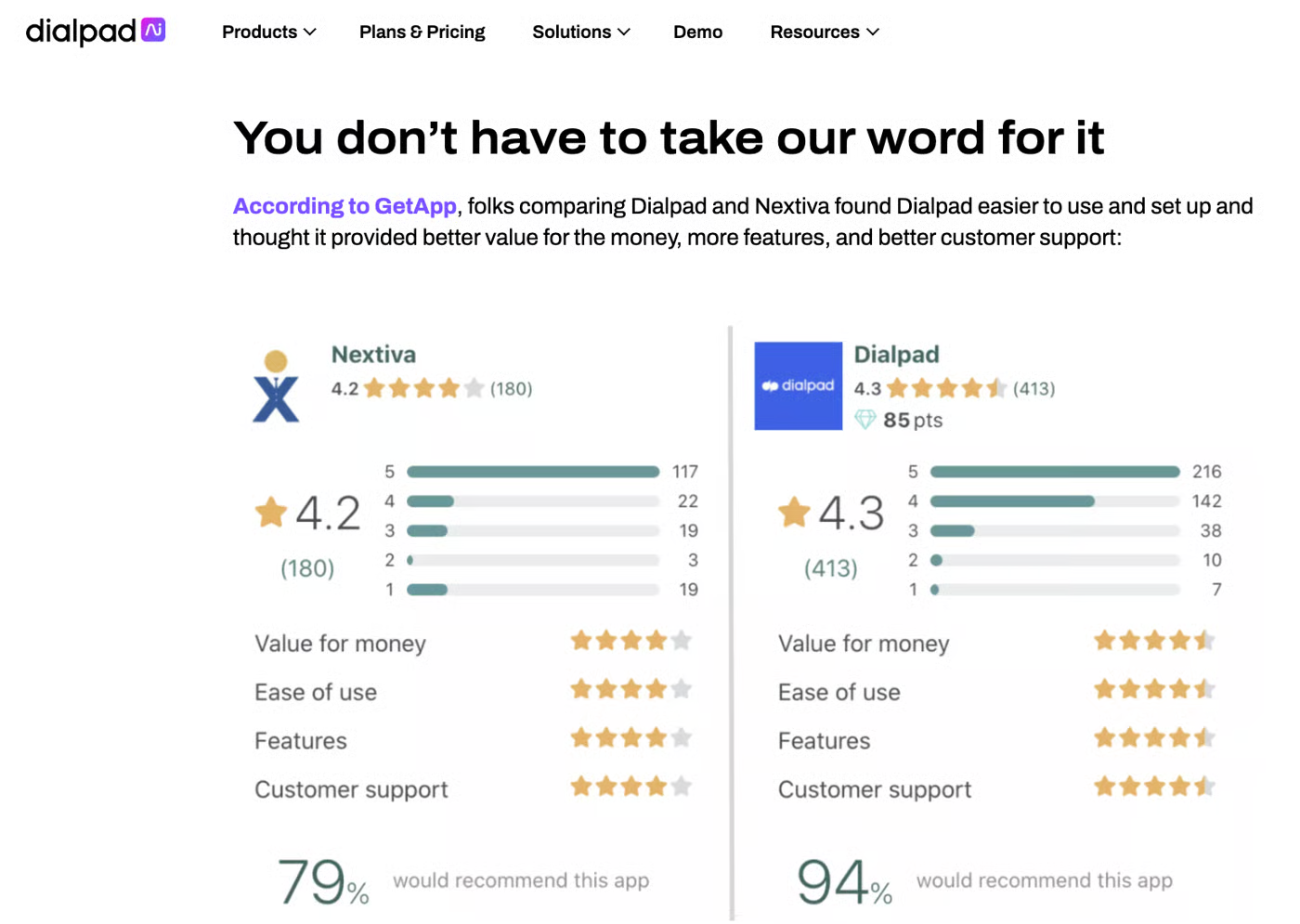
Dialpad includes an old screenshot of GetApp as proof of a 4.3-star score on its site, comparing that score to Nextiva’s then-4.2-star score, with only 79% of Nextiva customers saying they’d recommend the app.
Nextiva has since caught up.
Its GetApp’s user review rating is 4.6 stars, and 92% of consumers now recommend the service. Since the original date of publishing, Nextiva’s recommendation percentage has increased, whereas Dialpad’s has decreased.
The difference between the two is marginal, although Nextiva’s overall support score outranks Dialpad’s by 4.6 to 4.2.
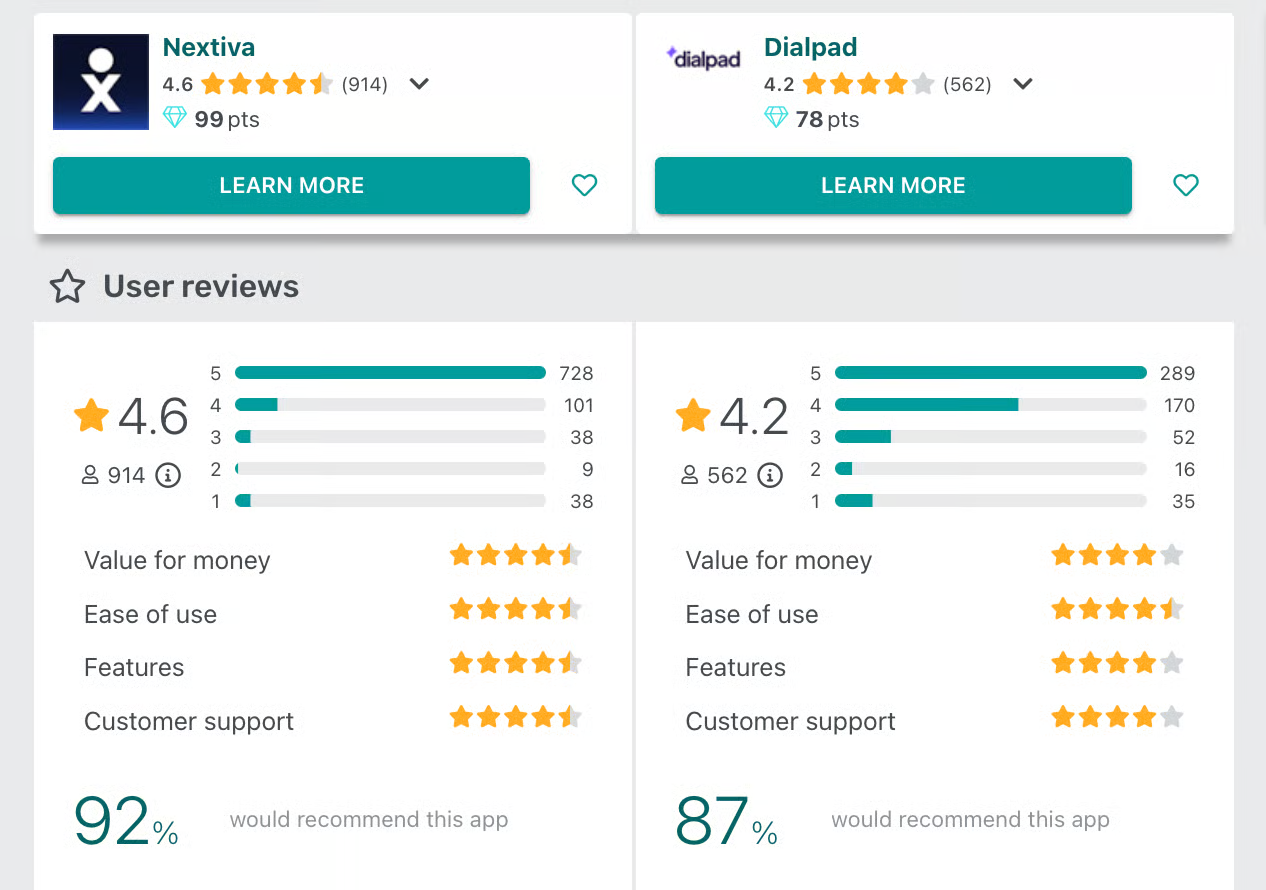
Ask yourself if you want a communications provider that’s improving its customer satisfaction score or one whose score is declining.
Nextiva vs Dialpad Setup and Usability
Setup and user management are easy to do with Dialpad’s cloud-based platform — in most situations, on your own. Additionally, Dialpad is particularly web-centric, with a user-friendly interface and user experience.
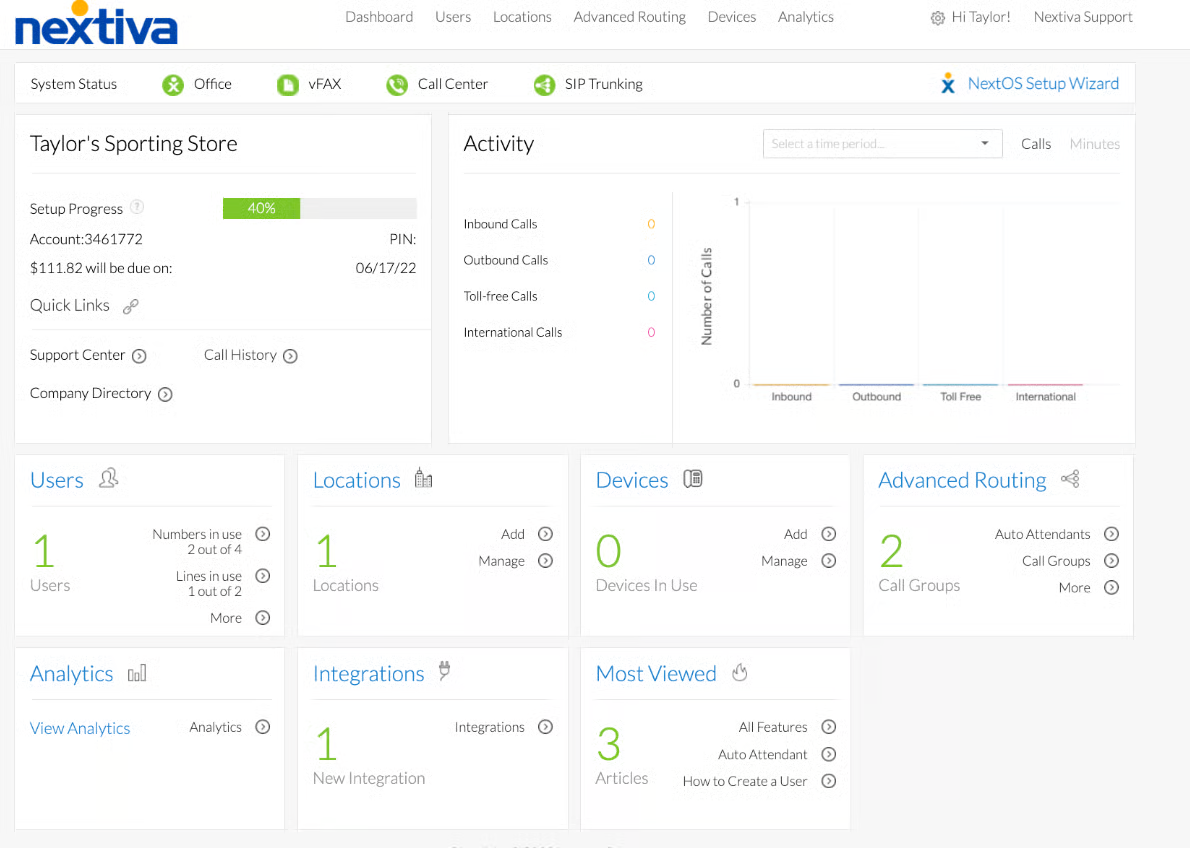
Nextiva’s user interface was designed to be user-friendly. Its setup is simple, and the overall usability is intuitive. Complex features are simple with the online dashboard, including call flows, user management, and voicemail changes.
Should You Choose Nextiva or Dialpad?
Choose Dialpad if:
- You’re a small team that needs basic AI call transcription and doesn’t mind paying a la carte for fax or toll-free numbers.
- You primarily work in a web browser and don’t require heavy desk phone support.
Choose Nextiva if:
- You want a reliable VoIP service with a 99.999% uptime guarantee.
- You need agentic AI (XBert) to automate complex tasks and improve customer support instantly.
- You value pricing transparency and want digital fax, video, and 24/7 live support included in your base price.
- You want a VoIP phone system that scales effortlessly as your business needs evolve.
| Choose Nextiva if | Choose Dialpad if |
|---|---|
| You prioritize 24/7 live human support and carrier-grade 99.999% uptime. | You want real-time AI coaching (RTA cards) and transcription natively in every call. |
| You need an all-in-one CX stack with digital fax and predictable monthly pricing. | You’re a mobile-first startup that primarily works in a web browser. |
| You want agentic automation (XBert) to book appointments while you sleep. | You want analytical coaching to help sales reps improve their talking points. |
Nextiva Is Future-Ready, Are You?
Nextiva is a good Dialpad alternative and a strong choice for businesses that need long-term stability and comprehensive, end-to-end solutions. The platform integrates voice calls, video, fax, and AI-powered automation into a single, clearly priced platform, eliminating the app fatigue and hidden costs common with modular competitors.
Whether you’re a small team needing professional reception services or a growing company requiring a complete customer experience solution, Nextiva offers maximum reliability and 24/7 support, keeping your business always connected.
Switch to the #1 Rated Cloud Phone System to Run Your Business
Upgrade to the industry’s highest-rated hosted VoIP system. G2 ranked Nextiva as the #1 cloud-based VoIP provider. Get flexible, reliable cloud communications anywhere your team works.
The post Nextiva vs. Dialpad: Which AI-Powered VoIP System Is Best for Your Business? appeared first on Nextiva Blog.